One great merit of the devotion to the rosary is that it was revealed by Our Lady to Saint Dominic as a means to revive the Faith in regions ravaged by the Albigensian heresy.
Indeed,the widespread practice of the rosary revived the Faith. With this, the rosary became, in times when there truly was faith in the world, one of the classic Catholic devotions. This led not only to the widespread making of statues of Our Lady of the rosary around the world but the practice of prayingthe rosary also became common among the faithful.Wearing the rosary hanging from the waist became an official component of the habits of many religious orders.
Among the thousand things that we could say about the rosary, I want to emphasize precisely this primary link between the rosary and the virtue of Faith, and between the rosary and the defeat of heretics. The rosary has always been considered an extremely powerful weapon of the Faith. We know that the virtue of Faith is the root of all virtues. Virtues are not true unless they spring from a living faith. Therefore,there is no point cultivating other virtues if one neglects Faith.
This devotion is particularly meaningful to those whose lives are marked by a continuous, legal and doctrinal struggle on behalf of orthodoxy,and who consider the victory of orthodoxy and of the Counter-Revolution in the world the ideal of our lives. This is because it establishes the link between our lives and devotion to Our Lady, who clearly appears here as the one who alone crushed all heresies,as the liturgy says. To a great extent, she has crushed them through the rosary.
Showing posts with label Dr. Plinio Commentary. Show all posts
Showing posts with label Dr. Plinio Commentary. Show all posts
Wednesday, April 17, 2013


Tuesday, April 16, 2013
How Do We Build an Organic Society? - Dr. Plinio Correa De Olivera
Upon describing organic society, the question remains as to how we might build such a society. The answer is quite simple. We must do it in the same manner as our ancestors did at the dawn of this civilization. We must understand, as they understood,that it is not enough that we follow the Ten Commandments and respect the rights of the Church with all due intransigence and strictness. Above all, we must allow the institutions of society to gradually walk on their own feet.
In our case,this means freeing society from the iron gauntlet of Statist dictatorship(whether it be in its legislative or executive form).The family must be allowed to return once again to the fullness of action and influence it once reached. Professional, social and other intermediary groups that stand between the individual and the State must be free to exercise the activities necessary to fulfill their duties on their own and according to their own procedures.
The State should respect everyone’s autonomy by giving every region the right to organize according to its socio-economic structures, character, and traditions. Finally,the State itself, operating within its own and supreme ambit, should exercise its sovereign power with honor, vigor and efficiency. Someone might ask what the final result would be if these principles are respected. Would it be a return to the Middle Ages? Or would we move toward a new and absolutely unpredictable future society?
Both questions should be answered in the affirmative. Human nature is constant; it is the same in all times and places.The basic principles of Christian civilization are likewise immutable. Thus, this new order of things—this new Christian civilization we envision—obviously will be profoundly similar, or rather identical,to the old one in its essential traits. Since this order is linked to God (Who does not change), its principles are just as applicable in the thirteenth as in the twenty-first century.
On the other hand, such a society would have many new elements.The technical and material conditions of life have profoundly changed since the thirteenth century. Nothing would be more inorganic than to ignore these changes. To build an organic Christian society,we must take care not to make many complex plans. The founders of Christian civilization in the Middle Ages did not make such plans to reach the height of medieval civilization in the thirteenth century. They simply had the general intention of building a Catholic world.For this end, each generation gradually solved, with its own sharp insight and Catholic sense, the problems within its reach.As for the rest,they did not get involved in complicated speculation.
We must do as they did.Generally, the whole framework of this society is already known to us through history and the Magisterium of the Church. As for the details, let us go forward step by step without abstract theoretical plans drawn up in some bureaucratic office, following the Gospel maxim: “Sufficient for the day is the evil thereof.”
In our case,this means freeing society from the iron gauntlet of Statist dictatorship(whether it be in its legislative or executive form).The family must be allowed to return once again to the fullness of action and influence it once reached. Professional, social and other intermediary groups that stand between the individual and the State must be free to exercise the activities necessary to fulfill their duties on their own and according to their own procedures.
The State should respect everyone’s autonomy by giving every region the right to organize according to its socio-economic structures, character, and traditions. Finally,the State itself, operating within its own and supreme ambit, should exercise its sovereign power with honor, vigor and efficiency. Someone might ask what the final result would be if these principles are respected. Would it be a return to the Middle Ages? Or would we move toward a new and absolutely unpredictable future society?
Both questions should be answered in the affirmative. Human nature is constant; it is the same in all times and places.The basic principles of Christian civilization are likewise immutable. Thus, this new order of things—this new Christian civilization we envision—obviously will be profoundly similar, or rather identical,to the old one in its essential traits. Since this order is linked to God (Who does not change), its principles are just as applicable in the thirteenth as in the twenty-first century.
On the other hand, such a society would have many new elements.The technical and material conditions of life have profoundly changed since the thirteenth century. Nothing would be more inorganic than to ignore these changes. To build an organic Christian society,we must take care not to make many complex plans. The founders of Christian civilization in the Middle Ages did not make such plans to reach the height of medieval civilization in the thirteenth century. They simply had the general intention of building a Catholic world.For this end, each generation gradually solved, with its own sharp insight and Catholic sense, the problems within its reach.As for the rest,they did not get involved in complicated speculation.
We must do as they did.Generally, the whole framework of this society is already known to us through history and the Magisterium of the Church. As for the details, let us go forward step by step without abstract theoretical plans drawn up in some bureaucratic office, following the Gospel maxim: “Sufficient for the day is the evil thereof.”
Friday, March 1, 2013
Christ’s Passion in Our Days - Dr. Plinio Corrêa de Oliveira
While meditating, we often fail to link the episodes of Our Lord’s life to ourselves and the world around us.
Consequently, we are shocked at the inconsistency, hatred and ingratitude of those who crucified Our Lord, after having honored Him as their Savior, days before.
However, Our Lord’s killers are not alone in their ingratitude and inconsistency. Our Lord still endures this conflicting adoration and hostility in various countries and in the hearts of many faithful.
Thus, we should not merely wince at the infamy of those who killed Our Lord. It is far more useful to contemplate our own infamy and trust in God’s goodness. Only then, can we truly amend our lives.
Reparation for Today’s Offenses
Everyone knows that sin is an insult to God. By committing a mortal sin, a person expels God from his heart, refuses Him the filial respect He deserves as Creator and rejects His grace. If we commit a mortal sin, we crucify Our Lord in our hearts, and thus imitate those who killed Him. Often, we do so shortly after having glorified Him with good deeds. Thus, we reenact the whole of Christ’s Passion, from Palm Sunday to the Crucifixion. How often this happens in men’s souls today!
To repair these offenses, we should become “souls of reparation.” If our virtue is insufficient for the task, we should practice a sincere humility that stems from intelligent, sensible and solid reasoning, not flowery words and emotional chest-beating. This alone will suffice to console Our Lord in His affliction.
During this holy Lenten season, we should strive to become these “souls of reparation,” through the practice of sincere humility, and thus make reparation before the throne of God for the countless offenses committed against Him at every moment.
Consequently, we are shocked at the inconsistency, hatred and ingratitude of those who crucified Our Lord, after having honored Him as their Savior, days before.
However, Our Lord’s killers are not alone in their ingratitude and inconsistency. Our Lord still endures this conflicting adoration and hostility in various countries and in the hearts of many faithful.
Thus, we should not merely wince at the infamy of those who killed Our Lord. It is far more useful to contemplate our own infamy and trust in God’s goodness. Only then, can we truly amend our lives.
Reparation for Today’s Offenses
Everyone knows that sin is an insult to God. By committing a mortal sin, a person expels God from his heart, refuses Him the filial respect He deserves as Creator and rejects His grace. If we commit a mortal sin, we crucify Our Lord in our hearts, and thus imitate those who killed Him. Often, we do so shortly after having glorified Him with good deeds. Thus, we reenact the whole of Christ’s Passion, from Palm Sunday to the Crucifixion. How often this happens in men’s souls today!
To repair these offenses, we should become “souls of reparation.” If our virtue is insufficient for the task, we should practice a sincere humility that stems from intelligent, sensible and solid reasoning, not flowery words and emotional chest-beating. This alone will suffice to console Our Lord in His affliction.
During this holy Lenten season, we should strive to become these “souls of reparation,” through the practice of sincere humility, and thus make reparation before the throne of God for the countless offenses committed against Him at every moment.
Friday, February 22, 2013
An Invitation to Love the Holy Cross of Our Lord Jesus Christ - Dr. Plinio Corrêa de Oliveira
While commemorating the forty days Our Lord fasted in the desert, we should remember a great and supreme truth that should illuminate all Lenten meditations.
The holy Gospels clearly show how much our merciful Savior pitied our spiritual and physical pains. Hence, He performed spectacular miracles to mitigate them. However, let us not imagine that these healings were the greatest gift He gave mankind.
This would not take into consideration the central aspect of Our Lord’s life: He was our Redeemer, Who willingly endured the cruelest sufferings to carry out His mission.
Even at the height of His Passion, Our Lord could have put an end to all His pains instantly by a mere act of His Divine will. From the first moment of His Passion to the last, He could have ordered His wounds to heal, His precious blood to stop pouring forth and the lacerations on His Divine body to disappear without a scar. He could have overcome the persecution that was dragging Him to death and gained a brilliant and jubilant victory.
However, He did not will this. He wanted to be led along the Via Dolorosa to the height of Golgotha. He willed to see His most holy Mother engulfed in the depths of sorrow and He wanted to cry out in piercing words that will echo until the consummation of the ages: “My God, My God, why hast Thou forsaken Me?” (Matt. 27:46).
We understand that by calling each of us to suffer a portion of His Passion, He clearly indicated the unrivaled role of the cross in the history of the world, His glorification and the whole of men’s lives. Thus, we still must pronounce our own consummatum est at death, despite the pains and sorrows of life.
If we misunderstand the role of the cross, refuse to love it and fail to walk along our own Via Dolorosa, we will shirk Providence’s designs for us. We will be unable, with our dying breaths, to repeat the sublime exclamation of Saint Paul: “I have fought a good fight, I have finished my course, I have kept the faith. As for the rest, there is laid up for me a crown of justice, which the Lord the just judge will render to me in that day” (2 Tim. 4:7-8).
Any quality, however exalted, will be useless, unless it is founded on a love of Our Lord’s cross, with which we obtain everything, though weighed down by the holy burden of purity and other virtues, unceasing attacks and mockeries of the Church’s enemies and betrayals of false friends.
The greatest foundation, of Christian civilization is a generous love for the Holy Cross of Our Lord Jesus Christ in each and every person.
May Mary help us, and through her omnipotent intercession, we shall reconquer for her Divine Son, the reign of God that flickers so faintly in the hearts of men.
The holy Gospels clearly show how much our merciful Savior pitied our spiritual and physical pains. Hence, He performed spectacular miracles to mitigate them. However, let us not imagine that these healings were the greatest gift He gave mankind.
This would not take into consideration the central aspect of Our Lord’s life: He was our Redeemer, Who willingly endured the cruelest sufferings to carry out His mission.
Even at the height of His Passion, Our Lord could have put an end to all His pains instantly by a mere act of His Divine will. From the first moment of His Passion to the last, He could have ordered His wounds to heal, His precious blood to stop pouring forth and the lacerations on His Divine body to disappear without a scar. He could have overcome the persecution that was dragging Him to death and gained a brilliant and jubilant victory.
However, He did not will this. He wanted to be led along the Via Dolorosa to the height of Golgotha. He willed to see His most holy Mother engulfed in the depths of sorrow and He wanted to cry out in piercing words that will echo until the consummation of the ages: “My God, My God, why hast Thou forsaken Me?” (Matt. 27:46).
We understand that by calling each of us to suffer a portion of His Passion, He clearly indicated the unrivaled role of the cross in the history of the world, His glorification and the whole of men’s lives. Thus, we still must pronounce our own consummatum est at death, despite the pains and sorrows of life.
If we misunderstand the role of the cross, refuse to love it and fail to walk along our own Via Dolorosa, we will shirk Providence’s designs for us. We will be unable, with our dying breaths, to repeat the sublime exclamation of Saint Paul: “I have fought a good fight, I have finished my course, I have kept the faith. As for the rest, there is laid up for me a crown of justice, which the Lord the just judge will render to me in that day” (2 Tim. 4:7-8).
Any quality, however exalted, will be useless, unless it is founded on a love of Our Lord’s cross, with which we obtain everything, though weighed down by the holy burden of purity and other virtues, unceasing attacks and mockeries of the Church’s enemies and betrayals of false friends.
The greatest foundation, of Christian civilization is a generous love for the Holy Cross of Our Lord Jesus Christ in each and every person.
May Mary help us, and through her omnipotent intercession, we shall reconquer for her Divine Son, the reign of God that flickers so faintly in the hearts of men.
Wednesday, February 20, 2013
“Pater, non mea voluntas, sed tua fiat”
“Pater, non mea voluntas, sed tua fiat”
Plinio Corrêa de Oliveira (*)
“When Jesus had said these things, He went forth with His disciples over the brook Cedron, where there was a garden, into which He entered with His disciples” (John, 18:1).
Jesus went forth from Jerusalem. This was not an ordinary departure followed by a prompt return, but a true and profound separation.
The Messiah loved the Holy City, its walls shrouded with glory, its Temple of the living God proudly standing therein, the Chosen People its inhabitants. It was because of this that, with special fondness, He had preached the Good News within it and contested its vices with an especially ardent vigor. But, He had been rejected. He was, therefore, leaving the accursed city.
It was night. Jerusalem glittered with all its lights. There was warmth and plenty within its houses and liveliness in its streets. A great unconcern hovered over the joyful and tranquil city. About Jesus, with all His beauty, grace, wisdom, and goodness, the city was little concerned. No one noticed the moment that He left the city, no one knew it, save perhaps one or another passerby who glanced at Him with indifference.
The Jews felt no need of Jesus. To guide their souls, they preferred Annas, Caiphas, and their kind. To watch over their national interests, they had Herod. They tolerated Pilate with a deeply resigned ill-humor. Under the care of these spiritual and temporal shepherds they could eat, drink, and enjoy themselves freely, then console their consciences later with a prayer or sacrifice in the Temple. Thus was everything arranged, with a somnolent and conformist outlook.
Jesus had come to disturb this peace. He had spoken about death, judgment, Heaven, and Hell without understanding that the world around Him did not tolerate such preaching and that a rabbi’s first duty lay in adapting himself to the demands of the times. Endowed with a profound understanding of the Sacred Scriptures, skillful in His reasoning, adept at impressing the multitudes and in attracting people into the intimacy of His persuasive colloquies, He seemed resolved to demonstrate the irremediable incompatibility between religion on the one hand and the easygoing, unbridled, and commodious life on the other. He thus pulled on both sides of the bow and sooner or later would reduce everything to ruins. But this did not bother Him, for He was neither balanced nor reasonable.
Accentuating the dangerous effect of His words, He performed miracles and, bolstered by the prestige gained thereby, He further disturbed souls by teaching that the road to Heaven is narrow, thus emphasizing the need of purity, honesty, and uprightness for gaining entry into it. Had He, who so preached mercy, no feeling for the travails of soul, the dramas of conscience He thus created? Did He, who so preached humility, not recognize the need to conform Himself with the example of prudence being given Him by the Chief Priests?
It is true that at one time He seemed to be on the verge of succeeding, but the Sanhedrin had acted in time. Generously opening its coffers, it had sent emissaries amidst the multitude, raising suspicions against the insolent one. These emissaries were agile, and they knew how to strike the right psychological chords. The rabbi’s chances had been eliminated. Jerusalem would not be His. Even more! His death was agreed upon and the people would applaud it. This death was one last and insignificant corollary in the whole affair, a small matter for the police. Yes, the Jesus of Nazareth “case” was closed. The populace could once again plunge itself into pleasure, gold, and the long ceremonies in the Temple. Everything would return to normal. Yes, a great unconcern made the air seem lighter during that tranquil and satisfied night.
Jesus’ preaching was over and He was leaving the city, for there was nothing for Him to do there. To associate with the tepid and drowsy tranquility of the somnolent consciences He had tried to awaken was incompatible with His perfection. The only recourse was to leave. Leave, yes, so as to express a complete estrangement, a complete separation, an undisguised incompatibility. So He departed.
Left behind were the lights as He penetrated the darkness of the night. Left behind was the multitude, as He took with Him only a handful of followers. Left behind was everything of power, of wealth, of human glory as He searched for a solitary and poor place accompanied by only a few foreigners without social standing, without cultural qualifications, with nothing. Behind Him were the joys of life; He was walking towards the desolation of those who are abandoned and the terrible anguishes of those awaiting death.
“And He saith to His disciples: Sit you here, while I pray” (Mark, 14:32).
His isolation was greater than it would seem at first sight. The Apostles followed Him, it is true, but with their souls filled with attachment to everything they were leaving behind in this terrible separation and with dread in face of everything that their hazy perspectives of the future allowed them to foresee. Their souls no longer felt like praying: This was the beginning of their defection, since he who does not pray is tumbling headlong into the abyss. Pray? They “could not.” Return to Jerusalem? They would not. They remained there, “sitting.” And they agreed to let the Master go on further, to leave Him to Himself. The Apostles, for sure, considered themselves heroes for having remained there “sitting.” They felt their own pain so much, that they could not think about the Lord’s. They thus allowed themselves to be crushed by the suffering.
Sitting. Soon they were fast asleep, and soon after they fled!
Not praying, thinking little about Christ’s Passion and much about one’s own sorrows, all of this leads one to “sit down” alongside the road and let Jesus walk on. After this, there is only heaviness, slumber, lukewarmness... and flight.
It is a terrible, terrible lesson for all those who set out on the long journey on the road to perfection!
Jesus had warned them, “Pray, lest you enter into temptation” (Luke 22:40). They did not pray, and so they succumbed.
“And taking with Him Peter and the two sons of Zebedee, He began to grow sorrowful and to be sad.” (Matt. 26:37).
A selection, as some were less dulled by the pain of abandonment, defeat, and total separation from the world. The suffering of Jesus pained them more vividly. They deserved to be called aside and to witness the beginning of the infinitely precious sorrows of the Redeemer.
How many receive the same call! Grace attracts them to a greater piety, a more profound orthodoxy, a more exact understanding of the terrible situation of the Church in our days. To correspond to these graces requires the courage to participate in Our Lord’s sadness, and this requires generosity, strength, and seriousness.
How does one refuse this grace? By refusing the sadness of Our Lord, dwelling on bagatelles, idolizing sports, centering one’s life on radio and television, jesting as the sole theme of one’s conversations; by fleeing from a consideration of the terrible duties our times impose and the gravity of the problems they cause, instead becoming engulfed in petty concerns of daily life.
Such people do not receive the adorable trust of the sorrows of the Heart of Jesus. They are like toads, which live with their bellies hugging the earth, and not like eagles, which penetrate the highest heavens with their powerful flight.
“Then He saith to them: My soul is sorrowful even unto death: stay you here, and watch with Me” (Matt. 26:38).
“My soul is sorrowful,” says the Saviour, not “I am sorrowful.” He wanted to indicate that His torment was an entirely moral torment. That of His body had not yet begun. The pains of His flesh are much dwelt on in the Passion, and this is good. Nevertheless, the devotion to the Sacred Heart of Jesus came to emphasize the sorrows of His soul, and this is excellent, for sorrows of the soul are more profound, more excruciating, and more noble than those of the body; they stand in greater opposition to the defects of soul that most offend God.
And with what was Christ’s soul suffering? With what should we suffer? With seeing the will of the Eternal Father violated and Jesus, Our Lord, rejected, denied, and hated. To ponder this, to measure the scope and gravity of this is to suffer within us the spiritual pains of Our Lord.
Jesus Christ and His Church constitute just one whole. Every time we encounter an immoral advertisement, an unjust statement, an institution or a law opposed to the Church’s doctrine, we should suffer. If not, if for this we have neither zeal nor strength, than we are good for nothing but to remain “sitting” and, when the hour of danger arrives, to flee.
“Sorrowful unto death.” In other words, a supreme sadness. The sadness of seeing God’s law violated, the Church persecuted, the glory of God denied, should be in us a supreme sadness and not just one of those emotional and ephemeral little sadnesses emanating from frivolous and impressionable souls like the ignis fatuus of swamps and cemeteries. It should not be merely a petty sadness, one only skin-deep, that does not wrench from us serious resolutions, profound zeal, effective renunciation of everything so that we live exclusively in the fight. A soul “sorrowful unto death” is not consoled with magazines, with fine clothing or restaurants, with strolls, with trifles, honest... or dishonest! It will live in the mortal sorrow of seeing God’s glory scorned and will find a palliative only, but only, in the interior life and in the apostolate.
“Stay here,” that is, do not mingle with the perfidious sons of Jerusalem, nor with the lukewarm who slumber a few steps away.
“Stay with me.” Yes, participate in My solitude, in My defeat, in My sorrow. And make of this your glory, your joy, your riches.
“And going a little further, He fell upon His face” (Matt. 26:39). Why did He go “a little further” after having told the three Apostles to “stay with Me”?
To stay with Our Lord is to stay close to Him in spirit, it is be united with Him. Staying with Him means standing with the Church with one’s whole heart, one’s whole soul, one’s whole understanding. He who in the hours of agony thinks of Our Lord and not of himself, “stays” with Him. He who thinks only about Our Lord, and not about the world, its spirit and delights, “stays” with Him.
Our Lord advanced just “a little,” a “stone’s cast,” says St. Luke (22:41). Why “go further?” And why just “a little”?
Our Lord wanted to be seen so as to maintain His three chosen Apostles in their fidelity. He wanted to console them and to console Himself by feeling them close by. It was necessary, however, that He “go further” because an hour of special gravity had arrived. He was going to speak with God, and God with Him. Just as in the Jewish worship the priest entered the Holy of Holies alone, so also Our Lord wished to take this first step of His Passion alone.
Have we holy solitudes in our souls such as this one? Peaks upon which only God and we stand, and to which no confidant, no friend, no earthly affection climbs and to which we admit only the gaze of our spiritual director?
Or are we of those souls with no reservation or nobility, open to any wind, any scrutiny, any step, like some dull public square?
“He fell upon His face.” A complete humiliation, a total renunciation; this is the victim prepared for the holocaust.
What preparation for prayer! When we speak with God, do we “fall upon our face” beforehand? In other words, do we approach humbly, ready to obey, desirous of renouncing everything, recognizing our worthlessness? Or do we approach with reservations, with reticence, with sore points in which God cannot ask of us a sacrifice? When we listen to the Church, do we throw ourselves face down on the ground, renouncing all of our opinions, all of our choices, so as to obey? In face of those who edify us, bringing us closer to the Church and the Pope, do we “fall upon our faces,” accepting their influence? Or do we erect barricades, set up restrictions?
“Praying and saying: My Father, if it be possible, let this chalice pass from Me. Nevertheless not as I will but as Thou wilt” (Matt. 26:39).
To be prostrate on the ground, but at the same time praying, with the body lying on what is most lowly, the ground, and with the soul ascending to the highest of Heaven, the throne of God! In this consists the invincibility of the true Catholic. In the apex of affliction, of humiliation, of abandonment, he has in his hands the weapon that overcomes all adversaries. How true this is for the struggles of the interior life. With no resources for finding the right path, or resisting, we pray... and we end up successfully. And how true this is in the apostolate.
Are we intimidated by the impetus of the paganizing wave? Immediately we think of conceding, in which we sacrifice the accidental because it is accidental, then the secondary essentials because they are secondary, and finally that which is fundamental... “so as to avoid greater harm.” If only we knew the strength of prayer, if only we knew how to throw ourselves face down on the ground and pray, we would understand better the efficacy of our supernatural weapons, the meaning, worth, and usefulness of Christian intransigence. The Divine Saviour suffered here for the pessimists, for those who are discouraged and have no idea of the Church’s triumphant force.
“Let this chalice pass from Me.” What chalice? It was the approaching atrocious, crushing, and unjust suffering that Jesus foresaw. At this moment, the Divine Master suffered for all those who sin through optimism; for all those who, confronted with the perspective of having to fight, with anguish and pain, resort to the ostrich policy and choose to imagine that “all goes well.” To foresee the pain, to prepare courageously for it, this is elevated, most elevated, virtue. And this, whether in our private lives or for the cause of the Holy Church. In this moment in which She is so warred against, let us not have the foolishness to say that all goes well. Let us recognize the gravity of the hour and let us view the threats posed by the future in a manly and Christian manner, with a resolute and confident spirit, ready to react with prayer, combativeness, and full acceptance of the sacrifice.
Such was the example given us by the Divine Master. He withdrew from everyone so that, face to face with God, He could fathom the full depth of the ocean of pain and sorrow into which He was to be immersed and take a stand in face of this perspective.
What stand? “If it be possible, let this chalice pass from Me. Nevertheless not as I will but as Thou wilt.”
Two supplications are comprised here. In one, the God-man asks that these pains and sorrows be removed from Him “if it be possible.” In the other, He accepts them in the event they cannot be avoided.
A holy attitude this, one with no theatrics or vainglory. Pain naturally provokes fear in man, and Our Lord, not only true God but true man as well, dreaded this pain. He asked, therefore, that it pass from Him “if possible.” Avoiding pain is legitimate, wise, holy. But avoiding it at any price, no! -- only “if it be possible.”
“If possible.” What does this mean? It means that, if the Divine Will, in light of the humble plea of a Just One crushed by the anticipation of the pains, would show Itself compassionate by removing the suffering, let it be so. On the contrary, if removing the suffering were to introduce a change in the plans of Providence, with a diminution of God’s glory, of the good of the Church to be founded, and of souls, then it would be better to suffer everything.
“If it be possible....” What a sublime conditional, unknown to our century. And because of this the whole world is in crisis, in distress, in agony. Earthly goods, wealth, glory, health, beauty, all of these are good in the measure in which we give precedence to God’s will. But, if it be necessary for us to renounce everything, because in light of this or that interior or exterior circumstance “it is not possible” to have these things without displeasing God, then let us make the complete renunciation. If all men were to think and feel this way, the world would be another! Because of the absence of this conditional -- which comprises the entirety of order and good -- civilization perishes.
“Not as I will but as Thou wilt.” Upon these words rests the entire life of the Church, of souls, and of nations. Holy, sweet, hard, and terrible words that today’s man chooses not to understand. These words provide a perfect definition of obedience, of that obedience which the world, from Luther’s day until now, has hated with increasing hatred.
Yes, may the will of God be done rather than mine; I will fulfill the Commandments and will not follow my own whims. I will think as the Pope thinks, even if another doctrine seems preferable to me. I will obey everyone who exercises a legitimate authority over me, for he represents God and I will therefore do his will and not mine.
My Jesus, in view of this, how can one explain that Thou art called a revolutionary and that Thou didst come to bring the Revolution to the earth?
After this, there is silence. The Gospels do not tell us what answer He received, nor what Jesus replied to this answer. Why say it? And with what words?
More than likely, only one person on this earth saw, knew, and adored everything: Mary Most Holy, present undoubtedly in spirit and participating in everything.
The matter is too elevated for us to interpret this silence, which not even the Evangelists chose to break. Let us beseech the Mediatrix of all graces that She introduce us into the recollection of the interior life and into the ineffable mysteries of this moment of silence.
Jesus accepted. “And there appeared to Him an angel from Heaven, strengthening Him. And being in agony, He prayed the longer. And his sweat became as drops of blood, trickling down upon the ground” (Luke 22:43-44).
Thus began the Passion. Jesus had foreseen the pain and death and had accepted them. The very foresight of the inevitable placed Him in face of an overwhelming accumulation of torments.
But “an angel strengthened Him.” Yes, His humble prayer had been heard. God was giving Him strength to overcome the invincible torment, to bear the unbearable pain, to accept with conformity the unacceptable injustice.
If only we understood this! The Commandments seem too heavy for us, the wind of unbridled appetites and diabolical temptations roars within us. If only we understood that this is the hour of God. If we only “prayed the longer.” If only we accepted the visit of the angel who strengthens us!
Yes, because for us also, an angel always comes, so long as we pray. At times it is an interior movement of grace, or a good book, or a friend who gives us good example or good advice. But, we do not pray. As a result, we fall.
In the Agony, the angel came, as a fruit of prayer. After the visit, Our Lord continued to pray. Yes, praying the harder is the secret of victory. He who prays, saves himself; he who does not pray, damns himself, St. Alphonsus Liguori used to say. And how right he was!
Jesus sweat blood. The redeeming blood flowed because of the pressure of the moral sorrow. One can say that it was blood from the heart. What a magnificent theme for devotees of the Sacred Heart.
Sweating blood is the utmost of pain. It is the highest pressure point of the moral suffering upon the body. One would say that Our Lord was enduring every suffering possible. Nevertheless, He had not yet taken even the first step of His Via Sacra.
His martyrdom was beginning where that of others reaches its apex. How does one explain this incomparable resistance?
It is because “there appeared to Him an angel from Heaven, strengthening Him,” and because “He prayed the longer.”
Oh, the value of the supernatural! And we dare say that we capitulate in the interior life or in the struggles of the apostolate from lack of strength!
Three times did Our Lord present his ”fiat” (cf. Matt. 26:39-44), returning to His disciples after each time.
After the first, “He found them sleeping” (Matt. 26:40), and He advised them, “Watch ye, and pray that ye enter not into temptation. The spirit indeed is willing, but the flesh is weak” (Matt. 26:41).
But they paid no heed. Why? They were drowsy. Theirs was a somnolence stemming from two opposite excesses. On the one hand, despair, on the other, presumption. -- Despair: Faced with the human defeat of Jesus, their dreams of worldly grandeur were undone. What was left them? Only that darkness, that solitude, that hard and ordinary ground on which they rested. Their careers were cut short, O sorrow of sorrows! Under the burden of this sorrow, the only thing to do was sleep. -- Presumption: Nevertheless, they considered themselves strong. They had fought so much; certainly it was an insult to doubt their strength. Convinced of their resistance, unconcerned with their perseverance, they “killed time” by sleeping.
It was a sleep that was rude as well. The Lord suffered and they slept! What could they care about the Lord? Were they not already rendering Him an infinite favor by being there with Him in that abandonment? What else did He want? For them to pray at so late an hour? By no means. He could watch if He wanted to. As for the Apostles, they were going to sleep.
The more one enters into sleep the heavier it becomes. Such also is the progress of lukewarmness. The second time, Jesus “found them sleeping, for their eyes were heavy with sleep” (Matt. 26:42), a sleep of mediocrity, of indolence, of softness. Did they still follow the Master? Yes and no. Yes, because after all, they were there. No, because they no longer listened to Him. He would speak and they would disobey. He would suffer and they would sleep. It was the beginning of a rupture.
How do such disastrous falls occur? To sleep while Jesus speaks is, for me, to be inattentive, indifferent, lukewarm when I am spoken to by those who represent the Holy Church, by those who would guide me along the ways of sanctity, by those who personify for me -- because of their example -- orthodoxy, generosity, hunger and thirst of virtue. When I fall into this sleep, what remedy is there, except to wake up, “watching and praying lest I fall into temptation?” And if I do not do so, what is the outcome?
The result is failure in one’s spiritual life and in one’s vocation. The third time, Our Lord’s words are a rebuke: “Sleep ye now and take your rest; behold the hour is at hand, and the Son of man shall be betrayed into the hands of sinners. Rise, let us go: Behold he is at hand that will betray Me” (Matt. 26:45-46).
It was past the hour. Not even the affectionate and doleful supplication, “couldest thou not watch one hour?” (Mark 14:37) had moved them.
Shortly thereafter, “while he was yet speaking, cometh Judas Iscariot, one of the twelve: and with him a great multitude with swords and staves” (Mark, 14:43). And soon afterwards, “his disciples leaving Him, all fled away” (Mark 14:50).
Yes, they fled, for they had been lukewarm, had slept, and had not prayed. If I, Lord, do not wish to flee, I must be steadfast, I cannot sleep, I must pray.
Grant me, Lord, this grace of perseverance in every situation, every anguish, every bitterness; this grace of fidelity in every abandonment, every forsaking, every defeat; this grace of constancy even when all have abandoned Thee, oppressed by sleep or maddened by concupiscence for the things of this world. Otherwise, my God, take me from this life, for there is one thing I do not want, that is, to flee.
Through the omnipotent intercession of Thy Most Holy Mother, Lord Jesus, this is the grace of perseverance I beseech of Thee.
Plinio Corrêa de Oliveira (*)
“When Jesus had said these things, He went forth with His disciples over the brook Cedron, where there was a garden, into which He entered with His disciples” (John, 18:1).
Jesus went forth from Jerusalem. This was not an ordinary departure followed by a prompt return, but a true and profound separation.
The Messiah loved the Holy City, its walls shrouded with glory, its Temple of the living God proudly standing therein, the Chosen People its inhabitants. It was because of this that, with special fondness, He had preached the Good News within it and contested its vices with an especially ardent vigor. But, He had been rejected. He was, therefore, leaving the accursed city.
It was night. Jerusalem glittered with all its lights. There was warmth and plenty within its houses and liveliness in its streets. A great unconcern hovered over the joyful and tranquil city. About Jesus, with all His beauty, grace, wisdom, and goodness, the city was little concerned. No one noticed the moment that He left the city, no one knew it, save perhaps one or another passerby who glanced at Him with indifference.
The Jews felt no need of Jesus. To guide their souls, they preferred Annas, Caiphas, and their kind. To watch over their national interests, they had Herod. They tolerated Pilate with a deeply resigned ill-humor. Under the care of these spiritual and temporal shepherds they could eat, drink, and enjoy themselves freely, then console their consciences later with a prayer or sacrifice in the Temple. Thus was everything arranged, with a somnolent and conformist outlook.
Jesus had come to disturb this peace. He had spoken about death, judgment, Heaven, and Hell without understanding that the world around Him did not tolerate such preaching and that a rabbi’s first duty lay in adapting himself to the demands of the times. Endowed with a profound understanding of the Sacred Scriptures, skillful in His reasoning, adept at impressing the multitudes and in attracting people into the intimacy of His persuasive colloquies, He seemed resolved to demonstrate the irremediable incompatibility between religion on the one hand and the easygoing, unbridled, and commodious life on the other. He thus pulled on both sides of the bow and sooner or later would reduce everything to ruins. But this did not bother Him, for He was neither balanced nor reasonable.
Accentuating the dangerous effect of His words, He performed miracles and, bolstered by the prestige gained thereby, He further disturbed souls by teaching that the road to Heaven is narrow, thus emphasizing the need of purity, honesty, and uprightness for gaining entry into it. Had He, who so preached mercy, no feeling for the travails of soul, the dramas of conscience He thus created? Did He, who so preached humility, not recognize the need to conform Himself with the example of prudence being given Him by the Chief Priests?
It is true that at one time He seemed to be on the verge of succeeding, but the Sanhedrin had acted in time. Generously opening its coffers, it had sent emissaries amidst the multitude, raising suspicions against the insolent one. These emissaries were agile, and they knew how to strike the right psychological chords. The rabbi’s chances had been eliminated. Jerusalem would not be His. Even more! His death was agreed upon and the people would applaud it. This death was one last and insignificant corollary in the whole affair, a small matter for the police. Yes, the Jesus of Nazareth “case” was closed. The populace could once again plunge itself into pleasure, gold, and the long ceremonies in the Temple. Everything would return to normal. Yes, a great unconcern made the air seem lighter during that tranquil and satisfied night.
Jesus’ preaching was over and He was leaving the city, for there was nothing for Him to do there. To associate with the tepid and drowsy tranquility of the somnolent consciences He had tried to awaken was incompatible with His perfection. The only recourse was to leave. Leave, yes, so as to express a complete estrangement, a complete separation, an undisguised incompatibility. So He departed.
Left behind were the lights as He penetrated the darkness of the night. Left behind was the multitude, as He took with Him only a handful of followers. Left behind was everything of power, of wealth, of human glory as He searched for a solitary and poor place accompanied by only a few foreigners without social standing, without cultural qualifications, with nothing. Behind Him were the joys of life; He was walking towards the desolation of those who are abandoned and the terrible anguishes of those awaiting death.
“And He saith to His disciples: Sit you here, while I pray” (Mark, 14:32).
His isolation was greater than it would seem at first sight. The Apostles followed Him, it is true, but with their souls filled with attachment to everything they were leaving behind in this terrible separation and with dread in face of everything that their hazy perspectives of the future allowed them to foresee. Their souls no longer felt like praying: This was the beginning of their defection, since he who does not pray is tumbling headlong into the abyss. Pray? They “could not.” Return to Jerusalem? They would not. They remained there, “sitting.” And they agreed to let the Master go on further, to leave Him to Himself. The Apostles, for sure, considered themselves heroes for having remained there “sitting.” They felt their own pain so much, that they could not think about the Lord’s. They thus allowed themselves to be crushed by the suffering.
Sitting. Soon they were fast asleep, and soon after they fled!
Not praying, thinking little about Christ’s Passion and much about one’s own sorrows, all of this leads one to “sit down” alongside the road and let Jesus walk on. After this, there is only heaviness, slumber, lukewarmness... and flight.
It is a terrible, terrible lesson for all those who set out on the long journey on the road to perfection!
Jesus had warned them, “Pray, lest you enter into temptation” (Luke 22:40). They did not pray, and so they succumbed.
“And taking with Him Peter and the two sons of Zebedee, He began to grow sorrowful and to be sad.” (Matt. 26:37).
A selection, as some were less dulled by the pain of abandonment, defeat, and total separation from the world. The suffering of Jesus pained them more vividly. They deserved to be called aside and to witness the beginning of the infinitely precious sorrows of the Redeemer.
How many receive the same call! Grace attracts them to a greater piety, a more profound orthodoxy, a more exact understanding of the terrible situation of the Church in our days. To correspond to these graces requires the courage to participate in Our Lord’s sadness, and this requires generosity, strength, and seriousness.
How does one refuse this grace? By refusing the sadness of Our Lord, dwelling on bagatelles, idolizing sports, centering one’s life on radio and television, jesting as the sole theme of one’s conversations; by fleeing from a consideration of the terrible duties our times impose and the gravity of the problems they cause, instead becoming engulfed in petty concerns of daily life.
Such people do not receive the adorable trust of the sorrows of the Heart of Jesus. They are like toads, which live with their bellies hugging the earth, and not like eagles, which penetrate the highest heavens with their powerful flight.
“Then He saith to them: My soul is sorrowful even unto death: stay you here, and watch with Me” (Matt. 26:38).
“My soul is sorrowful,” says the Saviour, not “I am sorrowful.” He wanted to indicate that His torment was an entirely moral torment. That of His body had not yet begun. The pains of His flesh are much dwelt on in the Passion, and this is good. Nevertheless, the devotion to the Sacred Heart of Jesus came to emphasize the sorrows of His soul, and this is excellent, for sorrows of the soul are more profound, more excruciating, and more noble than those of the body; they stand in greater opposition to the defects of soul that most offend God.
And with what was Christ’s soul suffering? With what should we suffer? With seeing the will of the Eternal Father violated and Jesus, Our Lord, rejected, denied, and hated. To ponder this, to measure the scope and gravity of this is to suffer within us the spiritual pains of Our Lord.
Jesus Christ and His Church constitute just one whole. Every time we encounter an immoral advertisement, an unjust statement, an institution or a law opposed to the Church’s doctrine, we should suffer. If not, if for this we have neither zeal nor strength, than we are good for nothing but to remain “sitting” and, when the hour of danger arrives, to flee.
“Sorrowful unto death.” In other words, a supreme sadness. The sadness of seeing God’s law violated, the Church persecuted, the glory of God denied, should be in us a supreme sadness and not just one of those emotional and ephemeral little sadnesses emanating from frivolous and impressionable souls like the ignis fatuus of swamps and cemeteries. It should not be merely a petty sadness, one only skin-deep, that does not wrench from us serious resolutions, profound zeal, effective renunciation of everything so that we live exclusively in the fight. A soul “sorrowful unto death” is not consoled with magazines, with fine clothing or restaurants, with strolls, with trifles, honest... or dishonest! It will live in the mortal sorrow of seeing God’s glory scorned and will find a palliative only, but only, in the interior life and in the apostolate.
“Stay here,” that is, do not mingle with the perfidious sons of Jerusalem, nor with the lukewarm who slumber a few steps away.
“Stay with me.” Yes, participate in My solitude, in My defeat, in My sorrow. And make of this your glory, your joy, your riches.
“And going a little further, He fell upon His face” (Matt. 26:39). Why did He go “a little further” after having told the three Apostles to “stay with Me”?
To stay with Our Lord is to stay close to Him in spirit, it is be united with Him. Staying with Him means standing with the Church with one’s whole heart, one’s whole soul, one’s whole understanding. He who in the hours of agony thinks of Our Lord and not of himself, “stays” with Him. He who thinks only about Our Lord, and not about the world, its spirit and delights, “stays” with Him.
Our Lord advanced just “a little,” a “stone’s cast,” says St. Luke (22:41). Why “go further?” And why just “a little”?
Our Lord wanted to be seen so as to maintain His three chosen Apostles in their fidelity. He wanted to console them and to console Himself by feeling them close by. It was necessary, however, that He “go further” because an hour of special gravity had arrived. He was going to speak with God, and God with Him. Just as in the Jewish worship the priest entered the Holy of Holies alone, so also Our Lord wished to take this first step of His Passion alone.
Have we holy solitudes in our souls such as this one? Peaks upon which only God and we stand, and to which no confidant, no friend, no earthly affection climbs and to which we admit only the gaze of our spiritual director?
Or are we of those souls with no reservation or nobility, open to any wind, any scrutiny, any step, like some dull public square?
“He fell upon His face.” A complete humiliation, a total renunciation; this is the victim prepared for the holocaust.
What preparation for prayer! When we speak with God, do we “fall upon our face” beforehand? In other words, do we approach humbly, ready to obey, desirous of renouncing everything, recognizing our worthlessness? Or do we approach with reservations, with reticence, with sore points in which God cannot ask of us a sacrifice? When we listen to the Church, do we throw ourselves face down on the ground, renouncing all of our opinions, all of our choices, so as to obey? In face of those who edify us, bringing us closer to the Church and the Pope, do we “fall upon our faces,” accepting their influence? Or do we erect barricades, set up restrictions?
“Praying and saying: My Father, if it be possible, let this chalice pass from Me. Nevertheless not as I will but as Thou wilt” (Matt. 26:39).
To be prostrate on the ground, but at the same time praying, with the body lying on what is most lowly, the ground, and with the soul ascending to the highest of Heaven, the throne of God! In this consists the invincibility of the true Catholic. In the apex of affliction, of humiliation, of abandonment, he has in his hands the weapon that overcomes all adversaries. How true this is for the struggles of the interior life. With no resources for finding the right path, or resisting, we pray... and we end up successfully. And how true this is in the apostolate.
Are we intimidated by the impetus of the paganizing wave? Immediately we think of conceding, in which we sacrifice the accidental because it is accidental, then the secondary essentials because they are secondary, and finally that which is fundamental... “so as to avoid greater harm.” If only we knew the strength of prayer, if only we knew how to throw ourselves face down on the ground and pray, we would understand better the efficacy of our supernatural weapons, the meaning, worth, and usefulness of Christian intransigence. The Divine Saviour suffered here for the pessimists, for those who are discouraged and have no idea of the Church’s triumphant force.
“Let this chalice pass from Me.” What chalice? It was the approaching atrocious, crushing, and unjust suffering that Jesus foresaw. At this moment, the Divine Master suffered for all those who sin through optimism; for all those who, confronted with the perspective of having to fight, with anguish and pain, resort to the ostrich policy and choose to imagine that “all goes well.” To foresee the pain, to prepare courageously for it, this is elevated, most elevated, virtue. And this, whether in our private lives or for the cause of the Holy Church. In this moment in which She is so warred against, let us not have the foolishness to say that all goes well. Let us recognize the gravity of the hour and let us view the threats posed by the future in a manly and Christian manner, with a resolute and confident spirit, ready to react with prayer, combativeness, and full acceptance of the sacrifice.
Such was the example given us by the Divine Master. He withdrew from everyone so that, face to face with God, He could fathom the full depth of the ocean of pain and sorrow into which He was to be immersed and take a stand in face of this perspective.
What stand? “If it be possible, let this chalice pass from Me. Nevertheless not as I will but as Thou wilt.”
Two supplications are comprised here. In one, the God-man asks that these pains and sorrows be removed from Him “if it be possible.” In the other, He accepts them in the event they cannot be avoided.
A holy attitude this, one with no theatrics or vainglory. Pain naturally provokes fear in man, and Our Lord, not only true God but true man as well, dreaded this pain. He asked, therefore, that it pass from Him “if possible.” Avoiding pain is legitimate, wise, holy. But avoiding it at any price, no! -- only “if it be possible.”
“If possible.” What does this mean? It means that, if the Divine Will, in light of the humble plea of a Just One crushed by the anticipation of the pains, would show Itself compassionate by removing the suffering, let it be so. On the contrary, if removing the suffering were to introduce a change in the plans of Providence, with a diminution of God’s glory, of the good of the Church to be founded, and of souls, then it would be better to suffer everything.
“If it be possible....” What a sublime conditional, unknown to our century. And because of this the whole world is in crisis, in distress, in agony. Earthly goods, wealth, glory, health, beauty, all of these are good in the measure in which we give precedence to God’s will. But, if it be necessary for us to renounce everything, because in light of this or that interior or exterior circumstance “it is not possible” to have these things without displeasing God, then let us make the complete renunciation. If all men were to think and feel this way, the world would be another! Because of the absence of this conditional -- which comprises the entirety of order and good -- civilization perishes.
“Not as I will but as Thou wilt.” Upon these words rests the entire life of the Church, of souls, and of nations. Holy, sweet, hard, and terrible words that today’s man chooses not to understand. These words provide a perfect definition of obedience, of that obedience which the world, from Luther’s day until now, has hated with increasing hatred.
Yes, may the will of God be done rather than mine; I will fulfill the Commandments and will not follow my own whims. I will think as the Pope thinks, even if another doctrine seems preferable to me. I will obey everyone who exercises a legitimate authority over me, for he represents God and I will therefore do his will and not mine.
My Jesus, in view of this, how can one explain that Thou art called a revolutionary and that Thou didst come to bring the Revolution to the earth?
After this, there is silence. The Gospels do not tell us what answer He received, nor what Jesus replied to this answer. Why say it? And with what words?
More than likely, only one person on this earth saw, knew, and adored everything: Mary Most Holy, present undoubtedly in spirit and participating in everything.
The matter is too elevated for us to interpret this silence, which not even the Evangelists chose to break. Let us beseech the Mediatrix of all graces that She introduce us into the recollection of the interior life and into the ineffable mysteries of this moment of silence.
Jesus accepted. “And there appeared to Him an angel from Heaven, strengthening Him. And being in agony, He prayed the longer. And his sweat became as drops of blood, trickling down upon the ground” (Luke 22:43-44).
Thus began the Passion. Jesus had foreseen the pain and death and had accepted them. The very foresight of the inevitable placed Him in face of an overwhelming accumulation of torments.
But “an angel strengthened Him.” Yes, His humble prayer had been heard. God was giving Him strength to overcome the invincible torment, to bear the unbearable pain, to accept with conformity the unacceptable injustice.
If only we understood this! The Commandments seem too heavy for us, the wind of unbridled appetites and diabolical temptations roars within us. If only we understood that this is the hour of God. If we only “prayed the longer.” If only we accepted the visit of the angel who strengthens us!
Yes, because for us also, an angel always comes, so long as we pray. At times it is an interior movement of grace, or a good book, or a friend who gives us good example or good advice. But, we do not pray. As a result, we fall.
In the Agony, the angel came, as a fruit of prayer. After the visit, Our Lord continued to pray. Yes, praying the harder is the secret of victory. He who prays, saves himself; he who does not pray, damns himself, St. Alphonsus Liguori used to say. And how right he was!
Jesus sweat blood. The redeeming blood flowed because of the pressure of the moral sorrow. One can say that it was blood from the heart. What a magnificent theme for devotees of the Sacred Heart.
Sweating blood is the utmost of pain. It is the highest pressure point of the moral suffering upon the body. One would say that Our Lord was enduring every suffering possible. Nevertheless, He had not yet taken even the first step of His Via Sacra.
His martyrdom was beginning where that of others reaches its apex. How does one explain this incomparable resistance?
It is because “there appeared to Him an angel from Heaven, strengthening Him,” and because “He prayed the longer.”
Oh, the value of the supernatural! And we dare say that we capitulate in the interior life or in the struggles of the apostolate from lack of strength!
Three times did Our Lord present his ”fiat” (cf. Matt. 26:39-44), returning to His disciples after each time.
After the first, “He found them sleeping” (Matt. 26:40), and He advised them, “Watch ye, and pray that ye enter not into temptation. The spirit indeed is willing, but the flesh is weak” (Matt. 26:41).
But they paid no heed. Why? They were drowsy. Theirs was a somnolence stemming from two opposite excesses. On the one hand, despair, on the other, presumption. -- Despair: Faced with the human defeat of Jesus, their dreams of worldly grandeur were undone. What was left them? Only that darkness, that solitude, that hard and ordinary ground on which they rested. Their careers were cut short, O sorrow of sorrows! Under the burden of this sorrow, the only thing to do was sleep. -- Presumption: Nevertheless, they considered themselves strong. They had fought so much; certainly it was an insult to doubt their strength. Convinced of their resistance, unconcerned with their perseverance, they “killed time” by sleeping.
It was a sleep that was rude as well. The Lord suffered and they slept! What could they care about the Lord? Were they not already rendering Him an infinite favor by being there with Him in that abandonment? What else did He want? For them to pray at so late an hour? By no means. He could watch if He wanted to. As for the Apostles, they were going to sleep.
The more one enters into sleep the heavier it becomes. Such also is the progress of lukewarmness. The second time, Jesus “found them sleeping, for their eyes were heavy with sleep” (Matt. 26:42), a sleep of mediocrity, of indolence, of softness. Did they still follow the Master? Yes and no. Yes, because after all, they were there. No, because they no longer listened to Him. He would speak and they would disobey. He would suffer and they would sleep. It was the beginning of a rupture.
How do such disastrous falls occur? To sleep while Jesus speaks is, for me, to be inattentive, indifferent, lukewarm when I am spoken to by those who represent the Holy Church, by those who would guide me along the ways of sanctity, by those who personify for me -- because of their example -- orthodoxy, generosity, hunger and thirst of virtue. When I fall into this sleep, what remedy is there, except to wake up, “watching and praying lest I fall into temptation?” And if I do not do so, what is the outcome?
The result is failure in one’s spiritual life and in one’s vocation. The third time, Our Lord’s words are a rebuke: “Sleep ye now and take your rest; behold the hour is at hand, and the Son of man shall be betrayed into the hands of sinners. Rise, let us go: Behold he is at hand that will betray Me” (Matt. 26:45-46).
It was past the hour. Not even the affectionate and doleful supplication, “couldest thou not watch one hour?” (Mark 14:37) had moved them.
Shortly thereafter, “while he was yet speaking, cometh Judas Iscariot, one of the twelve: and with him a great multitude with swords and staves” (Mark, 14:43). And soon afterwards, “his disciples leaving Him, all fled away” (Mark 14:50).
Yes, they fled, for they had been lukewarm, had slept, and had not prayed. If I, Lord, do not wish to flee, I must be steadfast, I cannot sleep, I must pray.
Grant me, Lord, this grace of perseverance in every situation, every anguish, every bitterness; this grace of fidelity in every abandonment, every forsaking, every defeat; this grace of constancy even when all have abandoned Thee, oppressed by sleep or maddened by concupiscence for the things of this world. Otherwise, my God, take me from this life, for there is one thing I do not want, that is, to flee.
Through the omnipotent intercession of Thy Most Holy Mother, Lord Jesus, this is the grace of perseverance I beseech of Thee.
Saturday, December 29, 2012
A little Christmas Meditation - Dr. Plinio Correa De Oliveira
The state of world events is so uncertain that it is impossible to know the conditions in which we will celebrate Christmas or what the New Year will bring. This will be a Christmas in which Americans are filled with uncertainty, trials and insecurity.
One could rightly ask: “Is it proper to have these concerns during Christmastime? Shouldn’t we have only consolations, joys and satisfactions during this season?”
To answer this question, we should consider the first Christmas night. Saint Joseph and, above all,Our Lady were filled with inexpressible joy in the grotto in Bethlehem.
However, before the Child Jesus was born,they suffered affliction. They had spent the night seeking a dignified place for Our Lord’s birth. Saint Joseph was humiliated seeing that his spouse would have to deliver the Christ Child in a stable where animals ate. While there could not have been a more stupendous event that evening, neither could there have been humbler surroundings.
The manger was all Saint Joseph and Our Lady had to offer the Child Jesus. Thus, the evening was filled with unfathomable joys, but also had its sufferings.
Although the Christ Child knew that Providence had dictated the conditions of His birth, it is possible that Our Lady and Saint Joseph did not know. They could have been filled with doubts concerning the reasons for their poor surroundings, perhaps even attributing them to a wrong doing of their own. Though faultless, Saint Joseph, who was most responsible for providing for the Holy Family,probably asked Our Lord’s pardon for the lowly accommodations he had furnished for His delivery.
Nevertheless, the joys of the evening so surpassed the sadness in it, that the latter was completely forgotten.
We should celebrate Christmas in the same manner, even though we are concerned with the crisis in the Church and breakdown of society and aware of our insufficiency to face these calamities.
The realization that we are chosen to follow Our Lady throughout these troubling times should fill us with joy and overcome the sadness we endure because our personal failings and the godlessness that surrounds us.
At the feet of the newborn Christ Child, we should thank Him for having called us to this struggle and these times. We should realize that we will be capable of persevering because of His Redemption for which His birth was a necessary condition. We ought to express this gratitude through the intercession of Our Lady, the Universal Mediatrix, and Saint Joseph.
We should ask Saint Joseph, Our Lady and the Christ Child for a soul continually mindful of Our Lady’s words at Fatima: “Finally, my Immaculate Heart will triumph!”
Thus, we will be able to overcome all sadness and advance joyfully in the fight, seeking heroism and even sacrifice.
One could rightly ask: “Is it proper to have these concerns during Christmastime? Shouldn’t we have only consolations, joys and satisfactions during this season?”
To answer this question, we should consider the first Christmas night. Saint Joseph and, above all,Our Lady were filled with inexpressible joy in the grotto in Bethlehem.
However, before the Child Jesus was born,they suffered affliction. They had spent the night seeking a dignified place for Our Lord’s birth. Saint Joseph was humiliated seeing that his spouse would have to deliver the Christ Child in a stable where animals ate. While there could not have been a more stupendous event that evening, neither could there have been humbler surroundings.
The manger was all Saint Joseph and Our Lady had to offer the Child Jesus. Thus, the evening was filled with unfathomable joys, but also had its sufferings.
Although the Christ Child knew that Providence had dictated the conditions of His birth, it is possible that Our Lady and Saint Joseph did not know. They could have been filled with doubts concerning the reasons for their poor surroundings, perhaps even attributing them to a wrong doing of their own. Though faultless, Saint Joseph, who was most responsible for providing for the Holy Family,probably asked Our Lord’s pardon for the lowly accommodations he had furnished for His delivery.
Nevertheless, the joys of the evening so surpassed the sadness in it, that the latter was completely forgotten.
We should celebrate Christmas in the same manner, even though we are concerned with the crisis in the Church and breakdown of society and aware of our insufficiency to face these calamities.
The realization that we are chosen to follow Our Lady throughout these troubling times should fill us with joy and overcome the sadness we endure because our personal failings and the godlessness that surrounds us.
At the feet of the newborn Christ Child, we should thank Him for having called us to this struggle and these times. We should realize that we will be capable of persevering because of His Redemption for which His birth was a necessary condition. We ought to express this gratitude through the intercession of Our Lady, the Universal Mediatrix, and Saint Joseph.
We should ask Saint Joseph, Our Lady and the Christ Child for a soul continually mindful of Our Lady’s words at Fatima: “Finally, my Immaculate Heart will triumph!”
Thus, we will be able to overcome all sadness and advance joyfully in the fight, seeking heroism and even sacrifice.
Wednesday, December 26, 2012
St. John the Evangelist - 27th December 2012 - a commentary by Dr. Plinio
Biographical selection:
After martyrdom, the most noble and courageous sacrifice one can make to God is that of the virginity and chastity. This is why the liturgical calendar chose the first day after Christmas to celebrate of martyrdom of St. Stephen, model of the martyrs, and the second day, December 27, to celebrate the feast of St. John, model of virgins.
St. John was from the family of David, and therefore a member of the family of the Most Holy Virgin; he was a relative of Our Lord by flesh. While the others were Apostles and Disciples, he was the Friend of Our Lord. This predilection was because of his virginity.
He was, according to the Gospel, the Disciple that Jesus loved. This simple phrase is enough to give him glory. This love was for St. John the starting point of the other gifts he received. He was, for example, the first defender of the Divine Word, the Son as co-substantial to the Father, which was being denied by a heresy. The teachings of St. John on this point soar to the heights of the Divine Sun, like an eagle that flies toward the blazing star.
If the face of Moses shone with light after he spoke with God, how much more brilliant and resplendent the face of St. John would have been after he rested his head over the Heart of Jesus, where he received secret treasures of wisdom and science.
Christ was the son of Mary. When He died, Jesus left Mary to St. John. Who on earth could merit such a legacy? The Savior could have left the care of the Most Holy Virgin to Angels. But from the height of the Cross He saw his virgin Disciple, and his chastity made him worthy of such a priceless treasure. The beautiful comment of St. Peter Damian describes this very well: “Peter received the Church, the Mother of men, as his inheritance, but John received Mary, the Mother of God.”
Comments of Prof. Plinio:
There are many profound thoughts in this selection based on Dom Gueranger. I will not comment on all, but just several points.
First, it is very true that the sacrifice of virginity, the oblation of chastity, is so agreeable to God that it second only to martyrdom. This is because it confers on a soul a special affinity with God. Although chastity is a virtue that pertains to the body, it is principally a virtue of the spirit that rejects what is sordid and leaves the soul free to take wing in the realm of the spirit.
It represents a victory of the spiritual over the material that ennobles and increases the dignity of a human creature, giving him greater affinity with God. For this reason Our Lord loved St. John. He is remembered as the disciple that Jesus loved. The others were Apostles and Disciples, but he was the Friend, which means that he was the one closest to Him, the one whom Our Lord honored with a great confidence and intimacy. Our Lord had an appreciation for him that He did not have for the others.
An episode at the Last Supper is very characteristic in this respect. St. Peter wanted to know which of them would betray Our Lord after He told them that this would happen. So, St. Peter requested St. John to ask the question. St. Peter was not able to ask Our Lord directly and went to St. John as mediator.
The latter rested his head over Jesus’ chest and asked Him. You see here an allusion to the devotion to the Sacred Heart of Jesus. St. John with his ear on the Divine Chest heard the Heart of Jesus beating. He understood those pulsations not only as a manifestation of love for mankind but also of anguish and sorrow because the Passion was drawing near.
Therefore, St. John appears as a virgin soul especially close to Our Lord and very devoted to the Sacred Heart of Jesus.
Second, another gift unarguably beyond compare is that of receiving Our Lady as Mother. When He was dying, Our Lord left this priceless treasure, Our Lady, to His friend and favorite Disciple. To receive Our Lady is to receive the Queen of Heaven and Earth, the first among creatures after Christ. To receive Our Lady is to receive everything that God can give to a man. He could give nothing greater than that.
Here you have, then, another manifestation of the love God has for virgin souls. Our Lady was a virgin – a virgin who gave birth to a virgin Son, who at His death gave her to a friend, the virgin Disciple who was St. John.
Third, as a true counter-revolutionary, Dom Guéranger understood well that a full picture of St. John could not be sketched without mentioning that he was one of the first fighters against heresy. The first heresy that was already starting at that time regarded the human and divine natures of Our Lord Jesus Christ. St. John started fighting against those heretics as soon as they appeared. He was, therefore, a precursor of all those combatants for the Catholic Faith who would exist until the end of time, until the moment when Elias and Enoch will return to fight against the Antichrist.
We have, therefore, ample requests to present to St. John in our prayers. We should ask him to help us acquire the same qualities of soul he had in order to receive the reward granted to him: to have Our Lady with us always.
After martyrdom, the most noble and courageous sacrifice one can make to God is that of the virginity and chastity. This is why the liturgical calendar chose the first day after Christmas to celebrate of martyrdom of St. Stephen, model of the martyrs, and the second day, December 27, to celebrate the feast of St. John, model of virgins.
St. John was from the family of David, and therefore a member of the family of the Most Holy Virgin; he was a relative of Our Lord by flesh. While the others were Apostles and Disciples, he was the Friend of Our Lord. This predilection was because of his virginity.
He was, according to the Gospel, the Disciple that Jesus loved. This simple phrase is enough to give him glory. This love was for St. John the starting point of the other gifts he received. He was, for example, the first defender of the Divine Word, the Son as co-substantial to the Father, which was being denied by a heresy. The teachings of St. John on this point soar to the heights of the Divine Sun, like an eagle that flies toward the blazing star.
If the face of Moses shone with light after he spoke with God, how much more brilliant and resplendent the face of St. John would have been after he rested his head over the Heart of Jesus, where he received secret treasures of wisdom and science.
Christ was the son of Mary. When He died, Jesus left Mary to St. John. Who on earth could merit such a legacy? The Savior could have left the care of the Most Holy Virgin to Angels. But from the height of the Cross He saw his virgin Disciple, and his chastity made him worthy of such a priceless treasure. The beautiful comment of St. Peter Damian describes this very well: “Peter received the Church, the Mother of men, as his inheritance, but John received Mary, the Mother of God.”
Comments of Prof. Plinio:
There are many profound thoughts in this selection based on Dom Gueranger. I will not comment on all, but just several points.
First, it is very true that the sacrifice of virginity, the oblation of chastity, is so agreeable to God that it second only to martyrdom. This is because it confers on a soul a special affinity with God. Although chastity is a virtue that pertains to the body, it is principally a virtue of the spirit that rejects what is sordid and leaves the soul free to take wing in the realm of the spirit.
It represents a victory of the spiritual over the material that ennobles and increases the dignity of a human creature, giving him greater affinity with God. For this reason Our Lord loved St. John. He is remembered as the disciple that Jesus loved. The others were Apostles and Disciples, but he was the Friend, which means that he was the one closest to Him, the one whom Our Lord honored with a great confidence and intimacy. Our Lord had an appreciation for him that He did not have for the others.
An episode at the Last Supper is very characteristic in this respect. St. Peter wanted to know which of them would betray Our Lord after He told them that this would happen. So, St. Peter requested St. John to ask the question. St. Peter was not able to ask Our Lord directly and went to St. John as mediator.
The latter rested his head over Jesus’ chest and asked Him. You see here an allusion to the devotion to the Sacred Heart of Jesus. St. John with his ear on the Divine Chest heard the Heart of Jesus beating. He understood those pulsations not only as a manifestation of love for mankind but also of anguish and sorrow because the Passion was drawing near.
Therefore, St. John appears as a virgin soul especially close to Our Lord and very devoted to the Sacred Heart of Jesus.
Second, another gift unarguably beyond compare is that of receiving Our Lady as Mother. When He was dying, Our Lord left this priceless treasure, Our Lady, to His friend and favorite Disciple. To receive Our Lady is to receive the Queen of Heaven and Earth, the first among creatures after Christ. To receive Our Lady is to receive everything that God can give to a man. He could give nothing greater than that.
Here you have, then, another manifestation of the love God has for virgin souls. Our Lady was a virgin – a virgin who gave birth to a virgin Son, who at His death gave her to a friend, the virgin Disciple who was St. John.
Third, as a true counter-revolutionary, Dom Guéranger understood well that a full picture of St. John could not be sketched without mentioning that he was one of the first fighters against heresy. The first heresy that was already starting at that time regarded the human and divine natures of Our Lord Jesus Christ. St. John started fighting against those heretics as soon as they appeared. He was, therefore, a precursor of all those combatants for the Catholic Faith who would exist until the end of time, until the moment when Elias and Enoch will return to fight against the Antichrist.
We have, therefore, ample requests to present to St. John in our prayers. We should ask him to help us acquire the same qualities of soul he had in order to receive the reward granted to him: to have Our Lady with us always.
Monday, February 20, 2012
The Importance of Chastity - Dr. Plinio Correa
In the midst of today’s moral decay, Holy Mother Church presents Saint Maria Goretti as a model of the battle
against immorality. A role model of heroic purity, Maria Goretti invites us to be faithful to the traditional doctrine of the Catholic Church by fighting for purity, and opposing the liberal, permissive tendencies of our contemporary world.
The Church has always instilled this form of bravery in defense of virtue. That is why a faithful Catholic should prefer death to losing his or her purity. Unfortunately, today the very mention of the virtue of purity fills men and women with human respect, “what will people think?” But the Church teaches that purity is a virtue that must be practiced bravely and to perfection, a virtue which must be honored as a value in and of itself.
Much has been said about a truly Christian social order, but there can be no true social order without the family and there can be no true family without purity. Few dare to talk about another aspect of the practice of the virtue of purity: chastity according to one’s state in life, be it perfect chastity or married chastity. Purity must be practiced and defended in these two holy forms. The political and social order will inevitably crumble in ambiances where the virtue of purity is disregarded. Thus, there can be no preservation of the social and political order, nor the seriousbuilding of Christian civilization without a foun-dation based on purity–among other virtues.
The Church has always instilled this form of bravery in defense of virtue. That is why a faithful Catholic should prefer death to losing his or her purity. Unfortunately, today the very mention of the virtue of purity fills men and women with human respect, “what will people think?” But the Church teaches that purity is a virtue that must be practiced bravely and to perfection, a virtue which must be honored as a value in and of itself.
Much has been said about a truly Christian social order, but there can be no true social order without the family and there can be no true family without purity. Few dare to talk about another aspect of the practice of the virtue of purity: chastity according to one’s state in life, be it perfect chastity or married chastity. Purity must be practiced and defended in these two holy forms. The political and social order will inevitably crumble in ambiances where the virtue of purity is disregarded. Thus, there can be no preservation of the social and political order, nor the seriousbuilding of Christian civilization without a foun-dation based on purity–among other virtues.
Friday, January 27, 2012
Considerations on the Conversion of Saint Paul - Dr. Plinio Correa
As Saint Paul was struck off his horse, he was shaken by the turn of
events when Our Lord asked him the question “Why persecutest thou Me?”
In other words, open your eyes! Examine your conscience! Realize the
fact that you are doing something which, if you make an upright
examination of conscience, you will find that it is wrong.
Our Lord’s question was reminiscent of one Our Lord Himself asked the man who hit Him during His Passion: “If I have spoken evil, give testimony of the evil; but if well, why strikest thou Me?”
In fact, Saint Paul gave no answer to Him because he had none to give. He simply responded: “Who art Thou, Lord?” And he said “Lord” right away because he sensed Who it really was. Our Lord answered: “I am Jesus whom thou persecutest.”
By saying “Whom thou persecutest,” Our Lord made clear Who He is. He was telling Saint Paul: See Who I am. See Who you are persecuting, and therefore measure how hideous your crime is.
After this, Our Lord adds a somewhat mysterious statement: “It is hard for thee to kick against the goad.” The goad is the wind. He was saying that it is hard to oppose the wind. In this case, the wind is the blowing wind of grace that for a while had been calling Paul to conversion, but he resisted it. The context at least leads to this hypothesis.
Saint Paul answered in his own radical way. He wasted no time. He saw that he was wrong and placed himself at the service of God. He asked: “Lord, what wilt Thou have me do?” The Acts of the Apostles say that he was trembling and astonished as he asked the question. In other words, the blow had hit home. He was disoriented and afraid. He was shaken as he went through a short ordeal of a few minutes which completely changed him and shook his soul. Our Lord then said to him: “Arise, and go into the city, and there it shall be told thee what thou must do.”
Why did Our Lord not tell him what to do right away? The whole dialogue took place while Saint Paul was blinded and prostrated on the ground. He was told to arise and go to the city and find out what he must do. In other words, he must receive Our Lord’s orders slowly, subjecting himself with humility like a child who takes orders from his superior.
Our Lord was telling him: Go, therefore, groping and advancing step by step, to find out what I want, because I am your Lord and command you as a servant, who is under his Lord’s orders and can do nothing else.
Thus, Saint Paul did not know what God wanted of him. He did not even know if God might want him to remain blind for his whole life. He, the great Paul, the excellent and illustrious Pharisee, was now going to enter the city of Damascus like a child, led by the hand. In other words, it was the complete breakdown of his pride. The text of the Acts ends thus: “But they leading him by the hands, brought him to Damascus.”
In other words, he entered Damascus as a blind man. There he would be blind for a few days, until the scales would fall from his eyes.
Our Lord’s question was reminiscent of one Our Lord Himself asked the man who hit Him during His Passion: “If I have spoken evil, give testimony of the evil; but if well, why strikest thou Me?”
In fact, Saint Paul gave no answer to Him because he had none to give. He simply responded: “Who art Thou, Lord?” And he said “Lord” right away because he sensed Who it really was. Our Lord answered: “I am Jesus whom thou persecutest.”
By saying “Whom thou persecutest,” Our Lord made clear Who He is. He was telling Saint Paul: See Who I am. See Who you are persecuting, and therefore measure how hideous your crime is.
After this, Our Lord adds a somewhat mysterious statement: “It is hard for thee to kick against the goad.” The goad is the wind. He was saying that it is hard to oppose the wind. In this case, the wind is the blowing wind of grace that for a while had been calling Paul to conversion, but he resisted it. The context at least leads to this hypothesis.
Saint Paul answered in his own radical way. He wasted no time. He saw that he was wrong and placed himself at the service of God. He asked: “Lord, what wilt Thou have me do?” The Acts of the Apostles say that he was trembling and astonished as he asked the question. In other words, the blow had hit home. He was disoriented and afraid. He was shaken as he went through a short ordeal of a few minutes which completely changed him and shook his soul. Our Lord then said to him: “Arise, and go into the city, and there it shall be told thee what thou must do.”
Why did Our Lord not tell him what to do right away? The whole dialogue took place while Saint Paul was blinded and prostrated on the ground. He was told to arise and go to the city and find out what he must do. In other words, he must receive Our Lord’s orders slowly, subjecting himself with humility like a child who takes orders from his superior.
Our Lord was telling him: Go, therefore, groping and advancing step by step, to find out what I want, because I am your Lord and command you as a servant, who is under his Lord’s orders and can do nothing else.
Thus, Saint Paul did not know what God wanted of him. He did not even know if God might want him to remain blind for his whole life. He, the great Paul, the excellent and illustrious Pharisee, was now going to enter the city of Damascus like a child, led by the hand. In other words, it was the complete breakdown of his pride. The text of the Acts ends thus: “But they leading him by the hands, brought him to Damascus.”
In other words, he entered Damascus as a blind man. There he would be blind for a few days, until the scales would fall from his eyes.
Sunday, September 11, 2011
Discovering the Wisdom of Saint Ignatius - Dr. Plinio Corrêa de Oliveira
The Spiritual Exercises by Saint Ignatius of Loyola are often presented as a magnificent sequence of logical arguments that can lead a person to amend his life, save his soul, choose his state in life or make important resolutions.
While all these treasures are found in this work, we need to have an even broader vision that will allow us to see yet another treasure that is rarely pointed out. That treasure is his wisdom. If someone wants to have mental balance, nervous equilibrium and wisdom, let him read The Spiritual Exercises of Saint Ignatius of Loyola. His way of thinking is not just speculative reasoning. Rather there is no more sensible or logical way to think about the concrete problems of life today than that of Saint Ignatius of Loyola. Anyone who becomes familiar with, and used to, his reasoning acquires a truly extraordinary and structured soul.
What is it about The Spiritual Exercises of St. Ignatius that we should especially praise? First of all, the wisdom by which he lays out the topics. He always goes straight to the central points of a topic. For example, his consideration of sin leads us to reflect upon the gravity of sin and the rights of God. By taking conclusions about the gravity of sin, people then gauge the gravity of their own sins. From a central point, he always develops his reasoning in a logical, simple, direct and irrefutable way. We are left with the alternative of either admitting we have no faith or that he is right.
Secondly, Saint Ignatius teaches us to be completely honest when considering our private lives. The Exercises are laid out in such a way as to make us fully objective when considering our defects, virtues, circumstances and duties. The saint teaches us to fight against those numerous and devious (although mostly semi-subconscious) maneuvers that we often employ to avoid knowing ourselves. His logic is like a straight arrow that forces us to look at things head on and with all honesty. We see and recognize ourselves as we are. At the time of our spiritual self-examination, we are put in a position where we will not lie to ourselves or to God.
However comforting or painful this honest vision may be, we can then draw helpful conclusions and resolutions.
Finally, Saint Ignatius supplies us with an admirable equilibrium between the intelligence and the will on the one hand, and the sensibility on the other. He bases his arguments on reason, not sensibility or feelings. Nevertheless, once reason dominates, he asks man’s sensibility to follow reason. Thus, Saint Ignatius asks us to think about a topic and then imagine a place or situation that will help stir up good movements in our souls. That is to say, he tries to bring human sensibility into line with the logical arguments. If however, your sensibility or feelings are not moved by the argument, he advises us to carry on with the exercise without them because that is what reason indicates we should do. This is a marvelous equilibrium!
Saint Ignatius also strikes a balance between the supernatural and the natural. At every moment he asks us to make an act of love or make an act of the will. He asks our souls to “exercise” but he also constantly asks us to stop and ask God for an insight to consider this or that thing. We are asked to stop and ask God to move our souls in the direction He desires for us. In other words, he bends over backward to stir in us the right natural dispositions to accept the orientation God wishes to give us. This truly shows an extraordinary fullness of wisdom.
In this regard, Saint Ignatius is so opposed to everything that our times have of arbitrary, wild and crazy. All saints are the opposite of the hippie. Charles Manson, for example, was characteristically unbalanced, with regard for neither thinking nor law, a kind of wild beast loose in the world.
In Saint Ignatius we have the exact opposite. We have composure, logic, common sense and a sense of measure. From this standpoint, he is an incomparable master of wisdom.
While all these treasures are found in this work, we need to have an even broader vision that will allow us to see yet another treasure that is rarely pointed out. That treasure is his wisdom. If someone wants to have mental balance, nervous equilibrium and wisdom, let him read The Spiritual Exercises of Saint Ignatius of Loyola. His way of thinking is not just speculative reasoning. Rather there is no more sensible or logical way to think about the concrete problems of life today than that of Saint Ignatius of Loyola. Anyone who becomes familiar with, and used to, his reasoning acquires a truly extraordinary and structured soul.
What is it about The Spiritual Exercises of St. Ignatius that we should especially praise? First of all, the wisdom by which he lays out the topics. He always goes straight to the central points of a topic. For example, his consideration of sin leads us to reflect upon the gravity of sin and the rights of God. By taking conclusions about the gravity of sin, people then gauge the gravity of their own sins. From a central point, he always develops his reasoning in a logical, simple, direct and irrefutable way. We are left with the alternative of either admitting we have no faith or that he is right.
Secondly, Saint Ignatius teaches us to be completely honest when considering our private lives. The Exercises are laid out in such a way as to make us fully objective when considering our defects, virtues, circumstances and duties. The saint teaches us to fight against those numerous and devious (although mostly semi-subconscious) maneuvers that we often employ to avoid knowing ourselves. His logic is like a straight arrow that forces us to look at things head on and with all honesty. We see and recognize ourselves as we are. At the time of our spiritual self-examination, we are put in a position where we will not lie to ourselves or to God.
However comforting or painful this honest vision may be, we can then draw helpful conclusions and resolutions.
Finally, Saint Ignatius supplies us with an admirable equilibrium between the intelligence and the will on the one hand, and the sensibility on the other. He bases his arguments on reason, not sensibility or feelings. Nevertheless, once reason dominates, he asks man’s sensibility to follow reason. Thus, Saint Ignatius asks us to think about a topic and then imagine a place or situation that will help stir up good movements in our souls. That is to say, he tries to bring human sensibility into line with the logical arguments. If however, your sensibility or feelings are not moved by the argument, he advises us to carry on with the exercise without them because that is what reason indicates we should do. This is a marvelous equilibrium!
Saint Ignatius also strikes a balance between the supernatural and the natural. At every moment he asks us to make an act of love or make an act of the will. He asks our souls to “exercise” but he also constantly asks us to stop and ask God for an insight to consider this or that thing. We are asked to stop and ask God to move our souls in the direction He desires for us. In other words, he bends over backward to stir in us the right natural dispositions to accept the orientation God wishes to give us. This truly shows an extraordinary fullness of wisdom.
In this regard, Saint Ignatius is so opposed to everything that our times have of arbitrary, wild and crazy. All saints are the opposite of the hippie. Charles Manson, for example, was characteristically unbalanced, with regard for neither thinking nor law, a kind of wild beast loose in the world.
In Saint Ignatius we have the exact opposite. We have composure, logic, common sense and a sense of measure. From this standpoint, he is an incomparable master of wisdom.
Friday, September 9, 2011
Zeal for the Most Holy Name of Mary - Dr. Plinio Corrêa de Oliveira
In times past, people considered names to be symbolic of the person. This was so true that for a long time people even gave great importance to initials, a kind of symbol of the name, which in turn is a symbol of the person.
Thus, a name was considered to be a symbol of the more profound psychological, moral and spiritual aspects of the person. The name of Our Lady, like the Most Holy Name of Jesus, should then be considered symbolic of the hallowed virtue of Our Lady, her mission, and all that which she represents.
From this standpoint, we venerate the name of Our Lady since it is an affirmation of her interior glory, inner qualities and her person. The name of Mary is then the symbolic manifestation of all that exists of hallowed in Our Lady. By honoring this name we celebrate the glory that Our Lady has, had and will have, in heaven, earth and the entire universe.
Regarding her glory in heaven, all has been said. She is the queen of all angels and saints, placed above all creatures. She is placed incomparably and incommensurably above all creatures so that in the order of creation she is the high point toward which everything converges. She is our Mediatrix with God, Our Lord. The glory that she has by this fact is simply inexpressible and derives from her condition as Mother of the Savior, Our Lord Jesus Christ.
Regarding her glory on earth, we consider how Our Lady must be glorified also on earth. The Glory be prayer states: Glory be to the Father, Son and Holy Spirit. The answer is: As it was in the beginning, is now and ever shall be, world without end. Amen. Thus, it is normal to affirm that Our Lady should also be venerated on earth; and for her most holy Name to be glorified in an ineffable way.
Imagine a world like that of Christendom which would be influenced by the spirit of the great Marian apostle Saint Louis Grignion de Montfort. Imagine if the disciples of Saint Louis Grignion de Montfort were the salt of the earth and really set the tone for devotion to Our Lady throughout Christendom. Then we could understand what Our Lady’s glory in the world should be like. It would be incomparably more than it is today.
We see how greatly Our Lady was glorified by Holy Mother Church (at least until progressivism entered the scene). To us this glory seemed immense. However, it was nothing in comparison to the glory that she should have according to the spirit of Saint Louis Grignion de Montfort. We must ardently love Our Lady’s glory because it is unbearable for her not to have the glory that she should have. It simply is most odious and execrable that vice, crime, the Revolution and the wickedness of men have managed to diminish the glory that she should receive from men.
Our zeal for the glory and name of Our Lady should be as children in their mother’s house. How could a son feel fine in his mother’s house when he sees others refusing to give the attention due to her? How can we feel happy on earth, which is under Our Lady’s queenship, when we see her being refused her rightful honors and respect? This must be a continuous reason for us to have much more than just grief but great indignation that the Queen is not being recognized by all in the role which is her own.
Thus, a name was considered to be a symbol of the more profound psychological, moral and spiritual aspects of the person. The name of Our Lady, like the Most Holy Name of Jesus, should then be considered symbolic of the hallowed virtue of Our Lady, her mission, and all that which she represents.
From this standpoint, we venerate the name of Our Lady since it is an affirmation of her interior glory, inner qualities and her person. The name of Mary is then the symbolic manifestation of all that exists of hallowed in Our Lady. By honoring this name we celebrate the glory that Our Lady has, had and will have, in heaven, earth and the entire universe.
Regarding her glory in heaven, all has been said. She is the queen of all angels and saints, placed above all creatures. She is placed incomparably and incommensurably above all creatures so that in the order of creation she is the high point toward which everything converges. She is our Mediatrix with God, Our Lord. The glory that she has by this fact is simply inexpressible and derives from her condition as Mother of the Savior, Our Lord Jesus Christ.
Regarding her glory on earth, we consider how Our Lady must be glorified also on earth. The Glory be prayer states: Glory be to the Father, Son and Holy Spirit. The answer is: As it was in the beginning, is now and ever shall be, world without end. Amen. Thus, it is normal to affirm that Our Lady should also be venerated on earth; and for her most holy Name to be glorified in an ineffable way.
Imagine a world like that of Christendom which would be influenced by the spirit of the great Marian apostle Saint Louis Grignion de Montfort. Imagine if the disciples of Saint Louis Grignion de Montfort were the salt of the earth and really set the tone for devotion to Our Lady throughout Christendom. Then we could understand what Our Lady’s glory in the world should be like. It would be incomparably more than it is today.
We see how greatly Our Lady was glorified by Holy Mother Church (at least until progressivism entered the scene). To us this glory seemed immense. However, it was nothing in comparison to the glory that she should have according to the spirit of Saint Louis Grignion de Montfort. We must ardently love Our Lady’s glory because it is unbearable for her not to have the glory that she should have. It simply is most odious and execrable that vice, crime, the Revolution and the wickedness of men have managed to diminish the glory that she should receive from men.
Our zeal for the glory and name of Our Lady should be as children in their mother’s house. How could a son feel fine in his mother’s house when he sees others refusing to give the attention due to her? How can we feel happy on earth, which is under Our Lady’s queenship, when we see her being refused her rightful honors and respect? This must be a continuous reason for us to have much more than just grief but great indignation that the Queen is not being recognized by all in the role which is her own.
Monday, May 9, 2011
Requirements for Leadership - Dr. Plinio
A Leader’s Intellectual Requisite
The exercise of authority requires certain qualities. In the first place, the leader must have a clear and firm notion of the objective and the common good of the group he directs. Then he needs a lucid knowledge of the means and procedures to attain this good. These intellectual qualities, however, do not suffice.
The leader must also be able to communicate his knowledge and, as much as possible, persuade those who differ. However broad his powers, however drastic the penalties imposed on those who disobey, however honorable and generous the rewards conferred on those who do obey, these factors are not enough for the leader to make himself obeyed.
A profound and stable consensus must exist between a leader and his subordinates regarding his objectives and methods. His subordinates must have earnest confidence in his capacity to employ these methods correctly and achieve these goals, all in view of attaining the common good.
Requisites of the Will and the Sensibility
Moreover, it is not enough for the leader merely to persuade through flawless logical argumentation. Other attributes are also necessary. These lie in the realm of the will and the sensibility. Above all, the leader must be gifted with a penetrating psychological sense. This quality requires the simultaneous exercise of the intelligence, will and sensibility. A very intelligent but weak-willed and unperceptive person ordinarily lacks the psychological sense needed to fathom even elementary aspects of his own mentality. How much less can he fathom that of others, such as his spouse, children, students and employees?
For a leader lacking psychological sense, it is difficult not only to persuade the minds of subordinates but also to unite their wills for a common action. Not even this psychological sense, however, suffices. The leader must also be endowed with a sensibility rich enough to suffuse whatever he says with the flavor of reality, honesty, authenticity, and a touch of interest and inspiration that prompts those who should obey him to follow joyfully.
In brief, these are the qualities without which someone who presides over a private social group will lack the conditions to fulfill his mission in ordinary circumstances. The Leader in Exceptional Circumstances, Whether Favorable or Adverse However, exceptional circumstances, whether favorable or adverse, occasionally alter the normal order in any private group. Unable to rise to the occasion, the average leader risks losing the excellent opportunities that he either fathoms incompletely or misses altogether. In this way, he lets
them slip by, taking either partial advantage of them or no advantage at all. Should he prove incapable of discerning danger when it appears on the horizon, evaluating the threat it poses, and devising means to eliminate it as quickly as possible,he risks seriously harming the group under his direction and even causing its ruin.
When confronted with exceptional occasions, whether favorable or unfavorable, a good leader is stimulated by them and grows in his qualities in proportion to the exceptional nature of the circumstances, thereby proving himself superior to them.
Saturday, April 30, 2011
What Is Tolerance? - Dr. Plinio Correa
When it comes to tolerance, confusion reigns supreme. Everyone talks about it, but few seem to know exactly what it is.
What Then is Tolerance?
Imagine a man with two sons, one with sound principles and a strong will, and the other with undecided principles and a vacillating will. One day a professor passes by the town and wants to teach a summer school course that would be of extraordinary use to both of them. The father wants his sons to take the course, but sees that this will mean depriving them of various outings that both enjoy.
Weighing the pros and cons, he decides that it would be better for his sons to forego their diversions, however legitimate, rather than miss this rare opportunity for intellectual betterment. The youths react to this decision in different ways.
The first son, after a moment of reluctance, accepts his father’s wish. The other complains and implores his father to change his mind, showing such irritation that his father fears a serious act of rebellion. In face of this, the man upholds his decision with his good son. On the other hand, considering the difficulty his mediocre son would have in following the academic routine and foreseeing many occasions of dissension that would arise in their daily relationships, he decides, for long-term safeguarding of immutable moral principles, that it is better not to insist. He relents, and this son does is not required to take the course.
Acting thus with his mediocre son, the father reluctantly gave his permission, but it was not in any way an approval. It was a blackmailed permission. To avoid an evil (friction with his son) he granted him a lesser good (the holiday trips) and relinquished the greater good (the summer course). It is this kind of consent, given without approval and even with censure, that we call tolerance.
True, tolerance sometimes means not so much accepting a lesser good to avoid an evil, but a lesser evil to avoid a greater one. Such would be the case of a father who, having a son who has acquired several serious vices that would be impossible to overcome all at once, plans to combat them successively. Thus , while trying to thwart one vice, he closes his eyes to the others, reluctantly acceding to them as a way to avoid a greater evil, which would be to make the moral correction of his son impossible. This is characteristically seen as an attitude of tolerance. As we have just seen, tolerance can only be practiced in abnormal situations. In fact, if there were no bad children there would be no need for tolerance on the part of parents.
The more that family members are forced to practice tolerance among themselves, the more abnormal their situation would be.
This reality becomes even starker when one considers the case of a religious order or an army whose superiors must habitually practice unlimited tolerance with their subordinates. Such an army would be unlikely to win battles, and such an order would not be aspiring to the rugged summits of Christian perfection. In other words, tolerance can be a virtue. But it is a virtue characteristic of abnormal, difficult and dangerous situations. We can say, then, that it is the daily cross of the fervent Catholic in times of desolation, spiritual decadence and the ruin of Christian Civilization.
For this reason, one understands how necessary it is in a catastrophic century like ours. At every moment, the Catholic of our time encounters the prospect of tolerating something. On the train or bus, on the streets, in the workplace, within the homes he visits, in hotels where he stays, he encounters abuses at every instant that provoke an interior cry of indignation. It is a cry that he is sometimes forced to restrain in order to avoid a greater evil. It is a cry that in normal circumstances would be a duty of honor and coherence.
It is a curious thing to note the contradictions which the fans of this century incur. On one hand they can’t praise its qualities enough while down playing its defects. On the other hand, they are quick to denounce Catholics as intolerant while clamoring and demanding tolerance in favor of this century.
They do not tire of affirming that this tolerance should be constant, all-encompassing and unlimited. It is hard to understand how they cannot perceive their inconsistency. For, if there is tolerance only in abnormality, then proclaiming the necessity for more tolerance affirms the existence of abnormality.
Given these conditions, it is easy to perceive how erroneous is the current usage regarding tolerance.
In fact, the word is commonly used eulogistically. When someone says that another is tolerant, the affirmation is accompanied by a series of implicit or explicit compliments. And, logically, qualifying someone as intolerant brings with it a series of implicit or explicit reproaches.
In reality, nothing is further from the truth. If there are cases in which tolerance is a good, there are cases in which it is not. Therefore, no one merits praise for being tolerant or intolerant systematically, but rather for being one or the other as circumstances demand.
The question, then, is somewhat different: It is not the case to decide whether someone should be tolerant or intolerant systematically. What matters is to decide when one ought to be one or the other. Before all else, it is appropriate to point out that there is a situation in which the Catholic must always be intolerant, that is, toward sin, to which there are no exceptions. One cannot tolerate committing some sin in order to please others or to avoid a greater evil. Since all sin is an offense against God, it is absurd to imagine that in a certain situation God can be virtuously offended. This is so obvious that it may seem superfluous to state it, but, in practice, this is very necessary to remember this principle.
For example, no one has the right, in order to be tolerant with friends and gain their sympathy, to dress immorally or to adopt the licentious or frivolous manners of those who lead disordered lives. Nor does anyone have the right to exhibit rash, questionable or even erroneous ideas, nor to boast of vices that in reality —thanks be to God—they do not have.
To give another example, a Catholic who is conscious of the duties of fidelity entrusted to him by Scholasticism but who professes another philosophy solely to win sympathy in certain circles, practices an unacceptable form of tolerance. He sins against the truth by professing a theory that he knows contains errors, even if they are not against the faith.
The obligation of intolerance, in cases such as these, goes even further. It is not enough that we abstain from practicing evil; it is necessary that we never approve of it by action or omission. The Catholic who takes a sympathetic attitude in face of sin or error sins against the virtue of intolerance. This is what happens when he overhears an immoral conversation, or when in a discussion he admits a right of others to embrace their own opinion about the Catholic Faith. This is not respect for the adversary but rather for the adversary’s errors
or sins. This is to approve of evil, a point to which no Catholic can go.
At times, however, one reaches that point thinking he has not sinned against intolerance. Such is the case when silence, in face of error or evil, gives an idea of tacit approval. In all of these cases, tolerance is a sin, and virtue is found only in intolerance.
* * *
It is understandable that certain readers will be irritated on reading these affirmations. The instinct of sociability is natural in man, and it is this instinct that allows us to socialize with others in an agreeable and harmonious way.
Within the logic of our argumentation, the Catholic is obliged in an ever-increasing number of circumstances to repeat before the world the heroic “non possumus” of Pius IX: We cannot imitate, we cannot agree, we cannot remain silent. Consequently, an ambience of conflict soon forms around us, and the supporters of the errors and fashions of our epoch persecute with implacable intolerance, in the name of tolerance, all those who dare to disagree with them. A curtain surrounds and isolates us—ostracism puts us at the fringe of modem ambiances.
Men fear this almost as much as, or even more, than death itself. We are not exaggerating. In order to have the right of citizenship in such ambiences, there are men who work themselves to death from heart attacks and women who fast to the point of seriously jeopardizing their health. Now, to forfeit a “citizenship” of such “value” merely out of love of principles, one must dearly love those principles. And besides, there is laziness. In order to study a subject in depth, to have the arguments entirely in hand for any opportunity, to justify a position, requires much effort, and laziness is so appealing.
Laziness in regard to speaking out, or discussing, is evident. Yet, even greater is the laziness in regard to study, and, above all, the supreme laziness regarding thinking with seriousness about something, mastering something, identifying oneself with an idea, or a principle! How far removed from the subtle, imperceptible,
manifold laziness regarding being serious, thinking seriously, and living seriously is the inflexible, heroic, and imperturbable intolerance that on certain occasions and in certain matters—perhaps it would be better to say on so many occasions and in so many matters—is the duty of the true Catholic, today as always.
Laziness is the sister of indifference. Many will ask, why so much effort, so much combat, so much sacrifice if our attitude isolates us and the others do not improve? Strange objection! As if we should practice the commandments only so others will also practice them and are dispensed from doing so if the others do
not imitate us.
We witness before men our love of good and hatred of evil in order to give glory to God. Even if the entire world disapproves, we must continue doing so.
The fact that the others do not accompany us does not diminish the right that God has to our complete obedience.
However, these are not the only reasons for disdaining intolerance. There is also opportunism. To be in concert with the dominant tendencies is something that opens all the doors and facilitates all careers. Prestige, comfort, money, everything, but everything becomes easier and more obtainable if one accepts the prevailing influence.
From this perspective, one sees how costly is the duty of intolerance.
What Then is Tolerance?
Imagine a man with two sons, one with sound principles and a strong will, and the other with undecided principles and a vacillating will. One day a professor passes by the town and wants to teach a summer school course that would be of extraordinary use to both of them. The father wants his sons to take the course, but sees that this will mean depriving them of various outings that both enjoy.
Weighing the pros and cons, he decides that it would be better for his sons to forego their diversions, however legitimate, rather than miss this rare opportunity for intellectual betterment. The youths react to this decision in different ways.
The first son, after a moment of reluctance, accepts his father’s wish. The other complains and implores his father to change his mind, showing such irritation that his father fears a serious act of rebellion. In face of this, the man upholds his decision with his good son. On the other hand, considering the difficulty his mediocre son would have in following the academic routine and foreseeing many occasions of dissension that would arise in their daily relationships, he decides, for long-term safeguarding of immutable moral principles, that it is better not to insist. He relents, and this son does is not required to take the course.
Acting thus with his mediocre son, the father reluctantly gave his permission, but it was not in any way an approval. It was a blackmailed permission. To avoid an evil (friction with his son) he granted him a lesser good (the holiday trips) and relinquished the greater good (the summer course). It is this kind of consent, given without approval and even with censure, that we call tolerance.
True, tolerance sometimes means not so much accepting a lesser good to avoid an evil, but a lesser evil to avoid a greater one. Such would be the case of a father who, having a son who has acquired several serious vices that would be impossible to overcome all at once, plans to combat them successively. Thus , while trying to thwart one vice, he closes his eyes to the others, reluctantly acceding to them as a way to avoid a greater evil, which would be to make the moral correction of his son impossible. This is characteristically seen as an attitude of tolerance. As we have just seen, tolerance can only be practiced in abnormal situations. In fact, if there were no bad children there would be no need for tolerance on the part of parents.
The more that family members are forced to practice tolerance among themselves, the more abnormal their situation would be.
This reality becomes even starker when one considers the case of a religious order or an army whose superiors must habitually practice unlimited tolerance with their subordinates. Such an army would be unlikely to win battles, and such an order would not be aspiring to the rugged summits of Christian perfection. In other words, tolerance can be a virtue. But it is a virtue characteristic of abnormal, difficult and dangerous situations. We can say, then, that it is the daily cross of the fervent Catholic in times of desolation, spiritual decadence and the ruin of Christian Civilization.
For this reason, one understands how necessary it is in a catastrophic century like ours. At every moment, the Catholic of our time encounters the prospect of tolerating something. On the train or bus, on the streets, in the workplace, within the homes he visits, in hotels where he stays, he encounters abuses at every instant that provoke an interior cry of indignation. It is a cry that he is sometimes forced to restrain in order to avoid a greater evil. It is a cry that in normal circumstances would be a duty of honor and coherence.
It is a curious thing to note the contradictions which the fans of this century incur. On one hand they can’t praise its qualities enough while down playing its defects. On the other hand, they are quick to denounce Catholics as intolerant while clamoring and demanding tolerance in favor of this century.
They do not tire of affirming that this tolerance should be constant, all-encompassing and unlimited. It is hard to understand how they cannot perceive their inconsistency. For, if there is tolerance only in abnormality, then proclaiming the necessity for more tolerance affirms the existence of abnormality.
Given these conditions, it is easy to perceive how erroneous is the current usage regarding tolerance.
In fact, the word is commonly used eulogistically. When someone says that another is tolerant, the affirmation is accompanied by a series of implicit or explicit compliments. And, logically, qualifying someone as intolerant brings with it a series of implicit or explicit reproaches.
In reality, nothing is further from the truth. If there are cases in which tolerance is a good, there are cases in which it is not. Therefore, no one merits praise for being tolerant or intolerant systematically, but rather for being one or the other as circumstances demand.
The question, then, is somewhat different: It is not the case to decide whether someone should be tolerant or intolerant systematically. What matters is to decide when one ought to be one or the other. Before all else, it is appropriate to point out that there is a situation in which the Catholic must always be intolerant, that is, toward sin, to which there are no exceptions. One cannot tolerate committing some sin in order to please others or to avoid a greater evil. Since all sin is an offense against God, it is absurd to imagine that in a certain situation God can be virtuously offended. This is so obvious that it may seem superfluous to state it, but, in practice, this is very necessary to remember this principle.
For example, no one has the right, in order to be tolerant with friends and gain their sympathy, to dress immorally or to adopt the licentious or frivolous manners of those who lead disordered lives. Nor does anyone have the right to exhibit rash, questionable or even erroneous ideas, nor to boast of vices that in reality —thanks be to God—they do not have.
To give another example, a Catholic who is conscious of the duties of fidelity entrusted to him by Scholasticism but who professes another philosophy solely to win sympathy in certain circles, practices an unacceptable form of tolerance. He sins against the truth by professing a theory that he knows contains errors, even if they are not against the faith.
The obligation of intolerance, in cases such as these, goes even further. It is not enough that we abstain from practicing evil; it is necessary that we never approve of it by action or omission. The Catholic who takes a sympathetic attitude in face of sin or error sins against the virtue of intolerance. This is what happens when he overhears an immoral conversation, or when in a discussion he admits a right of others to embrace their own opinion about the Catholic Faith. This is not respect for the adversary but rather for the adversary’s errors
or sins. This is to approve of evil, a point to which no Catholic can go.
At times, however, one reaches that point thinking he has not sinned against intolerance. Such is the case when silence, in face of error or evil, gives an idea of tacit approval. In all of these cases, tolerance is a sin, and virtue is found only in intolerance.
* * *
It is understandable that certain readers will be irritated on reading these affirmations. The instinct of sociability is natural in man, and it is this instinct that allows us to socialize with others in an agreeable and harmonious way.
Within the logic of our argumentation, the Catholic is obliged in an ever-increasing number of circumstances to repeat before the world the heroic “non possumus” of Pius IX: We cannot imitate, we cannot agree, we cannot remain silent. Consequently, an ambience of conflict soon forms around us, and the supporters of the errors and fashions of our epoch persecute with implacable intolerance, in the name of tolerance, all those who dare to disagree with them. A curtain surrounds and isolates us—ostracism puts us at the fringe of modem ambiances.
Men fear this almost as much as, or even more, than death itself. We are not exaggerating. In order to have the right of citizenship in such ambiences, there are men who work themselves to death from heart attacks and women who fast to the point of seriously jeopardizing their health. Now, to forfeit a “citizenship” of such “value” merely out of love of principles, one must dearly love those principles. And besides, there is laziness. In order to study a subject in depth, to have the arguments entirely in hand for any opportunity, to justify a position, requires much effort, and laziness is so appealing.
Laziness in regard to speaking out, or discussing, is evident. Yet, even greater is the laziness in regard to study, and, above all, the supreme laziness regarding thinking with seriousness about something, mastering something, identifying oneself with an idea, or a principle! How far removed from the subtle, imperceptible,
manifold laziness regarding being serious, thinking seriously, and living seriously is the inflexible, heroic, and imperturbable intolerance that on certain occasions and in certain matters—perhaps it would be better to say on so many occasions and in so many matters—is the duty of the true Catholic, today as always.
Laziness is the sister of indifference. Many will ask, why so much effort, so much combat, so much sacrifice if our attitude isolates us and the others do not improve? Strange objection! As if we should practice the commandments only so others will also practice them and are dispensed from doing so if the others do
not imitate us.
We witness before men our love of good and hatred of evil in order to give glory to God. Even if the entire world disapproves, we must continue doing so.
The fact that the others do not accompany us does not diminish the right that God has to our complete obedience.
However, these are not the only reasons for disdaining intolerance. There is also opportunism. To be in concert with the dominant tendencies is something that opens all the doors and facilitates all careers. Prestige, comfort, money, everything, but everything becomes easier and more obtainable if one accepts the prevailing influence.
From this perspective, one sees how costly is the duty of intolerance.
Tuesday, April 26, 2011
The True Meaning of Easter - Dr. Plinio Correa
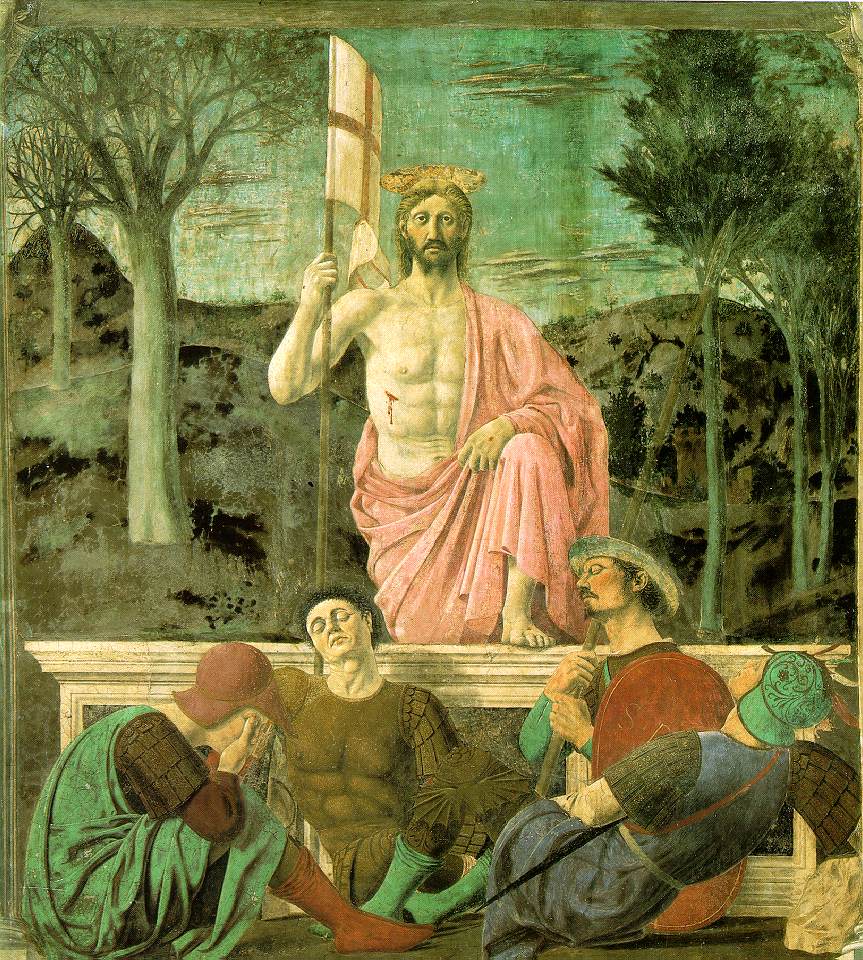
The Resurrection represents the eternal and definitive triumph of Our Lord Jesus Christ, the complete defeat of his adversaries, and the supreme argument of our faith. Saint Paul said that, if Christ had not resurrected, our faith would be vain. The whole edifice of our beliefs is founded on the supernatural fact of the Resurrection. Let us then meditate about this highly elevated subject.
Christ Our Lord was not resurrected: He resurrected. He was dead. Lazarus was resurrected. Someone other than him, in this case, Our Lord, called him back to life. As for the Divine Redeemer, no one resurrected Him. He resurrected Himself, needing no one to call Him back to life. He took his life back when He so willed.
Everything that is said about Our Lord can be analogically applied to the Holy Catholic Church. We often see, in the history of the Church, that precisely when She seemed irremediably lost and all the symptoms of catastrophe seemed to undermine Her, events took place that kept Her alive against all the expectations of Her adversaries. A rather curious fact is that sometimes it is the Church’s enemies that come to Her aid, rather than Her friends. For example, in a most sensitive time period for Catholicism like Napoleon’s era, an extremely unusual episode took place: a conclave was convened for the election of Pius VII under the protection of Russian troops, all of them schismatic and under the command of a schismatic sovereign. In Russia itself, the practice of the Catholic religion was curbed in a thousand ways. Yet, in Italy, Russian troops ensured the free election of a Sovereign Pontiff precisely at the moment when a vacancy in the See of Peter would have caused such grievous damages for Holy Church that, humanly speaking, she might never have been able to overcome them.
Such are the marvelous means that Divine Providence employs to demonstrate that God has the supreme government of all things. However, let us not think that the Church owed Her salvation to Constantine, Charlemagne, John of Austria, or Russian troops. Even when She seems to be entirely abandoned and when She lacks the most indispensable natural resources for survival, let us be certain that Holy Church will not die. Like Our Lord, She will rise with Her own, divine strength. And the more inexplicable the seeming resurrection of the Church may be from the human standpoint (we say seeming, because, unlike Our Lord, the Church will never die a real death), the more glorious Her victory will be.
In these murky and sad days, let us thus confide. However, in order to restore all things in the Kingdom of Christ, let us confide not in this or that power, man, or ideological current but in Divine Providence, which will once again force the sea to open wide, move mountains and cause the whole earth to tremble if necessary to fulfill the divine promise: “The gates of Hell shall not prevail against Her.”
Wednesday, January 19, 2011
Small Symptoms of a Great Transformation
(The following commentary is by Dr. Plinio)
 In this newspaper column, we always seek to look beyond the evident transformation of the forms and colors. We look for the more subtle transformations in mentalities, attitudes and values that are symbolized and expressed in forms and colors. Thus, analyzing the three uniforms shown here in this light, we reach the following conclusion.
According to the doctrine of the divine origin of power, those who legitimately exercise functions of authority do so in the name of God. The legitimate holder of authority, whatever his title or position, does so because of a power that comes to him from on high. This power transcends man himself and dignifies those who command and those who obey. However, this transcendence should be expressed in a perceptible form. Therefore, the symbols of power should be appropriate to inspire respect. And when the position employs the use of a uniform, it should have the distinction corresponding to the function of whoever is wearing it.
This concept obviously applies, par excellence, to the supreme magistrates. However, it also applies to a lesser degree to offices that participate in public authority even though in a very secondary way.
 This view of authority is contrary to the exquisitely revolutionary doctrine of popular sovereignty. This holds that since the power comes from below, it does not confer any superiority upon the person holding the office. Thus, those who exercise power should use symbols and, if it be the case, uniforms that manifest their absolute equality with those below them.
Because of its seriousness, distinction, and sobriety, the first uniform of the Civil Guard of Sao Paulo, obeys the first principle cited above. The second uniform already reflects an obvious concern towards attenuating the marks of superiority of the first. And, finally, the third uniform goes yet farther than the second in increasing this tendency. Thus, we see a small manifestation of the large gust of pagan and egalitarian naturalism that, in these cataclysmic days, is sweeping the universe.
Monday, January 3, 2011
The Three Kings - By Dr. Plinio
The following is a commentary about the Three Kings by Dr. Plinio
The feast of the Epiphany, the adoration of Our Lord in Bethlehem by the “Magi from the East” (Matthew 7), shows us the value of representation and symbolism in the plans of Divine Providence.
It is generally said that the Three Magi came to adore Our Lord as representatives of the Gentile peoples. It is also common to say that they were magi because they represented the ancient wisdom of the East paying homage to Our Lord Jesus Christ. Magus, a word derived from the Greek, means a man of a great wisdom. The Three Magi came from different parts of the world to adore Our Lord as a sign that all nations were called to the light of the Faith.
Many progressivists and Protestants have expressed misgivings that they were kings. I do not see any reason for such doubt since Scripture foretold that Kings from different parts of the world would come to adore the Messiah (Psalm 2:10-12; 71:10-11; Is 60:11; 62:2).
At any rate, they were men from different races representing the old world and ancient wisdom who came to adore Our Lord and pay Him homage with gifts of gold, frankincense and myrrh. They traveled to Bethlehem moved by a very noble cause. According to their wise previsions and an interior call they received from God, they knew that the Messiah had been born.
This interior call shows us that God Himself chose them as representatives of the Gentile peoples. They fulfilled the vocation for which they were called, and on the Epiphany they paid homage to Our Lord. Each King who was present at the Manger kneeling before the Divine Infant represented his own personal fidelity, of course, but he also represented the fidelity of all the past kings as well as all the kings to come in History. They were only three, but they fulfilled that representation.
We find something similar in the Passion and at the foot of the Cross. Our Lady, St. John, and the Holy Women represented everyone who had been, was, or would be faithful through the ages. For example, every faithful soul in History is represented by the act of Veronica wiping the Holy Face of Our Lord. The select group that was faithful on that solemn occasion represented the whole genre of faithful people.
We can ask if we can apply this rule to ourselves. Today the Catholic Church is humiliated by her own authorities, persecuted by Progressivism within her walls, immersed in the worst confusion that has ever fallen over her in History. We are just a few who want to remain faithful to the Church as she always was and to restore her to her past glory. In a certain way, we represent fidelity, purity, orthodoxy, courage, and the spirit of initiative and battle at the very moment when everything pressures everyone to give up, to step back, to flee.
Whom are we representing? In this new crucifixion of Our Lord, which is the crucifixion of the Church, we represent the faithful of the past who rest in the peace of the Lord and loved the Church. If St. Gregory VII, St. Louis of France, St. Ferdinand of Castile, St. Louis Grignon de Montfort, or Blessed Nuno Alvares could have seen in their times the crisis through which the Church is passing now and the few souls who would remain faithful, they would have blessed us from that distance. They would have considered themselves our cohorts and felt a relief that at least there were some small number doing what they would like to do.
The feast of the Epiphany, the adoration of Our Lord in Bethlehem by the “Magi from the East” (Matthew 7), shows us the value of representation and symbolism in the plans of Divine Providence.
It is generally said that the Three Magi came to adore Our Lord as representatives of the Gentile peoples. It is also common to say that they were magi because they represented the ancient wisdom of the East paying homage to Our Lord Jesus Christ. Magus, a word derived from the Greek, means a man of a great wisdom. The Three Magi came from different parts of the world to adore Our Lord as a sign that all nations were called to the light of the Faith.
Many progressivists and Protestants have expressed misgivings that they were kings. I do not see any reason for such doubt since Scripture foretold that Kings from different parts of the world would come to adore the Messiah (Psalm 2:10-12; 71:10-11; Is 60:11; 62:2).
At any rate, they were men from different races representing the old world and ancient wisdom who came to adore Our Lord and pay Him homage with gifts of gold, frankincense and myrrh. They traveled to Bethlehem moved by a very noble cause. According to their wise previsions and an interior call they received from God, they knew that the Messiah had been born.
This interior call shows us that God Himself chose them as representatives of the Gentile peoples. They fulfilled the vocation for which they were called, and on the Epiphany they paid homage to Our Lord. Each King who was present at the Manger kneeling before the Divine Infant represented his own personal fidelity, of course, but he also represented the fidelity of all the past kings as well as all the kings to come in History. They were only three, but they fulfilled that representation.
We find something similar in the Passion and at the foot of the Cross. Our Lady, St. John, and the Holy Women represented everyone who had been, was, or would be faithful through the ages. For example, every faithful soul in History is represented by the act of Veronica wiping the Holy Face of Our Lord. The select group that was faithful on that solemn occasion represented the whole genre of faithful people.
We can ask if we can apply this rule to ourselves. Today the Catholic Church is humiliated by her own authorities, persecuted by Progressivism within her walls, immersed in the worst confusion that has ever fallen over her in History. We are just a few who want to remain faithful to the Church as she always was and to restore her to her past glory. In a certain way, we represent fidelity, purity, orthodoxy, courage, and the spirit of initiative and battle at the very moment when everything pressures everyone to give up, to step back, to flee.
Whom are we representing? In this new crucifixion of Our Lord, which is the crucifixion of the Church, we represent the faithful of the past who rest in the peace of the Lord and loved the Church. If St. Gregory VII, St. Louis of France, St. Ferdinand of Castile, St. Louis Grignon de Montfort, or Blessed Nuno Alvares could have seen in their times the crisis through which the Church is passing now and the few souls who would remain faithful, they would have blessed us from that distance. They would have considered themselves our cohorts and felt a relief that at least there were some small number doing what they would like to do.
We also are representing those unknown faithful souls spread throughout the world today who are smashed by Progressivism inside the Church and do not know what to do or where to go to be faithful. They would like to do what we are doing.
Finally, we are representing those who will come after us and who will be enthused when they look back and see what we are doing now. They will wish that they could have been with us now to assist us.
In History some of these representations are quite impressive. For example, when St. Remigius was teaching King Clovis and his men the Catholic Faith to prepare them for Baptism and they heard about the Passion of Our Lord, Clovis cried out loudly and drove his lance in the ground saying: “Would that I were there with my Franks to prevent such an injustice!”
As he spoke, his Frankish warriors pounded their lances on the ground to signal their acquiescence. They did not realize it, but in a certain sense they were present at the Passion. For during it, Our Lord foresaw that action of Clovis and his Franks and it gave Him consolation.
There is, therefore, a kind of reversibility of action beyond time, where all the past and future fidelities converge in a single, grandiose scene that represents them all.
Today, Our Lady is like a prisoner who is insulted and ill-treated by men, and especially by the progressivist religious authorities. She came to warn mankind at La Salette and Fatima about this general apostasy in the Church. Her words were not heard. She also wept in various places – Syracuse, Rocca Corneta, New Orleans, Granada. Her tears beseech the few who remain faithful to save her from the horrible suffering of this passion of the Holy Church. It is an honor to be called to act at this extraordinary hour. If we correspond to this call, we will be wiping the holy face of Our Lady, as Veronica did for Our Lord, and we will be representing every faithful soul throughout History.
This doctrine of how a few persons can represent a whole genre, which we see in the adoration of the Three Magi, should encourage us. Let us ask them, who certainly are in Heaven with Our Lord, to give us the courage that we need:
* the courage to stand alone, as they did in the pagan world;
* the courage to wait for the appearance of a star, the signal that the hour of God has arrived for us to carry out His will;
* and the courage to do so promptly and with complete fidelity, as they did.
Finally, we are representing those who will come after us and who will be enthused when they look back and see what we are doing now. They will wish that they could have been with us now to assist us.
In History some of these representations are quite impressive. For example, when St. Remigius was teaching King Clovis and his men the Catholic Faith to prepare them for Baptism and they heard about the Passion of Our Lord, Clovis cried out loudly and drove his lance in the ground saying: “Would that I were there with my Franks to prevent such an injustice!”
As he spoke, his Frankish warriors pounded their lances on the ground to signal their acquiescence. They did not realize it, but in a certain sense they were present at the Passion. For during it, Our Lord foresaw that action of Clovis and his Franks and it gave Him consolation.
There is, therefore, a kind of reversibility of action beyond time, where all the past and future fidelities converge in a single, grandiose scene that represents them all.
Today, Our Lady is like a prisoner who is insulted and ill-treated by men, and especially by the progressivist religious authorities. She came to warn mankind at La Salette and Fatima about this general apostasy in the Church. Her words were not heard. She also wept in various places – Syracuse, Rocca Corneta, New Orleans, Granada. Her tears beseech the few who remain faithful to save her from the horrible suffering of this passion of the Holy Church. It is an honor to be called to act at this extraordinary hour. If we correspond to this call, we will be wiping the holy face of Our Lady, as Veronica did for Our Lord, and we will be representing every faithful soul throughout History.
This doctrine of how a few persons can represent a whole genre, which we see in the adoration of the Three Magi, should encourage us. Let us ask them, who certainly are in Heaven with Our Lord, to give us the courage that we need:
* the courage to stand alone, as they did in the pagan world;
* the courage to wait for the appearance of a star, the signal that the hour of God has arrived for us to carry out His will;
* and the courage to do so promptly and with complete fidelity, as they did.
Sunday, December 26, 2010
And the Word was made flesh
(The following is a commentary by Dr. Plinio)
And the Word was made flesh, and dwelt among us, and we saw His glory, the glory as it were of the Only Begotten of the Father, full of grace and truth."
Thus does Saint John's Gospel (1:14) announce the ineffably grand moment when the Son of God "dwelt among us" in order to manifest His glory.
Yet, how discreet, how humble, how hidden was this first step taken by the King of the universe along His path of suffering, struggle, and triumph!
Let us meditate on the Nativity of Our Lord Jesus Christ with the Gospel of Saint Luke (2:1-7).
And it came to pass that in those days there went out a decree from Caesar Augustus, that the whole world should be enrolled. This enrolling was first made by Cyrinus, the governor of Syria.
And all went to be enrolled, everyone into his own city.
And Joseph also went up from Galilee, out of the city of Nazareth into Judea, to the city of David, which is called Bethlehem, because he was of the house and family of David, to be enrolled with Mary, his espoused wife, who was with child.
And it came to pass that when they were there, her days were accomplished, that she should be delivered. And she brought forth her firstborn son, wrapped Him in swaddling clothes and laid Him in a manger because there was no room for them in the inn.
Let us picture a poor wedded couple, dressed with simplicity and bound for Bethlehem, crossing the arid countryside of the Holy Land, an aridity alleviated only by a few streams and olive groves. Mary travels seated on a young donkey, while Joseph proceeds on foot pondering the words of the angel who revealed to him the miraculous character of his virgin spouse's pregnancy.
As they reach Bethlehem, the winter night falls. But no one receives them, "because there was no room for them in the inn."
Is it for them that there is no room, since they have no prestige? Prestige commonly comes, especially in decadent times, from money and concessions to the vices of the times and the spirit of the "world" (this spirit being understood in the sense the Gospels give it). But this holy couple is poor and gifted with a highly religious spirit -- virtues the "worldly" find particularly detestable.
Nevertheless, Saint Joseph and Our Lady descend from the highest lineage of Bethlehem of Judea. Saint Joseph is a prince of the House of David, and Our Lady likewise descends from the kings of Judea.
However, so decadent are the Chosen People that in their eyes Saint Joseph is nothing but a poor carpenter, while Our Lady, his relatively well-off cousin, has chosen to share his poverty.
What are they doing in Bethlehem?
They are obeying the decree of the Roman Emperor, Caesar Augustus, who, certainly for vanity's sake, had ordered a census to ascertain how many were subject to his power.
The Prince of the House of David, in travelling to the city of his birth, manifests the glory of the foreign emperor. Saint Joseph is conquered, Caesar Augustus is the conqueror, and Bethlehem fails to recognize her illustrious children.
"He came unto his own, and his own received him not" (John 1:11). Mary and Joseph, bearing the very Son of God, are rejected by their own people and are thus obliged to seek shelter in a cave inhabited by animals. So it is in the intimacy and isolation of that dwelling place for beasts that history's most important event up till that time unfolds: the Word of God made flesh in the most pure womb of Mary comes into the world.
* * *
Thus does one understand the kind of joy proper to the Nativity. A great solitude and deprivation, but at the same time,a great elevation. For over such misery descended riches without name, riches unlike any others on the face of the earth. The Child-God was wrapped in swathes of cloth and lying in a manger where animals feed.
None, save that couple, witness or know how to appreciate this scene of indescribable grandeur.
The highest glory is there present in a tender child who, crying, hungry and cold, extends his little arms towards his mother, requesting a little milk or a blanket to be covered. And Our Lady knows that it is the Creator who opens his arms unto her! The Sovereign of the universe cries, beseeching a bit of milk and warm clothing!
We can imagine the contrast between the supernatural ambience and the poverty of the grotto. There the Child Jesus is adored by all the angels in a magnificent choir, the celestial court celebrating the greatest feast up to then. Angels and Archangels, Cherubim and Seraphim, all with extraordinary brilliance give glory to God through the Nativity. That glory permeates the grotto discreetly, for it is necessary that those outside not take note, that only souls of faith perceive what is happening and only in intimacy. Our Lady is there reclining and praying as the most perfect soul in the history of mankind, save only for the divine Person of Our Lord Jesus Christ.
For Our Lady alone is worth more than all the souls before her, during her time and thereafter; more than all who existed, exist, and will exist until the end of the world. She alone is worth more than all the angels.
A short distance away, praying to the Child-God and to Our Lady, is the humble cabinetmaker, the deposed prince, obscured by history and by the misfortunes that befell his ancestors. That man received an honor proper to no one else: He was chosen to be the spouse of the mother of the Word Incarnate, the adoptive father of the very Son of God!
* * *
This takes place at midnight, when little moved in the ancient world. We can imagine the silence, the abandonment. The inhabitants of the nearby city of Bethlehem comfortably rest in their beds. Outside, even the livestock sleep while the Divine Infant is born. Everything is empty and darkness reigns. Only within that grotto does a small light flicker. Only that couple is there, they and the Child Jesus, the King of ages, the God-Man Himself.
This divine event takes place before few. The greatest of honors is born and resides entirely in a frail infant. The most important historical event up to that time comes to pass in secret. In such a way that the sole witnesses to that august scene desire to meditate, to remain silent, with more desire to feel the Nativity within themselves than to proclaim it in a loud and clear voice. It is the affectionate reverence of those who feel inadequate to render gratitude for the extraordinary honor of touching, in such an intimate way, so high a mystery coupled with pity and compassion for a God who consented to make Himself so small. How to express respect so great that it approaches fear, and tenderness so profound that it seems almost to liquefy the soul? Lofty veneration, then lofty adoration, finally, lofty tenderness.
This also seems to explain the nocturnal aspect of the Nativity. We cannot conceive of it taking place except at night. For darkness is necessary for radiating so discreet a light. Therein we find the joy characteristic of Christmas that hesitates to expand itself for fear of losing its delicacy and intimacy.
* * *
Thus does one understand why such Christmas carols such as "Stille Nacht" ("Silent Night") are customarily sung in a low voice, almost as if to oneself. They are sung as if not to awaken the Child Jesus. This is one aspect of the genius of "Stille Nacht," composed by a simple German schoolmaster in the last century, yet now the preeminent Christmas carol of all ages. Hearing it we have the impression that the choir is in a corner of the cave of Bethlehem. The choir sings with such emotion, for it almost cannot help it, yet in a very low voice, so as not to disturb the Divine Infant nor the ineffable and almost internal song with which Our Lady is lulling her Son.
In this way one understands the thousand delicacies that emanate from "Silent Night" and the tenderness of the Nativity. It is a song expressive of a kind of compassion for Him who is being celebrated: How little this infinite God; how infinite this little God!
Centuries of Christian civilization were necessary that the most celebrated of Christmas songs might blossom like a flower in the Catholic Church.
And the Word was made flesh, and dwelt among us, and we saw His glory, the glory as it were of the Only Begotten of the Father, full of grace and truth."
Thus does Saint John's Gospel (1:14) announce the ineffably grand moment when the Son of God "dwelt among us" in order to manifest His glory.
Yet, how discreet, how humble, how hidden was this first step taken by the King of the universe along His path of suffering, struggle, and triumph!
Let us meditate on the Nativity of Our Lord Jesus Christ with the Gospel of Saint Luke (2:1-7).
And it came to pass that in those days there went out a decree from Caesar Augustus, that the whole world should be enrolled. This enrolling was first made by Cyrinus, the governor of Syria.
And all went to be enrolled, everyone into his own city.
And Joseph also went up from Galilee, out of the city of Nazareth into Judea, to the city of David, which is called Bethlehem, because he was of the house and family of David, to be enrolled with Mary, his espoused wife, who was with child.
And it came to pass that when they were there, her days were accomplished, that she should be delivered. And she brought forth her firstborn son, wrapped Him in swaddling clothes and laid Him in a manger because there was no room for them in the inn.
Let us picture a poor wedded couple, dressed with simplicity and bound for Bethlehem, crossing the arid countryside of the Holy Land, an aridity alleviated only by a few streams and olive groves. Mary travels seated on a young donkey, while Joseph proceeds on foot pondering the words of the angel who revealed to him the miraculous character of his virgin spouse's pregnancy.
As they reach Bethlehem, the winter night falls. But no one receives them, "because there was no room for them in the inn."
Is it for them that there is no room, since they have no prestige? Prestige commonly comes, especially in decadent times, from money and concessions to the vices of the times and the spirit of the "world" (this spirit being understood in the sense the Gospels give it). But this holy couple is poor and gifted with a highly religious spirit -- virtues the "worldly" find particularly detestable.
Nevertheless, Saint Joseph and Our Lady descend from the highest lineage of Bethlehem of Judea. Saint Joseph is a prince of the House of David, and Our Lady likewise descends from the kings of Judea.
However, so decadent are the Chosen People that in their eyes Saint Joseph is nothing but a poor carpenter, while Our Lady, his relatively well-off cousin, has chosen to share his poverty.
What are they doing in Bethlehem?
They are obeying the decree of the Roman Emperor, Caesar Augustus, who, certainly for vanity's sake, had ordered a census to ascertain how many were subject to his power.
The Prince of the House of David, in travelling to the city of his birth, manifests the glory of the foreign emperor. Saint Joseph is conquered, Caesar Augustus is the conqueror, and Bethlehem fails to recognize her illustrious children.
"He came unto his own, and his own received him not" (John 1:11). Mary and Joseph, bearing the very Son of God, are rejected by their own people and are thus obliged to seek shelter in a cave inhabited by animals. So it is in the intimacy and isolation of that dwelling place for beasts that history's most important event up till that time unfolds: the Word of God made flesh in the most pure womb of Mary comes into the world.
* * *
Thus does one understand the kind of joy proper to the Nativity. A great solitude and deprivation, but at the same time,a great elevation. For over such misery descended riches without name, riches unlike any others on the face of the earth. The Child-God was wrapped in swathes of cloth and lying in a manger where animals feed.
None, save that couple, witness or know how to appreciate this scene of indescribable grandeur.
The highest glory is there present in a tender child who, crying, hungry and cold, extends his little arms towards his mother, requesting a little milk or a blanket to be covered. And Our Lady knows that it is the Creator who opens his arms unto her! The Sovereign of the universe cries, beseeching a bit of milk and warm clothing!
We can imagine the contrast between the supernatural ambience and the poverty of the grotto. There the Child Jesus is adored by all the angels in a magnificent choir, the celestial court celebrating the greatest feast up to then. Angels and Archangels, Cherubim and Seraphim, all with extraordinary brilliance give glory to God through the Nativity. That glory permeates the grotto discreetly, for it is necessary that those outside not take note, that only souls of faith perceive what is happening and only in intimacy. Our Lady is there reclining and praying as the most perfect soul in the history of mankind, save only for the divine Person of Our Lord Jesus Christ.
For Our Lady alone is worth more than all the souls before her, during her time and thereafter; more than all who existed, exist, and will exist until the end of the world. She alone is worth more than all the angels.
A short distance away, praying to the Child-God and to Our Lady, is the humble cabinetmaker, the deposed prince, obscured by history and by the misfortunes that befell his ancestors. That man received an honor proper to no one else: He was chosen to be the spouse of the mother of the Word Incarnate, the adoptive father of the very Son of God!
* * *
This takes place at midnight, when little moved in the ancient world. We can imagine the silence, the abandonment. The inhabitants of the nearby city of Bethlehem comfortably rest in their beds. Outside, even the livestock sleep while the Divine Infant is born. Everything is empty and darkness reigns. Only within that grotto does a small light flicker. Only that couple is there, they and the Child Jesus, the King of ages, the God-Man Himself.
This divine event takes place before few. The greatest of honors is born and resides entirely in a frail infant. The most important historical event up to that time comes to pass in secret. In such a way that the sole witnesses to that august scene desire to meditate, to remain silent, with more desire to feel the Nativity within themselves than to proclaim it in a loud and clear voice. It is the affectionate reverence of those who feel inadequate to render gratitude for the extraordinary honor of touching, in such an intimate way, so high a mystery coupled with pity and compassion for a God who consented to make Himself so small. How to express respect so great that it approaches fear, and tenderness so profound that it seems almost to liquefy the soul? Lofty veneration, then lofty adoration, finally, lofty tenderness.
This also seems to explain the nocturnal aspect of the Nativity. We cannot conceive of it taking place except at night. For darkness is necessary for radiating so discreet a light. Therein we find the joy characteristic of Christmas that hesitates to expand itself for fear of losing its delicacy and intimacy.
* * *
Thus does one understand why such Christmas carols such as "Stille Nacht" ("Silent Night") are customarily sung in a low voice, almost as if to oneself. They are sung as if not to awaken the Child Jesus. This is one aspect of the genius of "Stille Nacht," composed by a simple German schoolmaster in the last century, yet now the preeminent Christmas carol of all ages. Hearing it we have the impression that the choir is in a corner of the cave of Bethlehem. The choir sings with such emotion, for it almost cannot help it, yet in a very low voice, so as not to disturb the Divine Infant nor the ineffable and almost internal song with which Our Lady is lulling her Son.
In this way one understands the thousand delicacies that emanate from "Silent Night" and the tenderness of the Nativity. It is a song expressive of a kind of compassion for Him who is being celebrated: How little this infinite God; how infinite this little God!
Centuries of Christian civilization were necessary that the most celebrated of Christmas songs might blossom like a flower in the Catholic Church.
Saturday, December 25, 2010
Gathered ‘Round the Manger - Christmas 2010
(The following article is by Dr. Plinio. The blog author wishes all my reader a Grace filled Christmas. I pray that the Our Lord finds a home in your hearts)
Lord, once again Christmas approaches. Christianity hastens anew to adore Thee in the manger at Bethlehem, where Thou can be seen by the light of the twinkling star of Bethlehem or under the brighter and more splendorous light of Mary’s maternal and sweet gaze. Saint Joseph stands nearby, so captivated by Thee that he seems to take notice neither of the animals that surround Thee nor of the angels who have opened the heavens and can be heard and seen singing in the highest. In a short while, the Magi will arrive with their entourage, laden with gifts of gold, frankincense and myrrh. Through the centuries, others will also come to venerate Thy crib: from India, Ancient Nubia, Macedonia, Rome, Carthage, and Spain; Gauls, Franks, Germans, Angles, Saxons, and Normans.
Both pilgrims and crusaders will come from the West to kiss the ground of the cave where Thou were born. Thy manger will be venerated all over the earth. In the great Gothic or Romanesque cathedrals, multitudes will gather around Thee, offering Thee presents of gold, silver, incense, and above all the piety and sincerity of their hearts.
Then will come the period of the Western discoveries in which the benefits of Thy Redemption will reach new lands. Incas, Aztecs, natives of various tribes, blacks from African shores or further inland, bronze-skinned Indians, slender and pensive Chinese, short and agile Japanese all will gather around Thy crib and adore Thee. The star of Bethlehem now shines over the whole world. All peoples have heard the angelic promise, and all across the earth hearts of goodwill have found the inestimable treasure of Thy peace. Overcoming all obstacles, the Gospel has finally spread to people all over the world. In the midst of contemporary desolation, this great gathering of people from all nations and races around Thee is our only consolation and our only hope. Kneeling before Thee, we count ourselves among them. Look kindly on us, Lord, and have pity on us. There is something we would like to say.
Who are we? We are those who will not kneel before the modern Baal. We carry Thy law engraved upon the bronze of our hearts and do not allow the errors of our times to become engraved upon this bronze sanctified by Thy Redemption. We love the immaculate purity of orthodoxy above all else and reject any pact whatsoever with heresy, its wiles and infiltrations. We are merciful to the repentant sinner since, owing to our unworthiness and infidelity, we count ourselves among that number and we implore Thy mercy. We spare no criticism, either, of insolent and conceited impiety or of strutting vice that scorns virtue. We pity all men, particularly the blessed who suffer persecution for love of the Church, who are oppressed everywhere because they hunger and thirst for virtue; who are abandoned, ridiculed, betrayed, and disdained because they remain faithful to Thy Commandments.
Many are those whose suffering is not celebrated in contemporary literature: the Christian mother who will pray alone before Thy crib because her children no longer practice the Faith; the strong yet austere husband who is misunderstood or even loathed by his own because of his fidelity to Thy teachings; the faithful wife who bears the solitude of heart and soul because her husband’s frivolous habits have led to adultery, he who should be her support, her “other half ”; the pious son or daughter who, while Christian homes are celebrating, sense how in their own home and family life, religion has been stifled by egotism, hedonism and secularism; the student who is shunned and mocked by his classmates because of his fidelity to Thee; the professor who is eschewed by colleagues because he will not condone their errors; the parish priest or bishop around whom a menacing wall of misunderstanding or indifference has been raised because he refuses to compromise the integrity of the doctrine entrusted to his care; the honest man made penniless for refusing to swindle.
All of these isolated people, scattered across the globe, ignorant of each other, now gather around Thee to offer Thee a gift and a prayer. Their gift exceeds the sun and the stars, the oceans with all its riches, and the earth in all its splendor: they give themselves entirely and faithfully. By preferring complete orthodoxy over approval, purity over popularity among the impure, honesty over gold; by remaining faithful to Thy law even when this entails sacrificing career and fame, they attain perfection in their spiritual life by practicing love of God above all things, which is a sincere and lasting love. Such love differs greatly from love as it is understood nowadays, which predominantly consists of gushy and illogical feelings, senseless and blurry affections, obscure self-condescension and trite justifications to appease one’s conscience.
Instead theirs is true love, enlightened by Faith, justified by reason, seriousness, chastity and perseverance. In a word, theirs is love of God. They also offer a prayer for Thy holy and immaculate Church whom they love above all else in this world: for the pastors and the flock; foremost, for the pastor of pastors of the flock, that is for Peter, whom today we call Benedict.
May the Church, which now moans as a captive in the dungeons of this anti-Christian “civilization,” finally triumph over this era of sin and implant a new civilization for Thy greater glory. May the saintly become ever holier, may the good be sanctified, may sinners become good, and may the impious convert. May the impenitent who have rejected grace and are jeopardizing souls be dispersed, humbled, and their efforts frustrated. May the souls in Purgatory rise to Heaven straight away. They also pray for themselves: may their orthodoxy be ever purer, their purity ever more rigorous. May they be more faithful amidst adversity, stand ever taller amidst humiliations, be more energetic in their struggles. May they be more terrible to the impious, yet more compassionate toward those who, ashamed of their sins, strive seriously to overcome them and acclaim virtue publicly.
Finally, they pray for Thy Grace, without which no will can durably persevere in good, and no soul can be saved; may it be more abundant in proportion to the number of their miseries and infidelities.
Lord, once again Christmas approaches. Christianity hastens anew to adore Thee in the manger at Bethlehem, where Thou can be seen by the light of the twinkling star of Bethlehem or under the brighter and more splendorous light of Mary’s maternal and sweet gaze. Saint Joseph stands nearby, so captivated by Thee that he seems to take notice neither of the animals that surround Thee nor of the angels who have opened the heavens and can be heard and seen singing in the highest. In a short while, the Magi will arrive with their entourage, laden with gifts of gold, frankincense and myrrh. Through the centuries, others will also come to venerate Thy crib: from India, Ancient Nubia, Macedonia, Rome, Carthage, and Spain; Gauls, Franks, Germans, Angles, Saxons, and Normans.
Both pilgrims and crusaders will come from the West to kiss the ground of the cave where Thou were born. Thy manger will be venerated all over the earth. In the great Gothic or Romanesque cathedrals, multitudes will gather around Thee, offering Thee presents of gold, silver, incense, and above all the piety and sincerity of their hearts.
Then will come the period of the Western discoveries in which the benefits of Thy Redemption will reach new lands. Incas, Aztecs, natives of various tribes, blacks from African shores or further inland, bronze-skinned Indians, slender and pensive Chinese, short and agile Japanese all will gather around Thy crib and adore Thee. The star of Bethlehem now shines over the whole world. All peoples have heard the angelic promise, and all across the earth hearts of goodwill have found the inestimable treasure of Thy peace. Overcoming all obstacles, the Gospel has finally spread to people all over the world. In the midst of contemporary desolation, this great gathering of people from all nations and races around Thee is our only consolation and our only hope. Kneeling before Thee, we count ourselves among them. Look kindly on us, Lord, and have pity on us. There is something we would like to say.
Who are we? We are those who will not kneel before the modern Baal. We carry Thy law engraved upon the bronze of our hearts and do not allow the errors of our times to become engraved upon this bronze sanctified by Thy Redemption. We love the immaculate purity of orthodoxy above all else and reject any pact whatsoever with heresy, its wiles and infiltrations. We are merciful to the repentant sinner since, owing to our unworthiness and infidelity, we count ourselves among that number and we implore Thy mercy. We spare no criticism, either, of insolent and conceited impiety or of strutting vice that scorns virtue. We pity all men, particularly the blessed who suffer persecution for love of the Church, who are oppressed everywhere because they hunger and thirst for virtue; who are abandoned, ridiculed, betrayed, and disdained because they remain faithful to Thy Commandments.
Many are those whose suffering is not celebrated in contemporary literature: the Christian mother who will pray alone before Thy crib because her children no longer practice the Faith; the strong yet austere husband who is misunderstood or even loathed by his own because of his fidelity to Thy teachings; the faithful wife who bears the solitude of heart and soul because her husband’s frivolous habits have led to adultery, he who should be her support, her “other half ”; the pious son or daughter who, while Christian homes are celebrating, sense how in their own home and family life, religion has been stifled by egotism, hedonism and secularism; the student who is shunned and mocked by his classmates because of his fidelity to Thee; the professor who is eschewed by colleagues because he will not condone their errors; the parish priest or bishop around whom a menacing wall of misunderstanding or indifference has been raised because he refuses to compromise the integrity of the doctrine entrusted to his care; the honest man made penniless for refusing to swindle.
All of these isolated people, scattered across the globe, ignorant of each other, now gather around Thee to offer Thee a gift and a prayer. Their gift exceeds the sun and the stars, the oceans with all its riches, and the earth in all its splendor: they give themselves entirely and faithfully. By preferring complete orthodoxy over approval, purity over popularity among the impure, honesty over gold; by remaining faithful to Thy law even when this entails sacrificing career and fame, they attain perfection in their spiritual life by practicing love of God above all things, which is a sincere and lasting love. Such love differs greatly from love as it is understood nowadays, which predominantly consists of gushy and illogical feelings, senseless and blurry affections, obscure self-condescension and trite justifications to appease one’s conscience.
Instead theirs is true love, enlightened by Faith, justified by reason, seriousness, chastity and perseverance. In a word, theirs is love of God. They also offer a prayer for Thy holy and immaculate Church whom they love above all else in this world: for the pastors and the flock; foremost, for the pastor of pastors of the flock, that is for Peter, whom today we call Benedict.
May the Church, which now moans as a captive in the dungeons of this anti-Christian “civilization,” finally triumph over this era of sin and implant a new civilization for Thy greater glory. May the saintly become ever holier, may the good be sanctified, may sinners become good, and may the impious convert. May the impenitent who have rejected grace and are jeopardizing souls be dispersed, humbled, and their efforts frustrated. May the souls in Purgatory rise to Heaven straight away. They also pray for themselves: may their orthodoxy be ever purer, their purity ever more rigorous. May they be more faithful amidst adversity, stand ever taller amidst humiliations, be more energetic in their struggles. May they be more terrible to the impious, yet more compassionate toward those who, ashamed of their sins, strive seriously to overcome them and acclaim virtue publicly.
Finally, they pray for Thy Grace, without which no will can durably persevere in good, and no soul can be saved; may it be more abundant in proportion to the number of their miseries and infidelities.
Sunday, December 19, 2010
Expectation of Our Lady - Dr. Plinio
Expectation of Our Lady
December 19 begins the last week of Advent, which the Church calls the Week of Expectation. We are only one week away from the Birth of Our Lord, and the Church imagines the jubilation and hope of Our Lady in expectation of her parturition: she was waiting to admire the Blessed Face of the Son she was generating in her womb.
Our Lady had begged God to hasten the coming of the Messiah, God heard her omnipotent prayer, and Incarnation in fact was anticipated. She was invited to be the Mother of the Word. She accepted, and conceived the Incarnate Word in her womb. In this last week of her gestation, she awaits with expectation seeing the Face of her Son, so that she might have a more profound knowledge of His soul and His full personality.
She also awaits the salvation of the world that approaches. She sees the hour coming when the glory of God will cease to be offended by the legacy of original sin. The Devil’s reign that dominated for more than 4,000 years is drawing to its end. She senses that the Reign of Our Lord Jesus Christ is near. Only one week is lacking for the birth of the Word that marks the beginning of the end of the reign of the Devil. It was definitely destroyed when Our Lord was immolated on the Cross and the Redemption was consummated.
These considerations filled the heart of Our Lady with hope. That is why during this period of waiting she is called Our Lady of the Expectation, Our Lady of the Hope or Our Lady of the O!, since on each of the seven days before Christmas there is an antiphon in the liturgy that the Church attributes to her. All of these antiphons begin with the exclamation – O! – and continue with adapted words of the Old Testament that refer to the birth of Our Lord and His Redemption.
These antiphons, called the "Greater Antiphons" or the "O Antiphons," are the following:
Antiphon 1: O Wisdom! Thou came forth from the mouth of the Most High and, reaching from beginning to end, Thou ordered all things mightily and sweetly. Come, and teach us the way of prudence.
Antiphon 2: O Adonai, Ruler of the House of Israel! Thou appeared to Moses in the fire of the burning bush and on Mount Sinai gave him Thy law. Come to redeem us with the strength of Thy arm.
Antiphon 3: O Root of Jesse! Thou stand as a sign for all peoples; before Thee kings shall keep silence and to Thee all nations shall have recourse. Come, save us, and do not delay.
Antiphon 4: O Key of David, Scepter of the House of Israel! Thou doth open and no man closes; Thou doth close and no man opens. Come, and deliver from the chains of prison those who sit in darkness and in the shadow of death.
Antiphon 5: O Rising Dawn, Radiance of the Light eternal and Sun of Justice! Come and enlighten those who sit in darkness and in the shadow of death.
Antiphon 6: O King of the Gentile, the Awaited One of all! Thou are the cornerstone that binds two into one. Come, and save man whom Thou fashioned out of clay.
Antiphon 7: O Emmanuel, our King and Lawgiver, the Hope and Salvation of the nations! Come and save us, O Lord our God.
The O Antiphons suggest to us some thoughts.
When the encyclical Divini Redemptoris of Pius XI against Communism was published in 1937, the Pontiff noted in it that the world was in such a bad state that it was in danger of falling to a state lower than it was before the Redemption. And indeed, we can say that it fell. From 1937 to this date, the catastrophe has happened. The many evils described by Pius XI have only increased since his time. The world redeemed by Jesus Christ is now at a lower state than before His coming.
In this situation we long for a restoration so radical that is similar to a redemption. We hope for a renewal of the fruits of Redemption applied to the needs of our times. We have need of the punishment of those who despise Our Lord and have infiltrated into the deepest recesses of His Church. If they could, they would destroy her. We also call for those who can convert to be regenerated and reconciled with Our Lord. We need the Reign of Mary to be implanted.
So, for us, in the days that precede Christmas, these antiphons should express an appeal and a plea to the Infant Jesus to hasten a stronger and more triumphant and invincible action to re-implant His Kingdom on earth - with Mary, in Mary and through Mary.
We should ask Our Lady to obtain this from her Son. We also should ask her to increase our hope that this will happen. In this way, we will pass this week in expectation of these graces as Our Lady was waiting for the graces of the Our Lord’s coming before the feast of Christmas.
December 19 begins the last week of Advent, which the Church calls the Week of Expectation. We are only one week away from the Birth of Our Lord, and the Church imagines the jubilation and hope of Our Lady in expectation of her parturition: she was waiting to admire the Blessed Face of the Son she was generating in her womb.
Our Lady had begged God to hasten the coming of the Messiah, God heard her omnipotent prayer, and Incarnation in fact was anticipated. She was invited to be the Mother of the Word. She accepted, and conceived the Incarnate Word in her womb. In this last week of her gestation, she awaits with expectation seeing the Face of her Son, so that she might have a more profound knowledge of His soul and His full personality.
She also awaits the salvation of the world that approaches. She sees the hour coming when the glory of God will cease to be offended by the legacy of original sin. The Devil’s reign that dominated for more than 4,000 years is drawing to its end. She senses that the Reign of Our Lord Jesus Christ is near. Only one week is lacking for the birth of the Word that marks the beginning of the end of the reign of the Devil. It was definitely destroyed when Our Lord was immolated on the Cross and the Redemption was consummated.
These considerations filled the heart of Our Lady with hope. That is why during this period of waiting she is called Our Lady of the Expectation, Our Lady of the Hope or Our Lady of the O!, since on each of the seven days before Christmas there is an antiphon in the liturgy that the Church attributes to her. All of these antiphons begin with the exclamation – O! – and continue with adapted words of the Old Testament that refer to the birth of Our Lord and His Redemption.
These antiphons, called the "Greater Antiphons" or the "O Antiphons," are the following:
Antiphon 1: O Wisdom! Thou came forth from the mouth of the Most High and, reaching from beginning to end, Thou ordered all things mightily and sweetly. Come, and teach us the way of prudence.
Antiphon 2: O Adonai, Ruler of the House of Israel! Thou appeared to Moses in the fire of the burning bush and on Mount Sinai gave him Thy law. Come to redeem us with the strength of Thy arm.
Antiphon 3: O Root of Jesse! Thou stand as a sign for all peoples; before Thee kings shall keep silence and to Thee all nations shall have recourse. Come, save us, and do not delay.
Antiphon 4: O Key of David, Scepter of the House of Israel! Thou doth open and no man closes; Thou doth close and no man opens. Come, and deliver from the chains of prison those who sit in darkness and in the shadow of death.
Antiphon 5: O Rising Dawn, Radiance of the Light eternal and Sun of Justice! Come and enlighten those who sit in darkness and in the shadow of death.
Antiphon 6: O King of the Gentile, the Awaited One of all! Thou are the cornerstone that binds two into one. Come, and save man whom Thou fashioned out of clay.
Antiphon 7: O Emmanuel, our King and Lawgiver, the Hope and Salvation of the nations! Come and save us, O Lord our God.
The O Antiphons suggest to us some thoughts.
When the encyclical Divini Redemptoris of Pius XI against Communism was published in 1937, the Pontiff noted in it that the world was in such a bad state that it was in danger of falling to a state lower than it was before the Redemption. And indeed, we can say that it fell. From 1937 to this date, the catastrophe has happened. The many evils described by Pius XI have only increased since his time. The world redeemed by Jesus Christ is now at a lower state than before His coming.
In this situation we long for a restoration so radical that is similar to a redemption. We hope for a renewal of the fruits of Redemption applied to the needs of our times. We have need of the punishment of those who despise Our Lord and have infiltrated into the deepest recesses of His Church. If they could, they would destroy her. We also call for those who can convert to be regenerated and reconciled with Our Lord. We need the Reign of Mary to be implanted.
So, for us, in the days that precede Christmas, these antiphons should express an appeal and a plea to the Infant Jesus to hasten a stronger and more triumphant and invincible action to re-implant His Kingdom on earth - with Mary, in Mary and through Mary.
We should ask Our Lady to obtain this from her Son. We also should ask her to increase our hope that this will happen. In this way, we will pass this week in expectation of these graces as Our Lady was waiting for the graces of the Our Lord’s coming before the feast of Christmas.
Subscribe to:
Posts (Atom)