Evil triumphs when good men do nothing - Edmund Burke
Showing posts with label Sacred Heart of Jesus. Show all posts

Friday, June 19, 2009

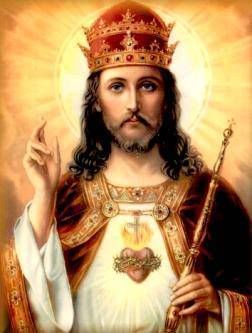
Act of Consecration to the Sacred Heart


Act of Consecration to the Sacred Heart

O Sacred Heart of Jesus, to Thee I consecrate and offer up my person and my life, my actions, trials, and sufferings, that my entire being may henceforth only be employed in loving, honoring and glorifying Thee. This is my irrevocable will, to belong entirely to Thee, and to do all for Thy love, renouncing with my whole heart all that can displease Thee.

I take Thee, O Sacred Heart, for the sole object of my love, the protection of my life, the pledge of my salvation, the remedy of my frailty and inconstancy, the reparation for all the defects of my life, and my secure refuge at the hour of my death. Be Thou, O Most Merciful Heart, my justification before God Thy Father, and screen me from His anger which I have so justly merited. I fear all from my own weakness and malice, but placing my entire confidence in Thee, O Heart of Love, I hope all from Thine infinite Goodness. Annihilate in me all that can displease or resist Thee. Imprint Thy pure love so deeply in my heart that I may never forget Thee or be separated from Thee.
I beseech Thee, through Thine infinite Goodness, grant that my name be engraved upon Thy Heart, for in this I place all my happiness and all my glory, to live and to die as one of Thy devoted servants.

Amen.

Sunday, February 15, 2009

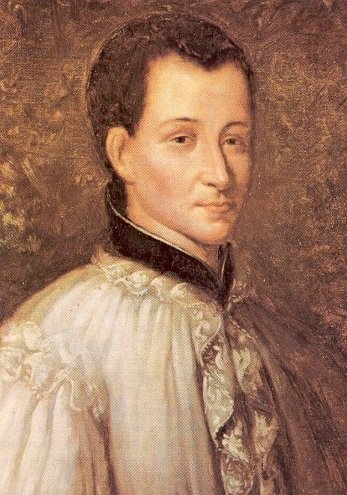
St. Claude la Colombiere - 15th Febraury 2009


This is a special day for the Jesuits, who claim today’s saint as one of their own. It’s also a special day for people who have a special devotion to the Sacred Heart of Jesus—a devotion Claude la Colombière promoted, along with his friend and spiritual companion, St. Margaret Mary Alacoque. The emphasis on God’s love for all was an antidote to the rigorous moralism of the Jansenists, who were popular at the time.

He was the third child of the notary Bertrand La Colombière and Margaret Coindat, was born on 2nd February 1641 at St. Symphorien d'Ozon in the Dauphine, southeastern France. After the family moved to Vienne Claude began his early education there, completing his studies in rhetoric and philosophy in Lyon.

It was during this period that Claude first sensed his vocation to the religious life in the Society of Jesus. We know nothing of the motives which led to this decision. We do know, however, from one of his early notations, that he "had a terrible aversion for the life embraced". This affirmation is not hard to understand by any who are familiar with the life of Claude, for he was very close to his family and friends and much inclined to the arts and literature and an active social life. On the other hand, he was not a person to be led primarily by his sentiments.

At 17 he entered the Jesuit Novitiate at Avignon. In 1660 he moved from the Novitiate to the College, also in Avignon, where he pronounced his first vows and completed his studies in philosophy. Afterwards he was professor of grammar and literature in the same school for another five years.

In 1666 he went to the College of Clermont in Paris for his studies in theology. Already noted for his tact, poise and dedication to the humanities, Claude was assigned by superiors in Paris the additional responsibility of tutoring the children of Louis XIV's Munster of Finance, Jean Baptiste Colbert.

His theological studies concluded and now a priest, Claude returned to Lyon. For a time he was teacher in the College, then full-time preacher and moderator of several Marian congregations.

Claude became noted for solid and serious sermons. They were ably directed at specific audiences and, faithful to their inspiration from the gospel, communicated to his listeners serenity and confidence in God. His published sermons produced and still produce significant spiritual fruits. Given the place and the short duration of his ministry, his sermons are surprisingly fresh in comparison with those of better-known orators.

The year 1674 was a decisive one for Claude, the year of his Third Probation at Maison Saint-Joseph in Lyon. During the customary month of the Exercises the Lord prepared him for the mission for which he had been chosen. His spiritual notes from this period allow one to follow step-by-step the battles and triumphs of the spirit, so extraordinarily attracted to everything human, yet so generous with God.

He took a vow to observe all the constitutions and rules of the Society of Jesus, a vow whose scope was not so much to bind him to a series of minute observances as to reproduce the sharp ideal of an apostle so richly described by St. Ignatius. So magnificent did this ideal seem to Claude that he adopted it as his program of sanctity. That it was indeed an invitation from Christ himself is evidenced by the subsequent feeling of interior liberation Claude experienced, along with the broadened horizons of the apostolate he witnesses to in his spiritual diary.

On 2nd February 1675 he pronounced his solemn profession and was named rector of the College at Paray-le-Monial. Not a few people wondered at this assignment of a talented young Jesuit to such an out-of the-way place as Paray. The explanation seems to be in the superiors' knowledge that there was in Paray an unpretentious religious of the Monastery of the Visitation, Margaret Mary Alacoque, to whom the Lord was revealing the treasures of his Heart, but who was overcome by anguish and uncertainty. She was waiting for the Lord to fulfill his promise and send her "my faithful servant and perfect friend" to help her realize the mission for which he had destined her: that of revealing to the world the unfathomable riches of his love.

After Father Colombière's arrival and her first conversations with him, Margaret Mary opened her spirit to him and told him of the many communications she believed she had received from the Lord. He assured her he accepted their authenticity and urged her to put in writing everything in their regard, and did all he could to orient and support her in carrying out the mission received. When, thanks to prayer and discernment, he became convinced that Christ wanted the spread of the devotion to his Heart, it is clear from Claude's spiritual notes that he pledged himself to this cause without reserve. In these notes it is also clear that, even before he became Margaret Mary's confessor, Claude's fidelity to the directives of St. Ignatius in the Exercises had brought him to the contemplation of the Heart of Christ as symbol of his love.

After a year and half in Paray, in 1676 Father La Colombière left for London. He had been appointed preacher to the Duchess of York - a very difficult and delicate assignment because of the conditions prevailing in England at the time. He took up residence in St. James Palace in October.

In addition to sermons in the palace chapel and unremitting spiritual direction both oral and written, Claude dedicated his time to giving thorough instruction to the many who sought reconciliation with the Church they had abandoned. And even if there were great dangers, he had the consolation of seeing many reconciled to it, so that after a year he said: "I could write a book about the mercy of God I've seen Him exercise since I arrived here!"

The intense pace of his work and the poor climate combined to undermine his health, and evidence of a serious pulmonary disease began to appear. Claude, however, made no changes in his work or life style.

Of a sudden, at the end of 1678, he was calumniously accused and arrested in connection with the Titus Oates "papist plot". After two days he was transferred to the severe King's Bench Prison where he remained for three weeks in extremely poor conditions until his expulsion from England by royal decree. This suffering further weakened Claude's health which, with ups and downs, deteriorated rapidly on his return to France.

During the summer of 1681 he returned to Paray, in very poor condition. On 15th February 1682, the first Sunday of Lent, towards evening Claude suffered the severe hemorrhage which ended his life.

On the 16th of June 1929 Pope Pius XI beatified Claude La Colombière, whose charism, according to St. Margaret Mary Alacoque, was that of bringing souls to God along the gospel way of love and mercy which Christ revealed to us.
Friday, October 17, 2008

St. Margaret Mary Alacoque – 17 October 2008


The devotion to the Sacred Heart of Jesus comes to us from St Margaret Mary Alcoque. Let us read what Dr. Plinio Correa has to say about this great saint.

St. Margaret Mary Alacoque (1647-1690) received revelations of the Sacred Heart of Jesus and spread this devotion.

Comments of Prof. Plinio:

There is a post-history to report about the revelations of the Sacred Heart to St. Margaret Mary that concerns our times.

You know that the Sacred Heart of Jesus appeared to St. Margaret Mary in an epoch when the revolutionary process was already well advanced. From a certain point of view, it was an irreversible process. The Middle Ages had ended, even though some remnants of the old medieval social body were still present and going forward. It was also true that the corruption of customs had entered on all fronts, and with it, the revolution in the ideas. You can get a notion of the situation by studying the life of St. Louis Grignion de Montfort and some of his writings where he describes the apostasy of his times. It was a tragic picture,a precursor to the French Revolution.

At that historic moment, the Sacred Heart of Jesus intervened, manifesting Himself to a religious woman of the Visitation Order, who was St. Margaret-Mary Alacoque. He told her that He was opening a new source of graces for souls, devotion to His Sacred Heart. Whoever practiced this devotion would have more abundant and generous graces than in the past. It was a way to attract souls to conversion. This devotion took root and expanded within the Church, reaching its apex in the 19th century until 1925, that is, the early pontificate of Pius XI.

This devotion has been very well studied by various theologians and great doctors, among them St. John Eudes, who promoted it vigorously. It was well-received by Popes – Leo XIII made the consecration of the world to the Sacred Heart of Jesus. Churches built in cities everywhere in the 19th and early 20th centuries were dedicated to the Sacred Heart of Jesus. It was a splendid devotion that did a great deal of good for souls.

This devotion began to be opposed on two fronts in the first years of the pontificate of Pius XI. This Modernism condemned by St. Pius X did not die, but entered a period of lethargy. Around 1924 or 1925 the same modernist heresy started to rear its head under the titles of Catholic Action and the liturgical movement. Many members of these movements started to combat devotion to the Sacred Heart in two different ways.

The first way, venomous but not the most efficient, was that in Catholic Action and liturgical milieus it began to be whispered that this devotion was sentimental and somehow effeminate, lacking theological content and acceptable only to poorly formed Catholics. If a person argued that the devotion had been approved by the Church, that St. Margaret Mary and St. John Eudes had been canonized, he would be put out of these movements. There was, therefore, a kind of defamatory campaign made against the devotion of the Sacred Heart.

Second, there was a more dangerous maneuver, which was to bury this devotion in a dense layer of silence. The devotion stopped being promoted and fell into oblivion. Churches were no longer built in honor of the Sacred Heart. The special devotions made in June, the month dedicated to the Sacred Heart, ceased to be promoted in many parishes. New devotions with suspicious theological content began to circulate.

Today, devotion to the Sacred Heart has almost completely disappeared in the Church. Like so many others, it was put aside, another treasure that almost no one pays attention to. It is a source of graces that Divine Providence opened to save the world, and it is abandoned.

When I was in France in the late ‘50s, I went to visit Paray-le-Monial, which is where the Sacred Heart appeared to St. Margaret-Mary. In times past, it was a very popular pilgrimage site. I found it empty and abandoned; almost no one was in the church, even though it was a good season.

In the front of the church was a Catholic bookstore that should have been spreading that devotion. I went there to buy a souvenir for my mother, who was a great devotee of the Sacred Heart, and didn’t find anything worthwhile. Instead I found some very beautiful souvenir cards with phrases of Rousseau and Voltaire. The great enemies of the Church were being promoted instead of the Sacred Heart. I was profoundly shocked to find such impious things in a place established by Our Lord for the salvation of the souls. To think that ingratitude had reached such a point.

The fact reminded me of the invocation from the Litany of the Sacred Heart, Cor Jesu, lancea perforatum – Miserere nobis; Sacred Heart of Jesus, pierced by the lance, have mercy on us. The Heart so filled with goodness, mercy, and forgiveness, the Vessel of all possible perfections that opened Itself to men, is perforated by mankind with a lance.

This rejection of the devotion to the Sacred Heart is more blameworthy than that of the centurion who perforated the Heart of the crucified Christ, from which blood and water poured out. The centurion was partially blind and when he pierced the Heart of Our Lord with his lance, some of that water and blood fell on him and cured him, and he converted.

Today an analogous sin is being committed by the Catholic world, but there is no blood and water that cures its blindness. The blind are leading the blind, and each day they are walking further into the abyss that you know.

Let us implore the Sacred Heart of Jesus through St. Margaret Mary Alacoque that this situation end, and that both a new Christendom and a restored Holy Mother Church be reinstalled on this earth.

Monday, October 13, 2008

Prayer of Thanksgiving to the Sacred Heart of Jesus

On this thanksgiving day let us give thanks to God the father for the most Sacred and Precious Heart of Jesus.


O Word of God,
dear Jesus our Redeemer,
we adore Thee and with hearts over-flowing
we thank Thee for having taken human flesh upon Thee
and become for our redemption both Priest and Victim
in the sacrifice of the Cross,
a sacrifice which,
through the exceeding love of Thy Sacred Heart,
Thou dost renew upon our altars at every moment.
O High Priest,
O Divine Victim,
give us the grace to honour Thy holy sacrifice
in the most adorable Eucharist
with the homage of Mary most holy
and of all Thy holy Church,
triumphant, suffering and militant.
We offer ourselves wholly to Thee;
of Thine infinite goodness and mercy
do Thou accept our offering,
unite it to Thine own
and grant us Thy blessing.

Glory be to the Father,
and to the Son,
and to the Holy Ghost.
As it was in the beginning,
is now,
and ever shall be,
world without end.