Thursday, April 28, 2011
Christians: Witnesses of Easter's New Path - Pope Benedict XVI
"In his Epistle to the Colossians, St. Paul says 'If then you were raised with Christ, seek what is above, where Christ is seated at the right hand of God. Think of what is above, not of what is on earth'". However, Benedict XVI emphasized, the apostle "is far from inviting Christians, any of us, to shun the world in which God has placed us. It is true that we are citizens of another 'city', our true home, but the path toward this goal must be traversed every day in this land. To participate, from this moment, in the life of the resurrected Christ, we must live as new men and women in this world, at the heart of this earthly city".
"This is the path", the Holy Father continued, "to transform not only ourselves but also to transform the world, to give the city a new face that favors the development of humankind and society within the logic of solidarity, goodness, and profound respect for the dignity proper to each ... Easter offers the newness of a profound and complete passage from a life subject to the slavery of sin to a life of freedom, inspired by love, the force that breaks down barriers and builds new harmony in our hearts and in our relationships with others and with things".
Every Christian, just as every community, "that lives the experience of this passage to the Resurrection, cannot help but be new leaven in the world giving themselves without reserve to the most urgent and just causes, as seen by the witness of the saints in every age and place. The expectations of our time are also great: believing firmly that the resurrection of Christ has renewed humankind without separating it from the world in which it builds its history, we Christians must be the radiant witnesses of Easter's new path".
"Easter is, therefore, a gift that must be welcomed in faith more deeply each time, to work in any situation with the grace of Christ, according to the logic of God, the logic of love", the pontiff concluded.
Wednesday, April 27, 2011
Resurrection Gives Strength to Human Hope - Pope Benedict XVI

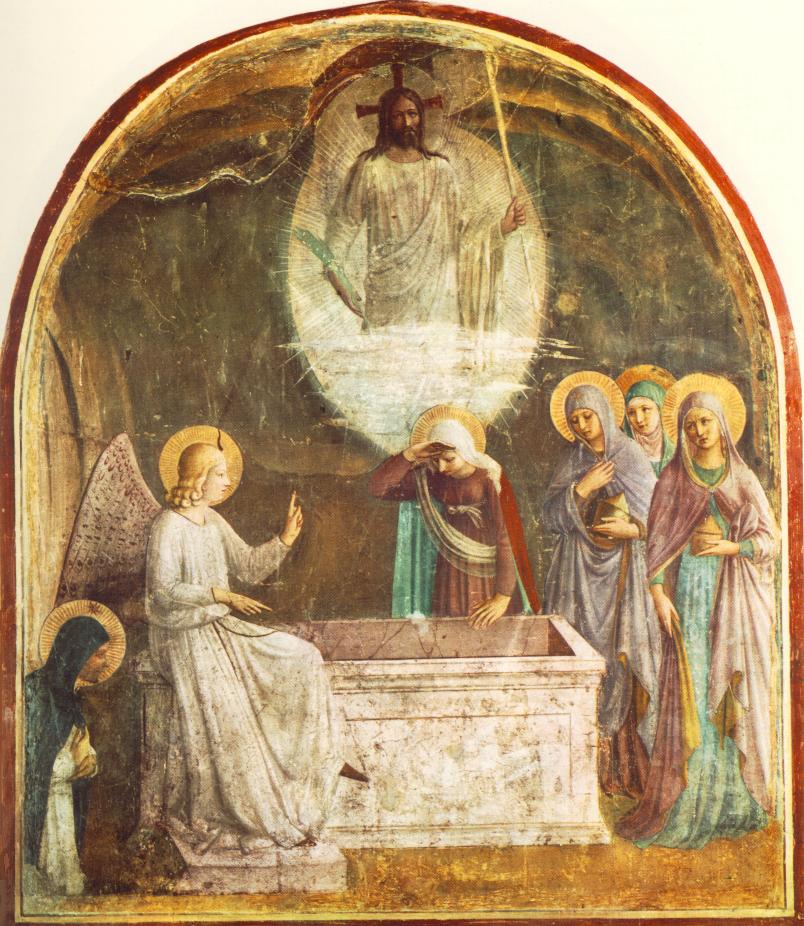
"Easter morning brings us news that is ancient yet ever new: Christ is risen! The echo of this event, which issued forth from Jerusalem twenty centuries ago, continues to resound in the Church, deep in whose heart lives the vibrant faith of Mary, Mother of Jesus, the faith of Mary Magdalene and the other women who first discovered the empty tomb, and the faith of Peter and the other Apostles".
"Just as the sun's rays in springtime cause the buds on the branches of the trees to sprout and open up, so the radiance that streams forth from Christ's resurrection gives strength and meaning to every human hope, to every expectation, wish and plan. Hence the entire cosmos is rejoicing today, caught up in the springtime of humanity, which gives voice to creation's silent hymn of praise. The Easter Alleluia, resounding in the Church as she makes her pilgrim way through the world, expresses the silent exultation of the universe and above all the longing of every human soul that is sincerely open to God, giving thanks to him for his infinite goodness, beauty and truth".
"'In your resurrection, O Christ, let heaven and earth rejoice.' To this summons to praise, which arises today from the heart of the Church, the 'heavens' respond fully: the hosts of angels, saints and blessed souls join with one voice in our exultant song. In heaven all is peace and gladness. But alas, it is not so on earth! Here, in this world of ours, the Easter Alleluia still contrasts with the cries and laments that arise from so many painful situations: deprivation, hunger, disease, war, violence. Yet it was for this that Christ died and rose again! He died on account of sin, including ours today, he rose for the redemption of history, including our own. So my message today is intended for everyone, and, as a prophetic proclamation, it is intended especially for peoples and communities who are undergoing a time of suffering, that the Risen Christ may open up for them the path of freedom, justice and peace".
"May the Land which was the first to be flooded by the light of the Risen One rejoice. May the splendour of Christ reach the peoples of the Middle East, so that the light of peace and of human dignity may overcome the darkness of division, hate and violence. In the current conflict in Libya, may diplomacy and dialogue take the place of arms and may those who suffer as a result of the conflict be given access to humanitarian aid. In the countries of northern Africa and the Middle East, may all citizens, especially young people, work to promote the common good and to build a society where poverty is defeated and every political choice is inspired by respect for the human person".
"May help come from all sides to those fleeing conflict and to refugees from various African countries who have been obliged to leave all that is dear to them; may people of good will open their hearts to welcome them, so that the pressing needs of so many brothers and sisters will be met with a concerted response in a spirit of solidarity; and may our words of comfort and appreciation reach all those who make such generous efforts and offer an exemplary witness in this regard".
"May peaceful coexistence be restored among the peoples of Ivory Coast, where there is an urgent need to tread the path of reconciliation and pardon, in order to heal the deep wounds caused by the recent violence. May Japan find consolation and hope as it faces the dramatic consequences of the recent earthquake, along with other countries that in recent months have been tested by natural disasters which have sown pain and anguish".
"May heaven and earth rejoice at the witness of those who suffer opposition and even persecution for their faith in Jesus Christ. May the proclamation of his victorious resurrection deepen their courage and trust".
Tuesday, October 28, 2008
St. Narcissus of Jerusalem - 29 October 2008
Eusebius assures us, that the Christians of Jerusalem preserved in his time the remembrance of several miracles which God had wrought by this holy bishop; one of which he relates as follows. One year on Easter-eve the deacons were unprovided with oil for the lamps in the church, necessary at the solemn divine office that day. Narcissus ordered those who had care of the lamps to bring him some water from the neighboring wells. This being done, he pronounced a devout prayer over the water; then bade them pour it into the lamps; which they did, and it was immediately converted into oil, to the great surprise of the faithful. Some of this miraculous oil was kept there as a memorial at the time when Eusebius wrote his history.
We do know that Narcissus became bishop of Jerusalem in the late second century. He was known for his holiness, but there are hints that many people found him harsh and rigid in his efforts to impose church discipline. One of his many detractors accused Narcissus of a serious crime at one point. Though the charges against him did not hold up, he used the occasion to retire from his role as bishop and live in solitude. His disappearance was so sudden and convincing that many people assumed he had actually died.
Several successors were appointed during his years in isolation. Finally, Narcissus reappeared in Jerusalem and was persuaded to resume his duties. Bending under the weight of extreme old age, made St. Alexander his coadjutor. This primitive example authorizes the practice of coadjutorships; which, nevertheless, are not allowable by the canons except in cases of the perpetual inability of a bishop through age, incurable infirmity, or other impediment as Marianus Victorius observes in his notes upon St. Jerome. St. Narcissus continued to serve his flock, and even other churches, by his assiduous prayers and his earnest exhortations to unity and concord, as St. Alexander testifies in his letter to the Arsinoites in Egypt, where he says that Narcisus was at that time about one hundred and sixteen years old.Sunday, May 23, 2010
The descent of the Holy Spirit on Mary and the Apostles - Mons João Clá Dias
The descent of the Holy Spirit on Mary and the Apostles
"The Spirit of the Lord filled the entire universe, he holds together all things and knows all Alleluia! - (Sb 1, 7)
Introduction:
For three years our Lord had prepared the apostles and disciples, for the great mission to spread the gospel throughout the world. Imagine the largest and most renowned teachers, the wisest and most capable that history has known, does not compare with Jesus Christ, who besides being the Master Teacher, God, the Second Person of the Holy Trinity, the incarnate Word of God, the God-man, he is the very Wisdom Incarnate.
The Divine Master had given them the doctrine, the power to forgive sins, the power to perform miracles; therefore they had all the elements to fulfill the great mission, however, they felt insecure, because it is not proportionate to that thought. So waiting for the special assistance that had been promised by our Lord: "you will receive power of the Holy Spirit has come in you and are witnesses to the ends of the earth: (Acts 1:8). We then gathered before our eyes, gathered in prayer in the Cenacle, the Virgin Mary, Holy Mother of God, the 12 Apostles, over 120 students waiting for the Counselor for excellence and dispenser of heavenly gifts.
Prayer Starter:
Come Holy Spirit, fill the hearts of your faithful and kindle in them the fire of your love! O Holy Spirit descended into the upper room on the apostles and their disciples, operating on them the most wonderful transformation, come on us with the abundance of your gifts and fruits ... Purify our hearts from everything that separates us from Thee.
Oh! Blessed Mother, Queen of Apostles, Virgin and Spouse of the Holy Spirit we will begin this meditation to make reparation to your Immaculate Heart, in the certainty of its complete triumph. We beg you, Madam, give us a spark of your love to meditate on this mystery of Pentecost.
Amen.
I - The origin of the feast of Pentecost.
It is originally a Jewish feast that was celebrated fifty days after Easter.
This feast was established by Moses, to remember the liberation of the Jewish people from bondage in Egypt. On this occasion, God told the Hebrews to sacrifice a lamb, from Egypt toward the promise land... It was a pre-figure of the Lamb of God - Jesus Christ - commemorated in the New Law, which would free men from the bondage of sin. On the fiftieth day after Easter, the party offering the first fruits of harvest - Pentecost - gave up the descent of the Holy Spirit.
Andon the day of Pentecost, they were all together in one place and suddenly there came from heaven a noise like a rushing wind blowing, and filled the whole house where they were.
Some appeared to them divided tongues of fire like which rested on each one. They were all filled with the Holy Spirit and began to speak several languages as the Spirit gave them utterance. (Acts 2, 1-4)
This coming of the Holy Spirit, brought to the church an extraordinary event. It has lent strength to the Church of Christ to overcome the obstacles by which they had to pass: The Apostles had to face death, would face lack of human respect, would have to bear witness to Jesus Christ in the midst of the greatest persecution, the greatest repulsions, suffer horrors of all kinds and therefore needed strength.
The Church as a tender baby ... The Church was born, it was forming, it was still like a baby, it had not yet reached adulthood. It correlates with what is happening at the Sacrament of Confirmation. When we receive the baptism, we begin to participate in the divine life we receive graces and gifts that are infused into our souls. However we do not have sufficient fortitude, temperance and so many other gifts and virtues to face adversity. And so that is how it was the early Church, gathered around the Cenacle of Our Lady, the Apostles were extremely fearful.
We must remember that when Jesus was resurrected and appeared in the Upper Room, He found the doors and windows locked because of the fear that something bad might happen to them (the apostles). Our Risen Lord said three times: Peace be with you! This peace that only reaches its fullness coma descent of the Holy Spirit.
II-The signs of the descent of the Holy Spirit
The effects of the descent of the Holy Spirit are impressive: It is heard as a strange noise, coming from the
sky, like that of a rushing mighty wind, while on the head of each apostle rested a tongue of fire.
The noise that comes from heaven, a mighty wind, signifies the fullness of the gifts that He would bring, such fullness, making the apostles suitable for the works of God. They receive the impetus of love and at the same time is manifest the greatness of God.
The Holy Spirit descends with his gifts filling the apostles with comfort, excitement, they feel transformed. It was what, centuries later, St. Therese of Child Jesus said: "To love nothing is impossible!"
They were full of God's Love, they who were once fearful of the high mission which they had been given, are now full of eagerness, enthusiasm, or filled with God.
St. Cyril of Alexandria, says of the transformation that took place: "Easily the Spirit makes the move from love of earthly things to the hope of heavenly realities, and the fear and indecision to the strength of strong and generous soul. This was the case with the disciples, animated and strengthened by the spirit, never to be intimidated by Her pursuers, remaining inseparably united and faithful to the love of Christ.
1 - Mary, Queen of Apostles, Mother of the Church.
When the Angel Gabriel appeared to Mary and announced to her a dignity more sublime than all the grandeur created: to be the Mother of God, on this occasion the Blessed Virgin received the fullness of grace and unspeakable that demanded perfection. Mary received both the noble and difficult mission to contribute to the redemption of mankind, that guaranteed Him lights, gifts, privileges offered to this important vocation. Now, at the time that the Church was to be revealed to the world,
spreading the Gospel, etc.. It was essential that She also received a new fullness of the Holy Spirit to be the Mother of the Mystical Body of Christ.
2 - The tongues of fire!
The most characteristic is that it is appropriate to register the tongues of fire. They had to preach and it symbolizes that the facility would have to express, to explain the doctrine of Our Lord, the ability to proclaim, to illustrate, to point, to teach the way of salvation. We know the first preaching of St. Peter, a beautiful sermon, whose results were 3,000 people converted. The Church is born with three thousand baptized on this day of Pentecost.
3 - How was this fire!
In daily life, we know the fire produced by cooking gas, for firewood in the oven, etc.. And we feel that this is the fire that exists in hell fire and took this as a bad thing harmful, like a fire that scorches. It happens that the fire of hell has no fuel material, it is sustained by God Himself. The same happens with the fire of Purgatory. But the fire of the earth can be useful, because what would we be if we did not have the fire in our lives, how would we make our meals? For these reasons some believe that in heaven there is no fire.
According to some theologians, the heavenly paradise there is fire and that fire from heaven is all beautiful, beneficent, is rejuvenating a fire, a fire is extraordinarily charitable benefit to us, the fire in the sky is fragrant!
The fire, made of light and heat, was the best element to symbolize the burning itself to restoring and exciting action of the Holy Spirit. By hovering over the heads of Mary and the others present, the flames were presented in the form of tongues of fire. In them we see the flames symbolized that the preaching of those men would pose. Thus, these tongues of fire that descended upon the Apostles is fire from heaven, carrying highly charitable, they symbolize the gift of eloquence, charm, enthusiasm, fervor that they should have to convert all peoples.
4 - strong wind,
The "strong wind" can be seen as the arrival of the flood of grace which were being poured, flooding to flush the fire room of the Cenacle. Where effective and mystical graces overabundant that "invaded" the room, pointing to the fullness of faith and love which suited the heralds of the Word of God. In addition to auditory phenomenon, and perhaps sensitive, there have been some perfume? The idea seems plausible.
III-Send forth your Spirit Creator!
The modern world is in a stunning decline. Men seem to be deaf to the voice of the Holy Spirit and if ever fall deeper into sin and forgetfulness of God, we see so much evil, violence and horrors of all kinds making progress scary. Enough that we beseige Our Lord, the prayers of Mary, send the Spirit of Truth and Love on Earth to be reversed this situation and the complete defeat the powers of hell.
Therefore, the Church in the person of his faithful, pray for twenty centuries the prayer of the Psalmist:
"Send forth your Spirit and renew the face creator of the earth"
What wonders what could still come after this event? If in the first coming there were so many beauties of culture and civilization, and especially so many miracles of grace - witness the long cohort of martyrs, confessors, virgins and doctors who already enjoy in eternity - what would happen if there was a new lease of the Paraclete on earth?
That is why we beg, insist that the Holy Spirit to restore order and renew the face of the earth, to close this meditation in reparation to the Immaculate Heart of Mary
Closing Prayer
Oh! Queen of Apostles, Queen of Peace, our heavenly Mother full of the love of God, we contemplate in this meditation the key role of this mystery of Pentecost, as Mediatrix of God which has been the coming of the Third Person of the Trinity so magnificent that transformed all the Apostles, the disciples and began the Holy Catholic Church. However, Madam, today we are in a worse situation than those times, all that Thou ask Thou received, now also ask, ask the Bride of the Holy Spirit and that He will come to convert sinful humanity so we can sing and proclaim rejoicing the song of your victory: your Immaculate Heart triumphed!
Amen!
Sunday, May 1, 2011
Bl. Pope John Paul II - Apostle of Divine Mercy
This year's feast of Divine Mercy -- coinciding with the end of the Easter Octave -- lands today, since Easter was so late this year. And thus the feast falls on the first day of Mary's month.
On various occasions, Cardinal Joseph Ratzinger proposed that the fundamental element of Pope John Paul II's legacy in the Church is his understanding of Divine Mercy as the factor limiting human evil.
Celebrating the Polish Pope's funeral, Cardinal Ratzinger reflected that the Holy Father "interpreted for us the paschal mystery as a mystery of divine mercy. In his last book, he wrote: The limit imposed upon evil 'is ultimately Divine Mercy' (Memory and Identity, pp. 60-61). And reflecting on the assassination attempt, he said: 'In sacrificing himself for us all, Christ gave a new meaning to suffering, opening up a new dimension, a new order: the order of love ... It is this suffering which burns and consumes evil with the flame of love and draws forth even from sin a great flowering of good' (pp. 189-190)."
The cardinal added: "Divine Mercy: the Holy Father found the purest reflection of God’s mercy in the Mother of God. He, who at an early age had lost his own mother, loved his divine mother all the more. He heard the words of the crucified Lord as addressed personally to him: 'Behold your Mother.' And so he did as the beloved disciple did: 'he took her into his own home' (eis ta idia: Jn 19:27) – Totus tuus. And from the mother he learned to conform himself to Christ."
The mystery of evil
Karol Wojtyła suffered the two totalitarian regimes of the 20th century, Communism and Nazism, and asked how God could permit such terrible atrocities.
But while many would point to these evils to deny God's existence or negate his goodness, John Paul II used them to reflect on what God teaches by permitting man's free will to bring about tragedy. And he found an answer in Divine Mercy, as presented in the writings of the Polish mystic, St. Faustina Kowalska (1905-1938).
St. Augustine explains that God never causes evil, but permits it. In creating man with liberty, God accepted the existence of evil. Would it have been better for God not to create man? Or to create him without liberty? No. But then, the Polish youth who would one day take St. Peter's throne asked himself: What can limit evil so that it doesn't have the last word?
John Paul II understood that Divine Mercy is this limit to evil. His mercy does not imply that everyone is saved automatically, thereby negating sin, but rather that God pardons every sinner who allows himself to be pardoned.
And if pardon is the limit to evil (how many lessons could be taken from this truth to overcome war!), then liberty in a sense conditions Divine Mercy. God in some way took a great risk in creating man with freedom. He risked that his love would be rejected and that man would be able to negate the truth of his liberty and kill and abuse his brother. But in answer, God paid the most terrible price: the sacrifice of his only Son. We are the risk of God. But a risk that is overcome with the infinite power of Divine Mercy.
A posthumous message
John Paul II prepared a message for Divine Mercy Sunday of 2005, which he never delivered, since on the eve of the feast he was called to the Father's House.
The text was read at the end of the Mass celebrated that day for the repose of his soul.
"As a gift to humanity, which sometimes seems bewildered and overwhelmed by the power of evil, selfishness and fear, the Risen Lord offers his love that pardons, reconciles and reopens hearts to love. It is a love that converts hearts and gives peace. How much the world needs to understand and accept Divine Mercy," John Paul II had written.
Today's beatification ceremony began with a remembrance of the Polish Pontiff's devotion to God's Mercy. Thousands of pilgrims packed into St. Peter's Square and overflowing through the streets of Rome prayed the Chaplet of Divine Mercy, the devotion promoted by St. Faustina.
The image of Divine Mercy was displayed in front of the Basilica until the beatification Mass began.
Saturday, November 21, 2009
A Sikh Boy who became a Catholic Priest

From devout Sikh to Catholic priest. This is the story of Jaideep Singh, who recently became a Maryknoll missionary, a societies of apostolic life founded in the United States in the early 1900s. Today he is Fr. Stephen James Taluja.
Born in 1981, the youngest child of an important Indian Sikh family, the only male eagerly awaited by his parents after three daughters. Fr. Stephen talks to AsiaNews about his unique and personal story that revolves around his discovery that Christ is the Mighty God "in weakness" and the certainty that "God is faithful."
"My mother was a very devout woman who introduced me to the teachings of the Guru Granth Sahib educated us at home in the prayer and recitation of the hymns of the sacred scriptures. My father accompanied me to the Gurdwara, the Sikh temple, and he raised me in the faith of the almighty. My parents instilled in us children love for God and a sense of service to the community".
The young Jaideep studied at St Stephen's School in Chandigarh, the capital of Punjab. Harold Carver, dean and founder of the institute remembers the young Sikh who "excelled in sports and played in the under 19 national soccer team of the state, loved music and sang in the school choir".
Because of the quality of his singing the little Jaideep was invited to sing at midnight Mass on Easter Eve in the local church of St. Sebastian. He was 13 years old and attending the 7th class. It was the first time he had set foot in a Catholic church making the unusual occasion even more special for the young Sikh. Today, he says: "In that night I have vivid memories of the crucifix hanging on the wall and all the people on their knees praying. I did not understand how people could pray to a weak and dying God. For me, God had to emanate strength and power. And that God was just the opposite. " Fr. Stephen remembers "the charm of the Liturgy of the Eucharist, common prayer and the unveiling of a totally new way for me." He left the Mass with the image of "the cross and crucified Lord" in his head as well as "emerging questions about the meaning of life."
After that night Jadeep began a long journey. "My mother had noticed that there was something new in me and caught my initial interest in Christianity, but did not say anything." Jaideep turned to the rector Carver, putting his questions to him. Which become more insistent, even after the events in the family life of the boy.
The sudden death of his mother made even more urgent the need to understand the meaning of life and death. Fr. Stephen speaks today of the "darkness of soul" recalling that time. "I wondered where God was in all that was happening to me, what was the meaning of life." The patient company of Harold Carver marks the "days of torment" of the young Sikh who recalls: "At some point I began to see the connection between life and death, realizing that Jesus died and rose was the model for us."
The memory of that period, in which anguish was followed by the emergence of faith, is for Fr Stephen motive for "pride and gratitude". "My family had planted in my soul the seed of religion, dean Carver the seed of Catholicism and of a life spent in witness of the Gospel."
Jaideep decides to speak with his father about becoming a Christian. "All hell broke loose. He was annoyed, angry and offended. He called my sisters to ask them for information about my new faith". The young priest now says: "They were really heavy and unsettling days for the whole family ... thus began my personal participation in the passion and crucifixion of Christ."
On March 1, 1999 Jaideep was baptized and chose the name of his school Stephen James. "I became a Catholic in secret and for 3-4 years my family knew nothing. I did not want to hurt them even more, because my father loved me so much and yet did not understand my choices".
The year after Stephen leaves for the United States to study computer science. He lives in New York. To earn some money he works at night at a gas station. Every morning he goes to Mass in the parish named after St. Elizabeth Ann Seton in Shrub Oak. Even there, he sings in the choir and one day the director Patti Copeland introduced Stephen to the Maryknoll missionaries. The young man remembers: "Their stories of aid to the poor around the world were impressed on my young 20 year old mind".
"For some time I felt emerge in me the innate desire to communicate with God, to devote all of myself to contemplation." Stephen believes the roots of this impulse lie in the education he received in his home: "Being Indian, and having received from my mother and our culture a deep sense of divinity I was fascinated by the mystical life in the early days of New York and I had thought of becoming a Trappist monk”.
In 2001, the young Indian was invited to an Easter spiritual retreat and he realises he is being called to consecrated life. Stephen enters the seminary, but does not say nothing yet to his father and sisters, "worried about the pain and stress that the decision might cause to my family."
"It was a period of anxiety in my life," says the boy. "I knew that my father and members of my family were mocked, scorned and humiliated for my decision to become Catholic." Sikh culture attaches great importance to the one male in the family circle. "You have the responsibility to carry on the name of your race, to take care of parents when they grow old - said Stephen - all this and I could no longer do so because of the decision I had taken."
The days of priestly formation pass accompanied by the torture of hurting his loved ones and especially his father. "But God is faithful," says the young man. "I suffered, but I knew that God would give my father a reward far greater than I could hope for."
Stephen studied at St. Xavier University in Chicago, attended the Maryknoll's Language Institute in Cochabamba, Bolivia, and for two years lived and worked in the mission of Aymara, on the Peruvian High Planes.
(Deacon Taluja prostrates himself before the altar during his ordination ceremony. Kindly note that the mass is being said Ad Orientem)On 30 May 2009 he was ordained to the priesthood. Stephen’s three sisters arrive in New York: Anu, Manpreet and Jaipreet, who live in Europe and America. U.S. authorities will not grant a visa to the father. "But it was one of the happiest days of my life," says the young priest. "My dad wanted to be with me and through my sisters gave me his blessing and the sign of his support for my choice. He wanted me to know that he was proud of me and he had reconciled with my vocation. "
On becoming a priest of the Maryknoll missionaries, the young priest began a new life and on the day of his ordination, officiated by Msgr. Timothy Dolan, Archbishop of New York, he received messages of congratulations from hitherto unknown people who had learned of his story through friends or other missionaries. "They wrote that they prayed for me, as I became a priest during his Year for Priests - says Fr Stephen - and I felt honoured and privileged to be a Catholic priest, blessed by the prayers of so many people around the world. All this has made me all the stronger in my desire to be a holy priest and a missionary who serves God by serving his people".
(I received this in my email from mum, I verified it at this website )
Saturday, July 11, 2009
St Benedict Abbot - 11th July 2009
Sent to Rome to be educated, young Benedict was quickly revolted by the licentiousness of his fellow students. He was not yet twenty when he decided to go away from Rome to live in some remote spot. No one knew of his plan except an aged family servant, who loyally insisted on accompanying him to serve his wants. Benedict and this old woman made their way to a village called Enfide, in the Sabine Mountains, some thirty miles from Rome. In the
According to Pope Gregory, the first outsider to find his way to the cave was a priest, who while preparing a special dinner for himself on Easter Sunday heard a voice saying to him: "Thou art preparing thyself a savoury dish while my servant Benedict is afflicted with hunger." The priest immediately set out in search of Benedict, and finally discovered his hiding place. Benedict was astonished, but before he would enter into conversation with his visitor he asked that they might pray together. Then, after they had talked for a time on heavenly things, the priest invited Benedict to eat, telling him that it was Easter Day, on which it is not reasonable to fast. Later Benedict was seen by some shepherds, who at first glance took him for a wild animal because he was clothed in the skins of beasts. It did not occur to them that a human being could live among the barren rocks. From that time on, others made their way up the steep cliff, bringing such small offerings of food as the holy man would accept and receiving from him instruction and advice.
Even though he lived thus sequestered from the world, Benedict, like the Desert Fathers, had to struggle with temptations of the flesh and the devil. One of these struggles is described by Gregory. "On a certain day when he was alone the tempter presented himself. A small dark bird, commonly called a blackbird, began to fly around his face and came so near him that, if he had wished, he could have seized it with his hand. But on his making the sign of the cross, the bird flew away. Then followed a violent temptation of the flesh, such as he had never before experienced. The evil spirit brought before his imagination a woman whom he had formerly seen, and inflamed his heart with such vehement desire at the memory of her that he had very great difficulty in repressing it. He was almost overcome and thought of leaving his solitude. Suddenly, however, with the help of divine grace, he found the strength he needed. Seeing near at hand a thick growth of briars and nettles, he stripped off his habit and cast himself into the midst of them and plunged and tossed about until his whole body was lacerated. Thus, through those bodily wounds, he cured the wounds of his soul." Never again was he troubled in the same way.
Between Tivoli and Subiaco, at Vicovaro, on the summit of a fortified rock overlooking the Anio, there lived at that time a community of monks. Having lost their abbot by death, they now came in a body to ask Benedict to accept the office, no doubt with the idea that his growing fame would attract offerings to their community. He at first refused, assuring the monks that their ways and his would not agree. At length they persuaded him to return with them. It soon became evident that the severe monastic discipline he instituted did not suit their lax habits, and in order to get rid of him they finally poisoned his wine. When, as was his habit, he made the sign of the cross over the cup, it broke as if a stone had fallen on it. "God forgive you, brothers," Benedict said serenely. "Why have you plotted this wicked thing against me? Did I not tell you beforehand that my ways would not accord with yours? Go and find an abbot to your taste, for after what you have done you can no longer keep me with you." Then he bade them farewell and returned to Subiaco.
Disciples now began to gather around Benedict, attracted by his sanctity and by his miraculous powers. At last he found himself in a position to initiate the great work for which God had been preparing him. This was the idea that had slowly been germinating during his years of isolation: to bring together those who wished to share the monastic life, both men of the world who yearned to escape material concerns and the monks who had been living in solitude or in widely scattered communities, to make of them one flock, binding them by fraternal bonds, under one observance, in the permanent worship of God. In short, his scheme was for the establishment in the West of a single great religious order which would end the capricious rule of the various superiors and the vagaries of individual anchorites. Those who agreed to obey Benedict in this enterprise, he settled in twelve monasteries of twelve monks each. Although each monastery had its own prior, Benedict himself exercised general control over all of them from the monastery of St. Clement.
They had no written rule, although they may at first have been guided by the Eastern Rule of St. Basil. According to one old record, they simply followed the example of Benedict's deeds. Romans and barbarians, rich and poor, came to place themselves under a monk who made no distinction of rank or nation. Parents brought their young sons, for, in the prevailing chaos, the safest and happiest way of life seemed to be that of the monk. Gregory tells us of two noble Romans, Tertullus, a patrician, and Equitius, who came with their small sons, Placidus, a child of seven, and Maurus, a lad of twelve. They were the forerunners of the great hosts of boys, in succeeding centuries, who were to be educated in Benedictine schools. On these two aristocratic young Romans, especially on Maurus, who afterwards became his coadjutor, Benedict expended his utmost care.
Gregory tells also of a rough untutored Goth who came to Benedict, was gladly received, and clothed in the monastic habit. As he was working one day with a hedgehook to clear the underbrush from a sloping piece of ground above the lake, the head of the hook flew off and disappeared into the water. When Benedict heard of the accident, he led the man to the water's edge, took from him the shaft, and dipped it into the lake. Immediately from the bottom rose the iron head and fastened itself in the shaft, whereat Benedict returned it to the astonished Goth, saying in a kindly voice, "Take your tool; work and be comforted." One of Benedict's greatest accomplishments was to break down in his monasteries the ancient prejudice against manual work as something in itself degrading and servile. The Romans had for centuries made slaves of conquered peoples, who performed their menial tasks. Now times were changing. Benedict introduced the novel idea that labor was not only dignified and honorable but conducive to sanctity; it was therefore made compulsory for all who joined the order, nobles and plebeians alike. "He who works prays," became the maxim which expressed the Benedictine attitude.
We do not know how long Benedict remained in the neighborhood of Subiaco, but he stayed long enough certainly to establish his monasteries there on a firm and permanent basis. His departure seems to have been unpremeditated. There was living in the neighborhood an unworthy priest called Florentius, who was bitterly envious of the success of Benedict's organization and of the great concourse of people who were flocking to him. Florentius tried to ruin him by slander; then he sent him a poisoned loaf, which failed of its purpose. Finally he set out to corrupt Benedict's monks by introducing into their garden women of evil life. Benedict realized Florentius' malicious schemes were directed at him personally and he resolved to leave Subiaco, lest the souls of his spiritual sons should be further assailed. Having set all things in order, he summoned the monks, or their representatives, from the twelve monasteries, bade them farewell, and withdrew with a few disciples from Subiaco to the more southerly territory of Monte Cassino, a conspicuous elevation where land had been offered him by Placidus' father, the patrician Tertullus.
The town of Cassino, formerly an important place, had been destroyed by the Goths, and the remnant of its inhabitants, left without a priest, were relapsing into paganism; the once-fertile land had fallen out of cultivation. From time to time the inhabitants would climb up through the woods to offer sacrifices in an ancient temple dedicated to Apollo, which stood on the crest of Monte Cassino. Benedict's first work, after a preliminary forty-day fast, was to preach to the people and win them back to the faith. With the help of these converts, he proceeded to overthrow the pagan temple and cut down the sacred grove. He built two oratories or chapels on the site; one he dedicated to St. John the Baptist and the other to St. Martin. Round about these sanctuaries new buildings were erected and older ones remodeled, until there rose, little by little, the tremendous pile which was to become the most famous abbey the world has known. The foundation was laid by Benedict probably about the year 520.
Profiting no doubt by his earlier experience, Benedict did not distribute his monks in separate houses, but gathered them together in one great establishment, ruled over by a prior and deans under his own direction. Almost immediately it became necessary to build guest chambers, for Monte Cassino[1] was easily accessible from Rome, Capua, and other points. Among the early visitors were Placidus' father, who came to confirm his donation, and Maurus' father, who bestowed more lands and churches on Benedict. Another generous benefactor was Gregory's father, Gordianus, who in the name of his wife Sylvia gave Benedict the Villa Euchelia in the suburbs of Aquinum, not far away, and other valuable property. Not only laymen but dignitaries of the Church, bishops and abbots, came to consult with the founder, whose reputation for sanctity, wisdom, and miracles was spreading.
It was probably during this period that Benedict composed his famous Rule.[2] Gregory says that in it may be perceived "all his own manner of life and discipline, for the holy man could not possibly teach otherwise than as he lived." Although the Rule professes only to lay down a pattern of life for the monks at Monte Cassino, it served as a guide for the monks of the whole Western Empire. It is addressed to all who, renouncing their own will, take upon them "the strong and bright armor of obedience, to fight under our Lord Christ, our true king." It prescribes a diversified routine of liturgical prayer, study, and physical work, in a community under one father. It was written for laymen by one who was not a priest; only after some five hundred years were clerical orders required of Benedictines. Its asceticism was intended to be reasonable; the monks abstained from flesh meat and did not break fast until mid-day. Self-imposed and abnormal austerities damaging to health were not encouraged. When a hermit who lived in a cave near Monte Cassino chained his foot to a rock, Benedict, to whom he looked for direction, sent him the message, "If thou art truly a servant of God, chain thyself not with a chain of iron but with a chain of Christ."
Far from confining his attention to those who accepted his Rule, Benedict extended his solicitude to the people of the countryside. He cured the sick, relieved the distressed, distributed alms and food to the poor, and is said on more than one occasion to have raised the dead. When Campania suffered from a famine, he gave away all the provisions stored in the abbey, with the exception of five loaves. "You have not enough today," he said to his monks, noticing their dismay, "but tomorrow you will have too much." Benedict's faith had its reward. The next morning a large donation of flour was deposited by unknown hands at the monastery gate. Other stories were told of prophetic powers and of an ability to read men's thoughts. A nobleman he had converted once found him in tears and inquired the cause of his grief. Benedict astounded him by replying that the monastery and everything in it would be delivered to the pagans, and the monks would barely escape with their lives. This prophecy came true some forty years later, when the abbey was wrecked by a new wave of invaders, the pagan Lombards.
Meanwhile, Totila, King of the Goths, had defeated the Emperor Justinian's army at Faenza and in 542 was making a triumphal progress through central Italy towards Naples. On the way he wished to visit Benedict, of whom he had heard marvelous tales. He therefore sent word of his coming to the famous abbot, who replied that he would see him. To discover whether Benedict really possessed the supernatural insight attributed to him, Totila ordered Riggo, captain of the guard, to don his own purple robes, and sent him, with the three counts who usually attended him, up to Monte Cassino. The trick did not deceive Benedict, who greeted Riggo with the words, "My son, take off what thou art wearing; it is not thine." Confounded, Riggo threw himself at Benedict's feet and then withdrew in haste to report to his master.
Totila now came himself to the abbey and, we are told, was so awed by Benedict that he fell prostrate. Benedict, raising him from the ground, rebuked him sternly for his cruelties and foretold in a few words all that should befall him. "Much evil," he said, "dost thou do and much wickedness hast thou done. Now, at least, make an end of iniquity. Rome thou shalt enter; thou wilt cross the sea; nine years thou shalt reign, and die the tenth." Totila begged for his prayers and departed, and from that time on, people said, was less cruel. In course of time he advanced on Rome, sailed thence to Sicily, and in the tenth year, lost both his crown and his life.[3] Benedict did not live long enough to see the prophecy fulfilled.
He who had foretold so many things was forewarned of his own death, and six days before the end bade his disciples dig a grave. As soon as this was done, Benedict was stricken with a fever, and on the sixth day, while the brethren supported him, he murmured a few words of prayer and died, standing, with hands uplifted towards Heaven. He was buried beside his sister Scholastica,[4] on the site of the altar of Apollo which he had thrown down. In art Benedict is commonly represented with King Totila, or with his finger on his lips, holding the Rule, or with the opening words, "
1. . .
2.
48.
64.
Notes:
1 The monastery of Monte Cassino was destroyed by the Lombards about seventy years later. It was rebuilt and again destroyed, this time by the Saracens in 884; after its second restoration, it enjoyed a period of tranquillity, and in the eleventh century attained its greatest influence. It suffered severely from aerial bombardment during the Allied advance northwards in World War II, but the rebuilding of damaged portions has already begun.
2 "A monument of legislative art, remarkable alike for its completeness, its Simplicitys and its adaptability," wrote H. F. Dudden. The French historian Michelet said that it "gave to a world worn out by slavery the first example of work done by the hands of free men."
3 Totila was killed in the battle of Tagina, fighting against the forces of the Emperor Justinian under Narses. With his death all hope of the Goths for a kingdom in Italy ended. For more background on this period, see
4 St. Scholastica was abbess of a nunnery about five miles south of Monte Cassino. Once a year she visited her brother and they spent the day in song and prayer and conversation. On the day of her death it is said that Benedict, at prayer in his cell, had a vision of his sister's soul ascending to Heaven. Filled with joy at her happiness, he thanked God, and then went out to announce her passing to his brethren.
5 Roman viii, 15
6 Historians differ as to the exact length of the periods of work, rest, and reading, but the office of Prime was said probably between five and six in the morning, and the first hour would be about six, the sixth about noon. In the winter months work did not begin until about an hour later in the morning.
7 See Matthew XXIV, 45-47.
Friday, April 29, 2011
Sunday, April 24, 2011
Sunday, November 1, 2009
All Saints Day - 1St November 2009
In the early days the Christians were accustomed to solemnize the anniversary of a martyr's death for Christ at the place of martyrdom. In the fourth century, neighbouring dioceses began to interchange feasts, to transfer relics, to divide them, and to join in a common feast; as is shown by the invitation of St. Basil of Caesarea (397) to the bishops of the province of Pontus. Frequently groups of martyrs suffered on the same day, which naturally led to a joint commemoration. In the persecution of Diocletian the number of martyrs became so great that a separate day could not be assigned to each. But the Church, feeling that every martyr should be venerated, appointed a common day for all. The first trace of this we find in Antioch on the Sunday after Pentecost. We also find mention of a common day in a sermon of St. Ephrem the Syrian (373), and in the 74th homily of St. John Chrysostom (407). At first only martyrs and St. John the Baptist were honoured by a special day. Other saints were added gradually, and increased in number when a regular process of canonization was established; still, as early as 411 there is in the Chaldean Calendar a "Commemoratio Confessorum" for the Friday after Easter. In the West Boniface IV, 13 May, 609, or 610, consecrated the Pantheon in Rome to the Blessed Virgin and all the martyrs, ordering an anniversary. Gregory III (731-741) consecrated a chapel in the Basilica of St. Peter to all the saints and fixed the anniversary for 1 November. A basilica of the Apostles already existed in Rome, and its dedication was annually remembered on 1 May. Gregory IV (827-844) extended the celebration on 1 November to the entire Church. The vigil seems to have been held as early as the feast itself. The octave was added by Sixtus IV (1471-84).
Wednesday, March 9, 2011
Lent: Rediscovering Our Baptism - Pope Benedict XVI
"It is above all in the liturgy, in participation in the holy mysteries, that we are drawn into following this path with the Lord, ... reliving the events that have led us to salvation; but not as a simple commemoration, a recollection of things past", the Holy Father explained. "There is", he said, "a keyword to indicate this, which is often repeated in the liturgy: the word 'today', which must be understood not metaphorically but in its original concrete sense. Today God reveals His law and we have the opportunity to chose between good and evil, between life and death".
On Sundays during Lent we experience "a baptismal itinerary" which helps to conform "our lives to the requirements and duties of that Sacrament, which lies at the foundation of our Christian life".
"The first Sunday [of Lent], called the Sunday of temptation because it presents us with the temptation of Jesus in the desert, invites is to renew our definitive choice for God, and courageously to face the struggle that awaits us in remaining faithful to Him". The second Sunday is the Sunday of Abraham and the Transfiguration and, "like Abraham, father of believers, we too are invited to depart, to leave our own land, to abandon the certainties we have constructed and place our faith in God. We may glimpse our goal in the transfiguration of Christ, the beloved Son, in Whom we too become 'children of God'".
On the third Sunday we encounter the Samaritan woman. "Like Israel in the Exodus, in Baptism we too received the water that saves. Jesus, as He tells the Samaritan woman, has the water of life which satisfies every thirst; this water is His Spirit. ... The fourth Sunday leads us to reflect on the experience of the man 'blind from birth'. In Baptism we are freed from the shades of evil and receive the light of Christ in order to live as children of light. ... Finally, the fifth Sunday presents us with the raising of Lazarus. In Baptism we pass from death to life and become capable of pleasing God, of causing the old man to die so as to live in the spirit of the Risen One".
In Church tradition the period of Lent is characterised by practices such as fasting, almsgiving and prayer, said Pope Benedict, explaining how fasting "means abstaining from food, but it also includes other forms of privation for a more abstemious life". It "is closely linked to almsgiving ... which under the one name of 'mercy' embraces many good works". Moreover, during this period the Church "invites us to a more trusting and intense prayer, and to prolonged meditation on the Word of God".
"On this Lenten journey", the Pope concluded, "let us be attentive to welcoming Christ's invitation to follow Him more decisively and coherently, renewing the grace and commitments of our Baptism, so as to abandon the old man who is in us and clothe ourselves in Christ, thus reaching Easter renewed and being able to say with St. Paul 'it is no longer I who live, but it is Christ who lives in me'"
Monday, January 11, 2010
St. Theodosius - 11th January 2010

Tuesday, November 17, 2009
St. Margaret of Scotland - 16th November 2009
Margaret was born in 1046 and was a member of an ancient English royal family. She was a direct descendant of King Alfred and was the granddaughter of King Edmund Ironside of England through his son Edward.
Along with her family Margaret had been exiled to the eastern continent when King Canute and his Danish army had overrun England. Beautiful and devout she was also intelligent receiving her formal education in Hungary.
Margaret and her family returned to England towards the end of the reign of her great-uncle, Edward the Confessor, as her younger brother Edgar the Aetheling, had a very strong claim to the English throne. The English nobility had other ideas however and elected Harold Godwin as Edward’s successor.
All of this political manoeuvring proved irrelevant when William, Duke of Normandy, otherwise known as ‘The Conqueror’ arrived with his army near Hastings in 1066, but that’s another story.
As some of the last remaining Saxon Royals in England, Margaret and her family’s position was precarious and fearing for their lives they fled northwards, in the opposite direction to the advancing Normans. They were heading back to the continent from Northumbria when their ship was blown off course and landed in Fife.
The Scottish King, Malcolm III, known as Malcolm Canmore (or Great Head) offered his protection to the royal family.
Malcolm was particularly protective towards Margaret! She initially refused his proposals of marriage, preferring, according to one account, a life of piety as a virgin. Malcolm however was a persistent king, and the couple finally married in Dunfermline in 1069.
Their union was exceptionally happy and fruitful for both themselves and the Scottish nation. Margaret brought with her some of the finer points of current European manners, ceremony and culture to the Scottish Court, which highly improved its civilised reputation.
Queen Margaret was renown for her moderating and good influence on her husband and also for her devout piety and religious observance. She was a prime mover in the reform of the Church in Scotland. Under Queen Margaret's leadership Church councils promoted Easter communion and, much to joy of the working-class, abstinence from servile work on a Sunday. Margaret founded churches, monasteries and pilgrimage hostels and established the Royal Mausoleum at Dunfermline Abbey with monks from Canterbury. She was especially fond of Scottish saints and instigated the Queen's Ferry over the Forth so that pilgrims could more easily reach the Shrine of St. Andrew.
Mass was changed from the many dialects of Gaelic spoken throughout Scotland to the unifying Latin. By adopting Latin to celebrate the Mass she believed that all Scots could worship together in unity, along with the other Christians of Western Europe. Many people believe that in doing this, it was not only Queen Margaret's goals to unite the Scots, but also Scotland and England in an attempt to end the bloody warfare between the two countries.
In setting the agenda for the church in Scotland Queen Margaret also ensured the dominance of the Roman Church over the native Celtic Church in the north of the country.
Margaret and Malcolm had eight children, all with English names. Alexander and David followed their father to the throne, whilst their daughter, Edith (who changed her name to Matilda upon her marriage), brought the ancient Anglo-Saxon and Scottish Royal bloodline into the veins of the Norman Invaders of England when she married and bore children to King Henry I.
Margaret was very pious and cared especially for the poor and orphans. It was this piety that caused considerable damage to her health with the repeated fasting and abstinence. In 1093, as she lay on her deathbed after a long illness, she was told that her husband and eldest son had been ambushed and treacherously killed at the Battle of Alnwick in Northumbia. She died shortly after aged just forty-seven.
She was buried alongside Malcolm in Dunfermline Abbey and the reported miracles that took place in and around her tomb supported her canonization in 1250 by Pope Innocent IV.
At the Reformation St. Margaret’s head somehow passed into the possession of Mary Queen of Scots, and was later secured by the Jesuits at Douai, where it is believed to have perished during the French Revolution.
The feast of St. Margaret was formerly observed by the Roman Catholic Church on 10th June but is now celebrated each year on the anniversary of her death, 16th November.
Sunday, April 4, 2010
Tuesday, April 26, 2011
The True Meaning of Easter - Dr. Plinio Correa

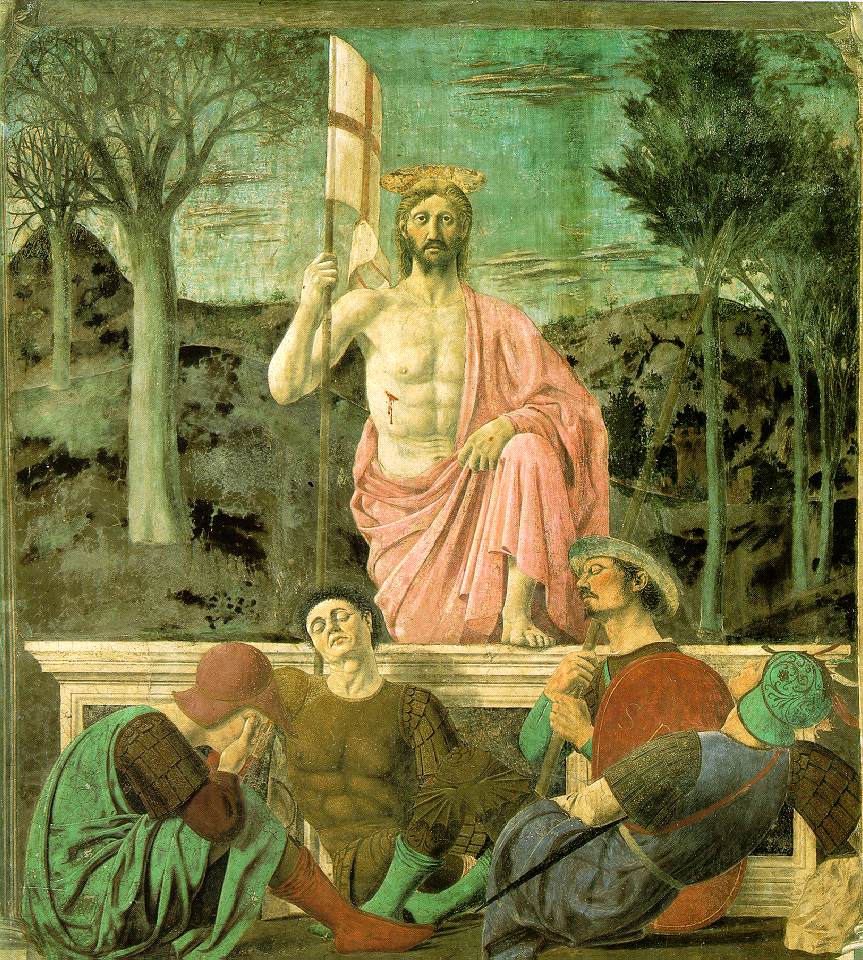
The Resurrection represents the eternal and definitive triumph of Our Lord Jesus Christ, the complete defeat of his adversaries, and the supreme argument of our faith. Saint Paul said that, if Christ had not resurrected, our faith would be vain. The whole edifice of our beliefs is founded on the supernatural fact of the Resurrection. Let us then meditate about this highly elevated subject.
Christ Our Lord was not resurrected: He resurrected. He was dead. Lazarus was resurrected. Someone other than him, in this case, Our Lord, called him back to life. As for the Divine Redeemer, no one resurrected Him. He resurrected Himself, needing no one to call Him back to life. He took his life back when He so willed.
Everything that is said about Our Lord can be analogically applied to the Holy Catholic Church. We often see, in the history of the Church, that precisely when She seemed irremediably lost and all the symptoms of catastrophe seemed to undermine Her, events took place that kept Her alive against all the expectations of Her adversaries. A rather curious fact is that sometimes it is the Church’s enemies that come to Her aid, rather than Her friends. For example, in a most sensitive time period for Catholicism like Napoleon’s era, an extremely unusual episode took place: a conclave was convened for the election of Pius VII under the protection of Russian troops, all of them schismatic and under the command of a schismatic sovereign. In Russia itself, the practice of the Catholic religion was curbed in a thousand ways. Yet, in Italy, Russian troops ensured the free election of a Sovereign Pontiff precisely at the moment when a vacancy in the See of Peter would have caused such grievous damages for Holy Church that, humanly speaking, she might never have been able to overcome them.
Such are the marvelous means that Divine Providence employs to demonstrate that God has the supreme government of all things. However, let us not think that the Church owed Her salvation to Constantine, Charlemagne, John of Austria, or Russian troops. Even when She seems to be entirely abandoned and when She lacks the most indispensable natural resources for survival, let us be certain that Holy Church will not die. Like Our Lord, She will rise with Her own, divine strength. And the more inexplicable the seeming resurrection of the Church may be from the human standpoint (we say seeming, because, unlike Our Lord, the Church will never die a real death), the more glorious Her victory will be.
In these murky and sad days, let us thus confide. However, in order to restore all things in the Kingdom of Christ, let us confide not in this or that power, man, or ideological current but in Divine Providence, which will once again force the sea to open wide, move mountains and cause the whole earth to tremble if necessary to fulfill the divine promise: “The gates of Hell shall not prevail against Her.”
Thursday, April 29, 2010
The priests’ responsibility - St. Catherine of Siena
"O dearest daughter! Those miserable persons about whom I spoke to you have no consideration for themselves. If they had, they wouldn’t fall into so many vices, but would live like virtuous persons, who prefer death rather than offend Me, staining their soul or belittling the dignity to which I have raised them, but on the contrary, they increase their souls’ dignity and beauty. The dignity itself of the priest is not increased by virtue nor diminished by any sin, as I have told you. But virtues are an embellishment and give added dignity to the soul beyond what it possesses from the beginning, when I created it in my image and likeness. Those who live thus, know the truth of my goodness, their beauty and dignity, because pride and self-love have not blinded them nor taken away the light of reason. Not having this self-love, they love Me and desire the salvation of souls. But these spoiled persons, completely deprived of light, calmly pass from vice to vice, until they fall into the pit.
They have turned the temple of their soul and the holy Church, which is a garden, into a stable for animals. O dearest daughter! How abominable for Me that their dwellings which ought to be lodging for those who serve Me and for the poor, a place to have as a wife their breviary, and as children the books of Sacred Scripture, to delight in them in order to exhort their neighbour to lead a holy life, but quite to the contrary have turned them into a den of unchaste and wicked persons!
Their spouse is not the breviary. They rather treat this breviary-spouse like an adulterous wife. A devil in the form of a woman’s body unchastely lives with him. His herd of children make up his books, and he shamelessly takes delight in these offspring begotten so indecently and wickedly.
At Easter and solemn Days when he should give glory and praise to My Name with the divine Office and offer Me the incense of humble and devout actions, he spends at gaming and entertainment with these creatures of the devil and has a good time with the laity hunting, as if he were just another lay person or courtier.
O wretched man, to what a level you have dropped! What you ought to hunt are souls for the glory and praise of My Name and be in the garden of the Holy Church, and not to go hunting through the woods. But you have become a beast; within you have the beasts of many mortal sins. For that reason, you are a hunter of beasts and the orchard of your soul is full of weeds and thorns, since you have acquired a liking for barren land seeking wild beasts. Be ashamed and consider your sins. You have cause to be ashamed wherever you turn. But you are not ashamed, because you have lost the holy and true fear of Me. Like the prostitute, who has lost shame, you will brag about your worldly position, your numerous family and your numerous children.
And if you do not have them, you try to have them so to be your heirs. You are a highwayman and a thief, because you know perfectly well you cannot bequeath your wealth to them; your heirs are the poor and the Holy Church.
O incarnate devil, spirit without light! You seek what you ought not seek. You boast and brag about what ought to be for you motive of confusion and shame before Me, who see the innermost of your heart, and before creatures. You are truly blind and the horns of your pride do not permit you to recognize your own blindness.
O dearest daughter! I have placed you on the bridge of the doctrine of my truth so that he might serve you, o pilgrims, and administer you the sacraments of the holy Church, but he stays in the miserable river below the bridge immersed in the pleasures and miseries of the world. There he exercises his ministry, without noticing the wave that drags him to death and he goes with the devils, his masters, whom he has served and by whom he has been openly guided, along the river. If he does not amend his life, he will be eternally condemned with great reprimand and reproach, that your tongue would be incapable of referring. And he, due to his priestly office, much more than any other lay person. For this reason the same sin is punished more in him than in one who would have stayed in the world. At the moment of death his enemies will accuse him more terribly, as I have told you."
St. Catherine of Siena, Doctor of the Church: The Dialogue, 130.
Prayer:
O God, You choose the frail and ignorant to confound the wise and mighty. We beseech You to raise up in our times men and women, who following St. Catherine’s example, are full of ardent love for the Church and the Pope. Let them persevere in prayer so that the shepherds of Christ’s flock may be true guardians and not hirelings. We ask you this through Jesus Christ, Our Lord. Amen
Sunday, April 25, 2010
St. Mark the Evangelist - 25th April 2010
Later St. Peter sent St. Mark to Alexandria, where he was the first to preach the Word of God. According to Simon, an old Jew who witnessed the labors of Mark in that city, an enormous multitude converted there as a consequence of the apostolate of St. Mark.
St. Peter Damian wrote that God gave St. Mark a special grace by which all the people he converted in Alexandria took up monastic customs. He inspired them to this by his miracles and the example of his virtues. After his death, his relics were sent back to Italy, so the land where he wrote his Gospel had the honor of preserving his body.
St. Peter consecrated him Bishop of Alexandria. In this city the zeal of St. Mark attracted the hatred of the priests of the false gods. On Easter in the year 68 AD, they seized him while he said Mass, and tied a rope around his neck. Then they dragged him through the city like an animal to slaughter. His body was lacerated by the rough rocky surface and his blood stained the roads.
In the prison where they threw him, he was consoled by an Angel. Then Our Lord deigned to visit him and told him: “Peace be with you, o Mark, My Disciple and My Evangelist. Fear nothing because I am near you.”
The next day the pagan priests again placed a rope around his neck and dragged him through the streets of the city. This time his strength gave out and he died, saying: “Into Thy hands I commend my spirit.”
The air became turbulent, and lighting and thunder broke through the sky. His assailants, who had planned to burn his body, all fled. Thus Mark’s disciples were able to collect and piously bury his remains.
Comments of Prof. Plinio:
You know that Alexandria was one of the largest cities of Antiquity. It was a city famous for its culture, wealth, and political importance, as well as for the pomp and luxury of its inhabitants. At that time Paganism was different from modern Paganism, which is noted for its vulgarity, banality, and equalitarianism. Paganism then was set in fabulous richness and luxury. It used to make a similar show of an elaborated culture. This pagan display of splendor brought great importance to many of the cities of that time and made them shine before the world.
These important cities were also the most difficult to convert. St. Mark, however, was able to convert many people of Alexandria. Soon after he arrived, many people changed their lives and took up monastic habits. You can easily imagine the sharp contrast this dignified, serious, chaste and austere life made with the dissolute and exorbitant way of life of the local social elites.
The life of those elites was quite censurable. It seems useful to give you an idea of how it was. The Romans had conquered all the countries around the Mediterranean Sea, which they called mare nostrum [our sea]. For this reason those countries had the tendency to adopt Roman customs.
For example, the elites used to have evening banquets and parties in palaces with garden courtyards. With the agreeable evening air of the sea, the doors of the palaces would be open. Such parties frequently lasted all night, ending at dawn with the family members and guests spread throughout the gardens, drunk and unconscious, lying here and there alone or entwined with others in dishonorable postures to be picked up by the servants and taken to their own beds.
At those bacchanals, they used to eat and drink until they were satiated. They would recline in a kind of chaise longue called a triclinium that could accommodate two or three persons. The ambience was what I imagine would be the boîte [night club] of our days. There were performances of music, poetry, songs, sometimes even gladiators for the amusement and enjoyment of the guests. Throughout the party all were eating and drinking.
When someone had gorged himself on food and drink and could take no more, there were places like our restrooms where slaves would tickle their throats with a feather so they could vomit everything. Then they would clean themselves with water and perfumes, dry their hands in the long hair of women slaves who were there for that purpose, and return to the banquet rooms to eat and drink again.
The moral ambience of the lower levels of society was also repugnant. The slaves were very numerous, since almost every free man of the elites or middle classes had more than one slave. But they were not treated as human beings. They were considered the objects of their owners. The slave had no rights to marry or have a family, no rights of parents over children. A child belonged to the owner of his parents like a fruit belongs to the proprietor of the tree. The owner used to take what he wanted from the family of the slaves. He could even kill the slave, which was not considered a crime.
This was the bestial and decadent world of Paganism. The world of the Alexandria when St. Mark came to preach in it.
You have to imagine this opulent city of Alexandria when St. Mark first arrives with his great dignity. He is there for the first time walking through its streets, let’s suppose, at 4 p.m. with the sun still shining. A Jew, with his beard, his stately bearing, his sanctity, his spirit of recollection, he approaches a first group of people, finds them open to him, and begins to preach. Some of the wayfarers laugh of him, others are indifferent, but one here, another there, come to joint the small group that is already listening to him. In a short time he has a circle of people around him. He finishes, bids farewell to his audience, and goes to a modest inn.
People start to talk about the things they heard, about Our Lord Jesus Christ, His cross, the need to follow a way of austerity, chastity, and sanctity. Grace accompanies the words of St. Mark, and those people for the first time contemplate a completely different life. Here is a wife who was abandoned by her husband, there is a young man whose eyes begin to open to the gross immorality of this society, further along is a drunk who stops to see what was going on.
The words of St. Mark open a new perspective of eternal live. He speaks about a spirit that is not material, he speaks of the resurrection of the body, of Heaven and eternal happiness, and also of Hell and Purgatory. He explains that there is a God who is Goodness, Justice and Wisdom Itself to whom we should pray and ask for help. He speaks about Our Lady and the Sacraments, the Holy Eucharist, Confession and the great privilege it is to have our sins forgiven. To a man accustomed to the orgies of Alexandria, these topics cause contradictory reactions. One feels an irresistible attraction, and another a complete repulsion.
This illustrates how the action of grace over the words of St. Mark could have converted many people. It also makes us understand how his words and his presence constituted a problem for the entire city of Alexandria. He gained so many followers that from that time onward the Catholic Faith was established in the city. But he also generated an immense hatred against him, and these people decided to kill him.
It is clear that he came to divide, to separate. He created an unsustainable situation for those who did not want to follow him. The result was that they began to plot to kill him. This explains, until the end of time, what happens to all those who follow the model of Our Lord Jesus Christ.
There is a similarity between the great mission of St. Mark and our more modest mission, we who fight against the modern world. In many ways, the present day world is much worse than the Alexandria of that time. Today’s immorality, I could sustain, is much worse than it was at that time. But I would focus on another point: the indifference of the modern world. In that time St. Mark was able to convert multitudes, in modern times you can consider the apathy of the world in face of the miracles of Lourdes, the great miracle of the sun at Fatima. The normal modern man doesn’t care about them and doesn’t change.
Another point, St. Mark suffered martyrdom and his body was received with veneration by the Italian people who dedicated a city to him: he became the patron of Venice. Today, the Monophysitist Coptic sect is trying to have the body of St. Mark returned to Alexandria. In 1968 Paul VI already gave the precious relic of the head of St. Mark to that sect. The reaction among the Catholic public was very weak, almost complete indifference.
From this we can see that, worse than the times of St. Mark, today we have doctrinal corruption that has penetrated the Holy Church. She should be the sun of sanctity, and today she is infiltrated by enemies who disfigure her. The Progressivism that controls the Catholic Church today is an expression of the modern world. It is worse than the world of St. Mark.
Just as St. Mark had the obligation to fight against the corrupt world of his time, we have the duty to fight against the enemies who brought this corruption inside the Church. And because we are convinced that we are incomparably less than St. Mark, we should ask him to help us to conquer ourselves, to overcome our own miseries, so that we might be able to defend the Church against her enemies.