Evil triumphs when good men do nothing - Edmund Burke

Friday, July 3, 2009

St. Thomas the Apostle - 3rd July 2009

Let us read the commentary of Dr Plinio about the Apostle St. Thomas who died in India.

St. Thomas was ordered by Our Lord to go to India, which he did in the company of Abbanes, a provost of one of the kings of India who had come to Caesarea looking for an architect. After dealing with this King and building a palace for him, not on earth, but in Heaven by giving his treasure to the poor, and after converting multitudes in India through his innumerable miracles, Thomas headed to Upper India.

There he converted Queen Migdonia and her sister to the Catholic Faith. From then on, they refused to lie with their pagan husbands. The King became furious and ordered that Thomas be brought before him, his hands and his feet bound. He was commanded to reconcile the wives to their husband. But Apostle answered the King saying that he could not do this so long as he professed a false faith.

Irate, the King commanded that pieces of burning iron be brought forth and that the Apostle should stand on them in his bare feet. And immediately, by the will of Our Lord, a spring of water sprang up and quenched the iron.

Next, the King, following the counsel of his brother-in-law Carisius, had him thrown into a fiery furnace, but miraculously it was made so cold that the next day he issued out all safe, without harm.

Then Carisius said to the King: “Command him to sacrifice to the god of the sun. That will bring down on him the wrath of his God, who so far has been protecting him.” They tried to force Thomas to do this, but the Apostle responded that the devil was in the idol, and that God would break it to pieces the moment he would approach it. And so it happened.

After that miracle, the high priest killed St. Thomas piercing him through with a sword. The King and Carisius did not convert, but fled away, for they saw that the people would avenge the Apostle.


Comments of Prof. Plinio:

Our Lord said that the Apostles would work more and even greater miracles than He Himself did: “Verily, verily, I say unto you, He that believeth on me, the works that I do shall he do also; and greater works than these shall he do; because I go unto my Father (John 14:12). Why did He say this? What principle is behind these words?

It is not easy to respond with precision to this question, but among many answers, there is one worthy of attention.

A person who saw Our Lord Jesus Christ and heard the words that issued from His divine mouth already experienced a kind of special miracle, which was to see with his own eyes the Incarnate God. Our Lord’s presence was so supernatural, so divine, so out of proportion to any human measure that for a man of faith, nothing else would be necessary to believe in His divinity. His presence was more than any miracle imaginable.

For this reason He censured those who were asking for miracles. He addressed them as a “faithless and perverse generation” who only believe when they see miracles. Thus, it is a blessing to believe without miracles. St. Thomas also received a similar criticism from Our Lord: “Because thou hast seen me, Thomas, thou hast believed. Blessed are they that have not seen, and have believed” (John 20:29).

This selection mentions some of St. Thomas’ astonishing miracles in India. He worked one miracle after another, but still the King did not convert. His mind was made up and he did not want to believe. In the end, he remained an unbeliever and allowed his high priest to kill St. Thomas. One miracle, two miracles, many miracles were not enough for him. When he was defeated by the evidence of the miracles, he became an accomplice to the murder of St. Thomas.

This mentality is shared by those who are not satisfied with normal graces, but are always asking for miracles. In appearance, they are thirsty for miracles, but at depth they are too lazy to open their souls to grace. If God would give a miracle, it would not satisfy them. They would become more hardened, and even reject the saint who worked the miracle. They share in some way the psychology of the pagan King.

This leads us to consider the depth of human wickedness. Man stained by original sin and excessively complacent with his actual sins has a strong tendency to close his soul to grace, even to miracles. Often nothing but very exceptional graces can touch a soul like this.

Another symptom of such hardness is when a person, like the King in India, is subject to superstitions. I knew a person with a great vocation who came to our fight for the Church but never had a true generosity toward Our Lady. He ended by going astray. He was a superstitious man, always carrying an amulet that he believed had occult powers. I don’t think his defection was caused by the malefic power of the amulet. I think that by relying on magical powers he rejected the grace and disregarded the rich supernatural help the Church places at our disposition.

A point also worthy of consideration is the attitude of St. Thomas regarding his previous infidelity. He was unfaithful when he doubted the Resurrection of Our Lord. He was chastised for that: he was the only Apostle who was not present at the death of Our Lady. He arrived late, when Our Lady was already starting her Assumption in the air. With a marvelous manifestation of her tenderness for him, she took off her girdle and let it fall for him. He was chastised, but at the same time she inundated him with her tenderness.

St. Thomas converted because of her sweetness as well as Our Lord’s severity and became a truly penitent soul. What is a truly penitent soul?

It is one who committed a bad action, but with shame and sadness repents of the evil he did and, when the occasion presents itself he takes advantage of it to admit his bad action. He is happy to humiliate himself in public and accuse himself of the evil that he committed. He hates his sin and wants others to hate it also. This is the profile of the truly penitent soul. Regarding sins of purity, this rule only applies for those sins that are public and notorious for obvious reasons.

Even after this person makes expiation for his fault and practices acts of virtue, he always has before him the sin he committed. This is what David sang in one of his penitential psalms: “Peccatum meum contra me est semper” – my sin is always before me. That is, I hate my sin, it will stand there facing me all my life, and only my death will annihilate it. Repentance is a swelling hatred for the evil that one has done. Insofar as a man comes to understand the consequences of his bad action, he is increasingly sorrowful. To be implacable toward ourselves is one of the starting points of the Catholic and counter-revolutionary spirit.

There is another way one can note this sense of penance in a man. A person who is convinced of the effects of original sin in himself likes to be reprimanded. He is grateful when someone shows him that he did something wrong. He feels relieved when he is reproved, because from then on he can avoid that error and improve.

St. Thomas went far and wide evangelizing and I am sure that, like St. Peter, he wept over his past infidelity. I am sure he repented publicly without fear of causing scandal or a bad impression. Penance, when it is sincere, only attracts and advances others on the path of virtue.

Here are some points for an examination of conscience: Are we really sorry for the sins we committed? Is our repentance as serious as it should be? Do we have a true severity toward the evil we committed? Do we always have our sins before us so that we might hate them and make reparation for them? Are we happy when others reprove us for our faults or do we flee from those who criticize us with rage in our heart?

If this examination reveals that we are not as penitent as we should be, we can direct our prayers to all the penitent saints who are in Heaven – especially St. Thomas – and ask them to have mercy on us, give us the grace of true repentance, penance, and the splendid sadness of contrition along with a hatred for the evil that is in our souls.

The soul with the true spirit of penance loves without self-interest the virtue opposed to the sin he committed. This soul attracts Our Lady. She comes to his soul, enters, and remains in it, bringing with her the Holy Ghost her Spouse, Our Lord Jesus Christ her Son, and God the Father. Let us beg her to make us worthy of this.

Thursday, July 2, 2009

St. Oliver Plunkett - 2nd July 2009

(Case holding head of St Oliver Plunkett)

Oliver Plunkett was born in Loughcrew, Co. Meath, Ireland in 1629 of well-to-do Anglo-Normal parentage. He was related by blood to a number of landowning families, such as the Earl of Fingall, Earl of Louth and Lord Dunsany. Until the age of 16, he was educated by his cousin, Patrick Plunkett, Abbot of St Mary’s in Dublin. Patrick was a brother of the first Earl of Fingall and later became bishop in turn of Ardagh and Meath.
In 1645 he set out for Rome under the care of Fr Scarampo of the Roman Oratory and stayed at the Irish College where he had a brilliant academic career. The Rector later said that Plunkett “devoted himself with such ardour to philosophy, theology, and mathematics, that in the Roman College of the Society of Jesus he was justly ranked amongst the foremost in talent, diligence, and progress in his studies… and was a model of gentleness, integrity, and piety". He was ordained a priest in 1654, and deputed by the Irish bishops to act as their representative in Rome. Meanwhile, the Cromwellian conquest of Ireland (1649-53) had defeated the Catholic cause in Ireland and, as a result, it was impossible for Plunkett to return to Ireland for many years. He asked to stay on in Rome and, in 1657, became a professor of theology at the College of Propaganda Fide. He also pleaded successfully the case of the Irish Church. On 9 July 1669, he was appointed Archbishop of Armagh, the Irish primatial see, and was consecrated on 30 November at Ghent by the Bishop of Ghent, assisted by the Bishop of Ferns and another bishop. He finally landed in Ireland in March 1670 just as the English Restoration of 1660 was becoming more tolerant.
On his return to Ireland, he began to rebuild a ravaged Church and to build schools and seminaries. The clergy he found very weak in moral theology and in their ability to deal with religious controversies. There were also drinking problems among them. As the Penal Laws had been relaxed in accordance with the Declaration of Breda in 1660, a Jesuit school was set up in Drogheda in 1670. Within a year it had 150 students. However, three years later when the Test Act which Plunkett refused to accept was enacted, the school was demolished.
Plunkett now had to travel in disguise and refused to register with the authorities for deportation. In 1678, the Titus Oates plot to blow up the Houses of Parliament led to further repression of Catholics. The Privy Council in London was also told that Plunkett was plotting a French invasion of Ireland. He had a price on his head but refused to abandon his flock.
He took refuge in a Clogherhead parish church, about 10 km outside Drogheda. He was finally arrested in Dublin in December 1679 and held in Dublin Castle, where he gave absolution to the dying Archbishop Peter Talbot of Dublin, who had also been arrested. He was tried at Dundalk for conspiring against the state by plotting to bring thousands of French soldiers into the country, and for levying a tax on the priests to support a local force for rebellion. This was not proved but there were fears that another rebellion was being planned. Because Lord Shaftesbury knew Plunkett would never be convicted in Ireland, he had him moved to Newgate prison in London. After two very dubious trials, Plunkett was found guilty of high treason “for promoting the Catholic faith” and condemned to death.
On 1 July 1681, Plunkett became the last Catholic martyr to die in England when he was hanged, drawn and quartered at Tyburn. His body was initially buried next to five Jesuits, who had died earlier, in the courtyard of St Giles. Two years later the remains were moved to the Benedictine monastery at Lamspringe, near Hildesheim in Germany. The head was brought to Rome, and from there to Armagh and eventually to Drogheda where, since 29 June 1921, it has rested in Saint Peter’s Church. Most of the other remains are now in Downside Abbey, England, with some still at Lamspringe. There are also other relics in different locations.
Oliver Plunkett was beatified in 1920 and canonised in 1975, the first new Irish saint for almost 700 years and the first Irish martyr to be beatified. He has since been followed by 17 other Irish martyrs who were beatified by Pope John Paul II in 1992. During his short and difficult ministry, Oliver Plunkett confirmed more than 48,000 people over a period of four years.

Wednesday, July 1, 2009

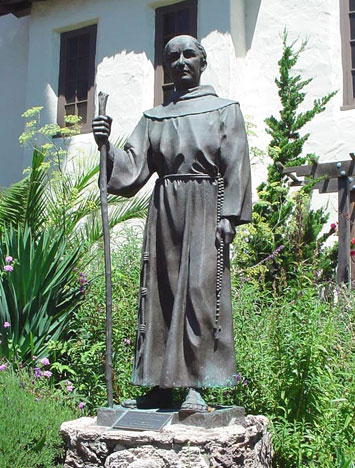
Blessed Junipero Serra - 1st July 2009


Spanish Franciscan priest, explorer and colonizer of California where he was the founder of the missions of California. He was beatified by Pope John Paul II in September 1988.

Junipero Serra was born Miguel Serra y Abram on November 24, 1713 in Petra, a farming village in Mallorca's central plain. At the age of sixteen, Miguel entered the Franciscan friary and took the name Junípero, after St. Francis' close, extroverted friend.

Years of formation and study followed, and in 1744 he was named Professor of Philosophy at the monastery of San Francisco and at Lullian University. Serra was known as a bright, articulate scholar -- apparently a moving speaker and a clear, precise writer -- but he did not remain long in academic life. In 1749 he responded to the call for Franciscan missionaries to the New World.

Nearly 200 years before, Spain had established a colony called New Spain, the area now known as Mexico. The success of colonization was due largely to the collaboration of the Spanish imperial staff and the Catholic Church. By acting as partners in exploration and settlement efforts, both their purposes were achieved: Spain claimed new territory and the Catholic Church claimed new members.

By the middle of the 18th century, Spanish cultural and religious influence was already evident in New Spain's great cathedrals, schools, hospitals, and seaports. However, this sophisticated civilization was restricted to urban centers such as Mexico City. The outlying areas were still uncharted and wild. The unexplored areas were considered missionary territory.

Serra's first assignment was to a rugged, mountainous region of Sierra Gorda. Here he remained for nine years, preaching to the Indians and strengthening the two missions already established in the area. Serra's second assignment was to journey out from Mexico City into coastal villages and mining camps. In those eight years, despite a leg chronically infected and ulcerated after an insect bite, he walked over 6,000 miles on foot, preaching retreats and administering the sacraments.

In 1767 when the King of Spain banished the Jesuit Society from his dominions, the thirteen Jesuit missions in Baja California were suddenly left unstaffed. Junipero Serra was assigned the new Superior of Baja California, and within several years he was given orders to move into Alta California, or what today is known as the state of California. In 1769 Serra was appointed padre president of California.

Serra joined the expedition of Don Gaspar de Pórtola, ordered by the Spanish king to explore and occupy new territory. He reached San Diego on June 27, 1769 and founded there the first mission. From San Diego the party journeyed northward and in April, 1770 Serra founded San Carlos Borromeo at Carmel, the second mission. In his fifteen years as padre president, he established nine of his 21 missions, each a one-day walk apart (about 30 miles), and linked by a dirt road called "El Camino Real."

Junípero Serra personally oversaw the planning, construction, and staffing of each mission from his headquarters at Carmel. From Carmel he traveled on foot to the other missions along the California coast, to supervise mission work and to confer the sacrament of Confirmation. Biographers estimate that, still bothered by the infected leg, Serra walked more than 24,000 miles in California alone -- more than the journeys of Marco Polo and Lewis and Clark combined. He kept with determination to his watchword, "Always to go forward and never to turn back."

Each mission centered on a church structure, usually a wood frame topped with a thatched roof. However, when the church at San Luis Obispo burned after being showered by Indians' flaming arrows, all churches were rebuilt of adobe and stone. Indians fashioned rounded roof tiles by molding wet clay around their shins. Surrounding the church itself were housing, areas for education of women and children, land cultivated for farming, and cattle-grazing areas.

Junipero Serra did not die a martyr as he had hoped. Instead he died a quiet, natural death at Carmel on August 28, 1784. Today, 200 years later, he is a candidate for canonization.

Tuesday, June 30, 2009

First Martyrs of Rome - 30th June 2009

Nero's persecution was occasioned by an early morning fire on July 19, 64. It broke out in a small shop by the Circus Maximus and spread rapidly to other regions of Rome, and raged for nine days, destroying much of the city. This was the worst in a series of fires that beset the crowded city -- more than a million people, packed tightly into apartment blocks of wooden construction, among narrow streets and alleyways. Only two areas escaped the fire; one of them, the Transtiberum region, Trastevere, across the Tiber River, had a large Jewish population.

Nero was at his seaside villa in Anzio when the blaze began, but he delayed returning to the city. They say that when he heard the news, he began composing an ode comparing Rome to the burning city of Troy (illustration above). His indifference to the suffering caused by the tragedy stirred resentment among the people. Rumors began that he himself set the fire in order to rebuild the city with his own plans.

Nero To stop the rumors, Nero decided to blame someone else, and he chose a group of renegade Jews called Christians, who had caused trouble before, and already had a bad reputation in the city. Earlier, about the year 49, the Emperor Claudius had banished some of them from Rome for starting upheavals in the Jewish synagogues of the city with their disputes about Christ.

Nero's Raging Sword

"Nero was the first to rage with Caesar's sword against this sect," wrote the early-Christian writer, Tertullian. "To suppress the rumor," the Roman historian Tacitus says, "Nero created scapegoats. He punished with every kind of cruelty the notoriously depraved group known as Christians." Just how long the process went on and how many were killed, the Roman historian does not say.

Christian martyrs of Rome The Early Christians of Rome

Who were the early Roman Christians? Most of them came from the large community of about 50,000 Jewish merchants and slaves who had strong ties to their mother city of Jerusalem. Even before Peter and Paul arrived in Rome, Jewish-Christians, clearly identified as followers of Jesus Christ, were found among the city's Jews. Indeed, these were the founders of the church at Rome; the apostles were among its foundation stones.

By the time of the fire Rome's Jewish-Christians had become alienated from the larger Jewish community and were beginning to separate from it. Where they lived and met was well known. The authorities, following the usual procedure, seized some of them, brought them to the Prefecture and forced them by torture to give the names of others.

"First, Nero had some of the members of this sect arrested. Then, on their information, large numbers were condemned -- not so much for arson, but for their hatred of the human race. Their deaths were made a farce." (Tacitus)

Mass Executions

Instead of executing the Christians immediately at the usual place, Nero executed them publicly in his gardens nearby and in the circus. "Mockery of every sort accompanied their deaths. Covered with the skins of beasts, they were torn by dogs and perished, or were nailed to crosses, or were doomed to the flames and burnt, to serve as a nightly illumination, when daylight had expired." (Tacitus)

Most thought Nero went too far. "There arose in the people a sense of pity. For it was felt that they (the Christians) were being sacrificed for one man's brutality rather than to the public interest." (Tacitus)

Monday, June 29, 2009

St. Peter and St. Paul – 29 June 2009

St. Peter and St. Paul – June 29

Biographical selection:

Sts. Peter and Paul always listen to the prayers of their devotees. Time has not diminished their power, and from Heaven – even more than when they were on earth – they do not abandon the interests of the Church or neglect the least of the inhabitants of this glorious earthly City of God, of which they were and remain princes.

One of the triumphs of the Devil in our times is to have dulled the faith of good people in this regard. It is necessary to insist that man awake from this deathlike sleep that makes us forget that Our Lord wanted these two saints to continue His work and represent Him visibly on earth.

St. Ambrose extols the continuing, vibrant apostolic mission of the Church, and expresses with profundity and delicacy the roles of Ss. Peter and Paul in the salvation of the elect. The Church, he says, is the ship from which Peter fishes, and for this labor at times he receives an order to use the hook, and at other times, the net. It is a great mystery, for this fishing is entirely supernatural. While the net does not harm the fish, the hook wounds it; the net takes in multitudes, the hook catches a single fish. The good fish does not resist the hook of Peter because it does not kill, but rather converts. Fortunate the gash that permits one to profess the same faith of Peter!

It is for this reason that Jesus told Peter: “"Put out into the deep water, and let down the nets for a catch” (Luke 5:1) “Put out into the deep water” – that is, go to the very depths of the hearts of men. ‘Put out into the deep water” – go to Christ, the source of living waters of wisdom and knowledge.

Peter continues to fish every day. Our Lord tells him: “Put out into the deep water.” But one seems to hear Peter replying: “Master, we have worked all night with no result.” Peter suffers when we are hard-hearted. Paul is also fighting for our souls. Didn’t he tell us that no one suffers without him also suffering? We should act in a way that does not make the Apostles suffer.


Comments of Prof. Plinio:

These are very beautiful words. Let us consider some of the thoughts in them.

First, the selection makes an interesting remark about how Divine Providence permitted the faith of many good people to be dulled regarding the roles that St. Peter and St. Paul exercise in Heaven. This is true. Devotion to the Apostles has diminished a great deal, except for devotion to St. Jude Thaddeus, who was an almost unknown Apostle and for a time even raised some suspicion because people thought that this Judas might be Judas Iscariot, also a member of the College of Apostles. Except for the devotion to St. Jude, who became the patron of the impossible, devotion to the other Apostles decreased a great deal.

This diminishment is completely unreasonable since it is evident that the mission of the Apostles did not diminish with time. On the contrary, we know that their mission continues now and will continue until the end of time. They were not Apostles for just one epoch. They were not men who saved souls in the first days of the Church, and then went to Heaven where they do nothing. They are there now with Our Lord Jesus Christ watching and exercising a role over the entire Church.

The apostolate they made in their times was a seed they planted that contained the apostolate of all epochs. From Heaven they continue to nurture and develop it. Therefore, devotion to them is a necessary thing, and this selection gives us an opportunity to recommend ourselves to St. Peter and St. Paul, to pray to them, and to increase our devotion to them.

Second, the selection seems to insinuate a difference between the apostolate of St. Peter – made with a hook – and the one of St. Paul – made with a net. The distinction between these two different methods of apostolate is useful. The apostolate of the net is meant to catch a large number of people; the apostolate of the hook is destined to catch this or that particular person.

Third, the text speaks beautifully of the apostolate of hook, saying that the hook wounds the mouth of the fish, but by means of this gash he pays the price of his conversion. There are conversions that are very difficult, that are only possible through great sacrifices and sufferings. The blood exacted by the great effort is the price paid to be a part of the Catholic Church. This is a normal characteristic of the apostolate of the hook.

There are conversions, however, that are painless. In the Middle Age, for example, we have the marvelous examples of the conversions of Kings who brought entire nations with them: the kingdom of the Franks came to the Church with Clovis, the Hungarians with St. Stephen, the Polish with Boleslaus, the Ukrainians with St. Vladimir, and so on. These were apostolates of the net that brought a multitude of souls without any special suffering.

Fourth, another beautiful part of this selection speaks of the apostolate when it is without fruit. St. Peter and St. Paul experienced enormous difficulties in their apostolates, and also enjoyed times of extraordinary successes. They were not easy labors with “happy endings.” It was hard work along rocky paths that required much prayer and supernatural help in order to go forward. Without this help, the apostolate is fruitless.

We should remember this in our own apostolate. We should keep in mind that St. Peter’s fished all night and was unsuccessful. But when he asked Our Lord for help, the net was lifted from the water filled with fish.

This reference to the miraculous catch serves to help increase our humility and supernatural spirit. Without supernatural assistance, without the help of God through the intercession of Our Lady, our apostolate will be fruitless.

We see that this results in a greater glory for Our Lady and should raise in us the desire to draw closer to her. She who is our very amiable Mother and an all-powerful supplicant before God, she who with her prayer can attain everything that she requests.

Sunday, June 28, 2009

St. Cyril of Alexandria - 27th June 2009

Today is the feast of St. Cyril of Alexandria, let us see what Dr. Plinio has to say about this saint

Biographical selection:

St. Cyril, Patriarch of Alexandria, strove to win back the heretic Nestorius by letters, in which his personal meekness is rivaled only by his vigor and breadth of doctrine. But Nestorius was obdurate. Since he had no argument in response, he began to make personal complaints against the Patriarch.

As always happens, there were pacifists who, although they did not accept Nestorius’ errors, thought it would be best not to reply to him for fear of further embittering him, increasing the scandal, and wounding charity. In response to this, Cyril criticized those who were more afraid of affirming the truths of the Catholic faith more than of falling into heresy:

“What! Nestorius dares to suffer men to say in public and in his presence that he who calls Mary the Mother of God is to be anathema! He hurls his anathema, by means of his partisans, at us, at the other Bishops of the Catholic Church, and at the ancient Fathers, who in all ages and places in one accord have acknowledged and honored the holy Mother of God! And have we not the right to repay him in his own coin and say, ‘If anyone denies that Mary is the Mother of God, let him be anathema’? ….

“If our fear of some disturbance is stronger than our zeal for God’s glory and thus prevents us from speaking the truth, how shall we dare in the presence of the Catholic people to celebrate the holy martyrs, whose glory lies in the very fact that by their lives they made example of the words: ‘To fight for justice even unto death’?”

Comments of Prof. Plinio:

The text is magnificent! Just to situate you a bit in those times, let me say that St. Cyril lived in the fifth century and combated the heresy of Nestorius, who denied the union between the humanity and divinity of Our Lord Jesus Christ, and thus, the divine motherhood of the Blessed Virgin Mary.

In the first centuries of the Church, there were various heretics who combated the dogmas of the divinity of Our Lord Jesus Christ. Some affirmed that He was only man and not God; others stated that He was God but not man. Both denied that He is man and God. Either way, the heresy tried to shake the Catholic belief that Our Lord is true God and true man. The heresy of Nestorius denied the hypostatic union of the divine and human natures in Our Lord. He affirmed that there would have been two distinct persons, that of God and that of the man Jesus Christ. This man would not have been God, but only joined by a moral union to God, like a kind of super-saint. As a consequence Our Lady would have been only the mother of the man, not the mother of God. Therefore, her mission would be greatly reduced.

St. Cyril and the good Catholics defended that Our Lord was both God and man. The heretics sustained the opposite. The false middle, the ones who were partisans of ecumenism and wanted to dialogue between the two positions, were of the opinion that it was better not to defend the good position. They argued that this would irritate the adversaries, make it more difficult to convert them, and violate charity. These “moderates” were against St. Cyril because the Saint attacked the heretics.

I ask you if this doesn’t remind you exactly of the reactions of many “moderates” of our days who criticize our work. We should not attack the heretics, communists, and progressivists, but start a dialogue with them. To attack them would be unproductive, it would irritate them, etc. Actually, this kind of “moderate” corresponds to those of whom Scripture says: “I would that thou were hot or cold. But because thou art lukewarm and neither cold nor hot, I will vomit thee out of my mouth.” (Re 3:16) That is, if you would accept either the truth or the error, you would be consistent, but since you will not be on either side, you cause me nausea. These are the one who are hated by God, those whom He vomits from His mouth, those who elicit that particular type of horror that causes queasiness.

These are the worst people, the ones who do the most harm to the good cause, because they present themselves to the average Catholics claiming to be Catholic, but warning them against following the ones who took the good position. The moderates say they are exaggerated in their views, etc. It is thanks to these people that the numbers of real fighters for the Catholic cause is much less than it should be.

The best support for error is not given by those who clearly defend that error, but by those who apparently profess the truth – but protect the error. They are the “fifth column” that prepares the future advance of the enemy. They attract divine wrath more than the outright evil people do.

If we want to be like Our Lord Jesus Christ, we should have the same repulsion for this kind of soul that He has. We should feel nausea when hearing the arguments of such “moderates.” It is not enough to love the good; we must also reject those who favor evil. A rejection similar to that of Our Lord, who had a loathing that caused a nausea. If we do not have such sentiment, we should pray and make a frequent ejaculation like the one we find in the litany of the Sacred Heart: “Sacred Heart of Jesus, make my heart like unto Thine.”

Let us ask St. Cyril of Alexandria through the intercession of Our Lady to give us a just indignation and revulsion toward such a hypocritical position.

Lessons from a Crashed Computer

I woke up yesterday morning to a crashed computer. After the boot up the computer would not load the OS. From about 10 AM in the morning till 2:00 AM I was resetting the computer.

The computer hard disk was full and as a consequence it would not load the OS. I had to format the entire hard disk making it clean and then install the OS again. After that I had to install various softwares.

A spiritual lesson was to be learnt. Sometimes in our spiritual journey we start taking up various tasks and do a lot of things for the Kingdom. After some time we forget why and for who we are doing these things. We become like a cluttered computer with lots of programs installed and lots of pictures and MP3s, we become like a library full of knowledge but nothing elese, or worse a garbage heap full of rubbish. And then we crash, we stop and examine ourselves and see that all the actions we think we are doing for God are not really for Him but more for ourselves. We need to reformat ourselves, by prayer and meditation, realizing that our primary duty is to Know, Love and Serve Him. In thar order specifically.

This lesson can be found in the Bible where Jesus says that He is the vine and we are the branches and the Father is the wine dresser who trims and prunes the branches. Your gardeners know that when a vine grows it uses energy that should be going to the grapes so it needs to be trimmed so that it bears more fruit. This pruning is like reformatting, sometimes our growth may look good to us, but we are not bearing the right kind of fruit. Hence it is a time for a reformat.

Happy Sunday
God Bless
Smiley

Thursday, June 25, 2009

Blessed Raymond Lull - 26th June 2009

Seneschal, courtier and troubador at the court of King James of Aragon from about 1246. Married Blanca Picany in 1257. In 1263 he received a vision of Christ crucified, and was converted on the spot.

Franciscan tertiary. Friend of Raymond of Penyafort. Worked to convert Muslims in the Iberian peninsula, and then in north Africa. He tried to interest the Vatican and assorted European royal courts in this work, travelling throughout Italy, France, England and Germany in search of support, but received little help. Learned Arabic, founded a school for Arabic study in 1276 on Majorca, and encouraged the study of Arab language and culture. Travelled three times to Tunis to preach to the Muslims, but was forcibly deported.

He wrote over 300 works in Latin, Arabic and Catalan on theology, logic, philosophy; wrote fiction and poetry. Known as a alchemist, but had no training in occult arts, and invented his own Christian-based concepts to try to explain the alchemical mysteries. Reputed to have solved the "lead-into-gold" mystery; legend says he worked on it to finance missionary work. Had a small but devoted band of followers known as Lullists who continued their work after his death, though some of them drifted away from the Church in search of alchemical knowledge. His work in this area has been the source of controversy for centuries, and non-Christian occult groups have seen him as a "master" or whatever term they use. Born c. 1234 at Palma, Majorca Died c. 1315; some writers indicate he was martyred by stoning in Tunis, but there is no evidence for it; may have died of natural causes during the return ocean voyage from Tunis; buried at the church of San Francisco, Palma, Mallorca, Spain Beatified

25 February 1750 by Pope Benedict XIV (cultus confirmed); 1847 by Pope Pius IX Canonized pending.

Ramon Lull's Ars Magna - 1274 AD

Possibly the first person in the history of formal logic to use a mechanical device to generate (so-called) logical proofs was the Spanish theologian Ramond Lull . In 1274, Lull climbed Mount Randa in Majorca in search of spiritual sustenance. After fasting and contemplating his navel for several days, Lull experienced what he believed to be a divine revelation, and he promptly rushed back down the mountain to pen his famous Ars Magna. This magnum opus described a number of eccentric logical techniques, but the one of which Lull was most proud (and which received the most attention) was based on concentric disks of card, wood, or metal mounted on a central axis. Ramon Lull's disks.

Lull's idea was that each disk should contain a number of different words or symbols, which could be combined in different ways by rotating the disks. In the case of our somewhat jocular example shown above, we can achieve 4 x 4 x 4 = 64 different sentences along the lines of "I love mice," "You hate cats," and "They eat frogs." a Of course, Lull had a more serious purpose in mind, which was to prove the truth of everything contained within the Bible. For example, he used his disks to show that "God's mercy is infinite," "God's mercy is mysterious," "God's mercy is just," and so forth. Lull's devices were far more complex than our simple example might suggest, with several containing as many as sixteen different words or symbols on each disk. His masterpiece was the figura universalis, which consisted of fourteen concentric circles
(the mind boggles at the range of combinations that could be generated by this device). Strange as it may seem to us, Lull's followers (called Lullists) flourished in the late middle ages and the renaissance, and Lullism spread far and wide across Europe.

Why is all of this of interest to us? Well by some strange quirk of fate, Lull's work fired the imagination of several characters with whom we are already familiar, such as Gottfried von Leibniz who invented the mechanical calculator called the Step Reckoner.

Wednesday, June 24, 2009

Nativity of St. John the Baptist - 24th June 2009


The birth of Saint John was foretold by Saint Gabriel, Archangel of the Lord, to his father, Zachary, who was offering incense in the Temple. The son of Zachary was to be the prophesied Messenger, Zachary was told, whose mission would prepare the way for Christ. Before he was born into the world John had already begun to live for the Incarnate God; even in the womb he recognized the presence of Jesus and of Mary, and leaped with joy at the glad coming of the Son of man. Before Christ’s public life began, a divine impulse sent Saint John into the desert; there, with locusts for his food and wearing haircloth, in silence and in prayer, he chastened his soul. In his youth he remained hidden, because He for whom he waited was also hidden.

Then, as crowds broke in upon his solitude, he warned them to flee from the wrath to come, and gave them the baptism of penance, while they confessed their sins. At last there stood in the crowd One whom Saint John did not know, until a voice within told him that it was his Lord. He affirmed: “I did not know Him, but He who sent me to baptize with water said to me, ‘He upon whom thou wilt see the Spirit descending and abiding, He it is who baptizes with the Holy Spirit.’ ” With the baptism of Saint John, Christ began His voluntary abasement for the sins of His people; and Saint John indeed saw the Holy Ghost descend, under the visible form of a dove, indicating in the humble Jesus of Nazareth the divine Perfection of the peaceable Eternal King and High Priest. Then the Saint’s work was done. He had but to point his own disciples to the Lamb, he had only to decrease as Christ increased. He saw all men leave him and go after Christ. “I told you,” he said, “that I am not the Christ. The friend of the Bridegroom rejoices hearing the Bridegroom’s voice. This, my joy, is fulfilled.”

Saint John was cast into the fortress of Herod on the east coast of the Dead Sea by the tyrant whose crimes he had rebuked; he would remain there until beheaded at the will of a girl and her cruel mother. During this time of imprisonment, some of his disciples visited him. Saint John did not speak to them of himself, but sent them to Christ, that they might witness His miracles and hear His doctrine, proofs of His mission. After Saint John’s death, the Eternal Truth pronounced the panegyric of the Saint who had lived and breathed for Him alone: “Verily I say unto you, among those born of women there has not risen a greater than John the Baptist.”

Tuesday, June 23, 2009

The Apparitions of the Blessed Virgin Mary to Sr. Agnes Sasagawa of Akita, Japan

October 13, 1973

"My dear daughter, listen well to what I have to say to you. You will inform your superior."

After a short silence:

"As I told you, if men do not repent and better themselves, the Father will inflict a terrible punishment on all humanity. It will be a punishment greater than the deluge, such as one will never seen before. Fire will fall from the sky and will wipe out a great part of humanity, the good as well as the bad, sparing neither priests nor faithful. The survivors will find themselves so desolate that they will envy the dead. The only arms which will remain for you will be the Rosary and the Sign left by My Son. Each day recite the prayers of the Rosary. With the Rosary, pray for the Pope, the bishops and priests."

"The work of the devil will infiltrate even into the Church in such a way that one will see cardinals opposing cardinals, bishops against bishops. The priests who venerate me will be scorned and opposed by their confreres...churches and altars sacked; the Church will be full of those who accept compromises and the demon will press many priests and consecrated souls to leave the service of the Lord.

"The demon will be especially implacable against souls consecrated to God. The thought of the loss of so many souls is the cause of my sadness. If sins increase in number and gravity, there will be no longer pardon for them"

"With courage, speak to your superior. He will know how to encourage each one of you to pray and to accomplish works of reparation."

"It is Bishop Ito, who directs your community."

And She smiled and then said:

"You have still something to ask? Today is the last time that I will speak to you in living voice. From now on you will obey the one sent to you and your superior."

"Pray very much the prayers of the Rosary. I alone am able still to save you from the calamities which approach. Those who place their confidence in me will be saved."

Monday, June 22, 2009

St. Thomas More - 22nd June 2009

Biographical selection:

Sir Thomas More was born in London on February 7, 1478 and received martyrdom on July 6, 1535 because he would not recognize Henry VIII as head of the so-called Anglican Church. He refused to give written approval to the Parliamentary Act of Succession by which the English Sovereign pretended to be superior to the See of Rome, that is, to the Pope.

In his defense Sir Thomas stated that such an act was not valid because it went against the foundation of Christendom, as well as the law of England itself, the Magna Carta. It also violated the solemn oath of allegiance to the Church and Rome that.all Christian Kings pronounced at their coronation. He argued that by refusing obedience to the Pope, the Kingdom of England was like a child refusing obedience to his natural father.

For two years, he remained imprisoned in the Tower of London, where he wrote the book Dialogue of the Comfort against Tribulation. In this book, two Hungarians, an uncle and his nephew, discuss the problem of suffering and death under the threat of an imminent invasion of the country by the Turks. He refers metaphorically to Henry VIII as the Great Turk, and the Turkish invasion as the threat of Protestantism against the unity of the Catholic Faith.

In its last chapter he has the uncle speak these words:

"How many Romans, how many noble hearts of other sundry countries, have willingly given their own lives and suffered great deadly pains and very painful deaths for their countries, to win by their death only the reward of worldly renown and fame! And should we, then, shrink to suffer as much for eternal honor in Heaven and everlasting glory? The Devil also has some heretics so obstinate that they wittingly endure painful death for vain glory. And is it not then more than shameful that Christ shall see His Catholics forsake His faith rather than suffer the same for Heaven and true glory?

If we had the fifteenth part of the love for Christ that He both had and has for us, all the pain of this Turk's persecution could not keep us from Him, but there would be at this day as many martyrs here in Hungary as there have been before in other countries of old.

And I doubt not but that, if the Turk stood even here with his whole army about him; and if every one of them were ready at hand with all the terrible torments that they could imagine, and were setting their torments to us unless we would forsake the faith; and if to the increase of our terror, they fell at us all at once in a shout, with trumpets, tabrets, and timbrels all blown, and all their guns going off making a fearful noise; if then, on the other hand, the ground should suddenly quake and rive at wain, and the Devils should rise out of Hell and show themselves in such ugly shape as damned wretches shall see them; and if, with that hideous howling that those hell-hounds should screech, they should lay Hell open on every side round about our feet, so that as we stood we should look down into that pestilent pit and see the swarm of poor souls in the terrible torments there - we would wax so afraid of the sight that we should scantly remember that we saw the Turk's host.

And in good faith, for all that, yet think I further this: If there might then appear the great glory of God, the Trinity in His high marvelous majesty, our Savior in His glorious manhood sitting on the throne, with His Immaculate Mother and all that glorious company, calling us there unto them; and if our way should yet lie through a marvelous, painful death before we could come to them - upon the sight, I say, of that glory, I daresay there would be no man who once would shrink at death, but every man would run on toward them in all that ever he could, though there lay by the way, to kill us for malice, both all the Turk's tormentors and all the Devils.

And therefore, nephew, let us well consider these things, and let us have sure hope in the help of God. "

Comments of Prof. Plinio:

These beautiful considerations by St. Thomas More call to mind the Spiritual Exercises of St. Ignatius of Loyola. They have a similar method, the same reasonable tone, and the frequent use of contrast. St. Ignatius draws on contrast a great deal to move souls.

For example, St. Thomas More describes the Devil who wants our souls to be lost, and then he shows God in all His glory Who wants to save us. He seeks to move the soul not only by the consideration of perdition, but perdition in contrast with salvation. He touches the soul in its deepest points to incline it toward a good decision. Contrast is an excellent psychological tool to move souls.

He presents the dreadful situation of a man facing persecution and martyrdom. In such situation, he vacillates. To keep him from wavering, St. Thomas More presents an argument that ends with this eminently Ignatian metaphor: There are the armies of the Turk ' Henry VIII ' that will take his life. But behind the Turk's armies are the armies of the Devil, filled with demons in their most horrendous forms. Therefore, the man thinks: "If I do not vanquish this fear I have of the Turk, then I will be taken by the Devil, and I will become a devil like those hideous creatures. The human body can die, but the soul will live forever."

So, to avoid being eternally tormented, the man agrees to a transitory suffering at the hands of the Turk. He is disposed to resist the Turk's army, and to die doing so.

This is not a theoretical consideration. It is one that St. Thomas More made because it applied to his case. He knew that he would suffer martyrdom, that he would have a violent death, and that he was describing his own agony. He remained two years in prison: it was a long, slow anguish. Then, after he learned the date of his execution, he suffered some days of intense distress. Finally, when he climbed the scaffold on Tower Hill and the executioner lowered the axe to his neck, he had some minutes, hardly more than ten, before his soul separated from his body. It was done. He went to Heaven. What was all that suffering compared to being damned for all eternity?

If he had chosen the Devil's army, which meant apostasy from the Catholic Faith, he would be like a hideous devil, filled with contradictions, unhappiness and afflictions, tormented by his own conscience and by other dammed souls for all eternity. That is to say, considering only the realm of torments, the ones he chose were much less than the ones he would have had to suffer if he had apostatized. He decided to face the executioner.

Then, as a contrast to these torments, St. Thomas portrays a vision full of charm. Suddenly, above those infernal hosts, Our Lady appears, seated at the right of her Divine Son, accompanied by all the Celestial Court. They look at that man threatened with martyrdom with warmth and tenderness, with that thirst for souls that Our Lord manifested at the height of the Cross, when he said: 'I thirst.' Our Lord wants the soul of that martyr to be with Him for all eternity. He wants to share His joy with him. Toward this end, He asks that soul for an act of sublime fidelity. This is the immense recompense awaiting the martyr. An act of pure love added to an act of holy fear leads the soul to choose martyrdom.

This is the argument of St. Thomas More based on contrasts.

Is this consideration only valid for martyrdom? No, it is also valid for similar situations. The life of fidelity of a Catholic is a long martyrdom. For a serious, upright man who seeks to serve Our Lady in everything, life is an extended martyrdom. He must make renunciations and sacrifices; he has to make violence against himself. This is the cross each one of us has to carry and the martyrdom we have to face.

Thus, we should apply to this parallel martyrdom the same advice that St. Thomas More offers for the real one.

Sometimes living a life of virtue becomes tedious. In those moments when we can be tempted to abandon our vocation, it is salutary to remember the two armies of St. Thomas. At other times, it is the small pleasure of a forbidden gaze, to look just for a moment at that immoral magazine or that badly dressed person. It is wrong; we should avoid it. The bad gaze often propitiates a bad thought, and then a bad action. Again, we are choosing between the two armies.

At still other times, we can consent to an act of pride, overestimating our qualities, declaring ourselves autonomous when we should obey. A concession in this realm cools the enthusiasm for our vocation, which in turn weakens the strength we need to persevere.

We are called to make a constant fight at all times and in all things against the Revolution and its tendencies even as it presents itself appealingly, inviting us to adhere to it. This is in many senses more than martyrdom. The latter is much harder, but it ends quickly, while the former goes on forever and ever.

So, for all such situations, the argument of St. Thomas More must be applied. We are choosing between an eternity of happiness with Our Lady, Our Lord and the Celestial Court or an eternity of torment and blaspheming in Hell.

It is good to note here that to save ourselves, we should be motivated not only by fear, but also by the love of God. It is not enough to be moved by fear. We should also think about the graces we have received in our counter-revolutionary vocation, about the recompense prepared in Heaven. We are called to be completely orthodox, having an acutely clear notion of what is right or wrong and a strong Catholic sense that allows us to understand the Church with a great lucidity and to love the Catholic Religion with a special love. Since God gave us these gifts, He prepares a place for our souls in Heaven where we will have a greater intimacy with Him than other souls to whom He gave less. Therefore, we should expect and love this reward He prepared for us. It will be a particularly clear beatific vision.

Since this Court has a King, it also has a Queen. And we will also have an intimacy with Our Lady, Queen of the Universe, proportionate to the devotion we had for her in this life. We are slaves of Our Lady following the method of St. Louis Grignion de Montfort, that is, we gave everything to her, for her service and glory, therefore, we should expect that in her, with her and through her, we will receive our reward in Heaven.

Sunday, June 21, 2009

On Fatherhood


Once upon a time, there was a young man torn by a critical conflict of affections. He loved his charming spouse with all his soul. Yet at the same time, he had profound affection and respect for his mother. However, relations between mother in-law and daughter in-law were tense. The enchanting but evil young woman, out of jealousy, conceived an unfounded hatred for the aged and venerable matron.

At a certain moment, the young woman literally put her husband against the wall: either he kill his mother and bring her heart to the wife, or she would abandon him. After a thousand torments, the young man succumbed. He killed her who had given him his life. He tore her heart from her breast, wrapped it in a cloth and headed back to his house. Along the way, he tripped. Suddenly, he heard a voice, full of concern and affection, coming from his mother's heart asking him, "Did you hurt yourself, my son?"

With this allegory, the author, whom I am told is Emile Faguet, wished to emphasize the most sublime and touching aspects of maternal love: complete selflessness, entirely disinterested concern, and unlimited capacity to forgive. A mother loves her son when he is good. She does not, however, love him only because he is good. She loves him even when he is bad. She loves him simply because he is her son, flesh of her flesh, blood of her blood. She loves him generously even when he does not return her love. She loves him in the crib, when he is still unable to merit the love that is lavished on him. Whether he rises to the splendors of happiness or glory, or falls into the abysses of misfortune or even of crime, she loves him as long as she lives. He is her son and that is all that needs to be said.

This love, profoundly in accordance with the dictates of reason, is also present in parents. In its instinctive aspect, it is akin to the love for their offspring that Providence instilled, found even in animals.

To fathom the sublimity of this instinct, it is enough to say that the Son of God Himself compared His most tender, pure, sovereign, august, sacral and self sacrificing love for man (the greatest that ever existed on earth) to animal instinct.

Shortly before suffering and dying, Jesus wept over Jerusalem, saying: "Jerusalem, Jerusalem,··· how often would I have gathered togther thy children as the hen doth gather her chicks under her wings, but thou wouldst not!" (Matt 23:37)

Without this love, there is neither fatherhood nor motherhood worthy of the name. Therefore, he who denies this love in its sublime gratuity denies the family. This love is what leads parents to love their children more than others in accordance with the Law of God and to earnestly desire for them better breeding, better education, more stable life and true ascent in the scale of all values, including their social standing.

For this end, parents work, struggle, and save. Their instinct, reason, and the dictates of the Faith itself lead them to this. It is natural for them to desire to accumulate an inheritance so they can pass it on to their children. To deny the legitimacy of this desire is to affirm that a father is like a stranger to his own child. It is to disintegrate the family.

Inheritance is the rendezvous of family and property. It is not only of family and property but of tradition, as well. Indeed, the most precious of the forms of inheritance is not money. In fact, it is a common observation that heredity sets certain facial and psychological features that constitute a link between the generations in a family line be it noble or plebeian. Thus, in a certain way, the ancestors survive and continue in their descendants.

A family, conscious of its own peculiarities, must distill, in the course of generations, its own style of manners and domestic life, as well as a style of public action in which the original wealth of its characteristics may develop so that they can reach their most legitimate and authentic expression. This aim, achieved in the course of decades and centuries, is tradition. A family either develops its own tradition as a school of being, acting, progressing and serving one's country and Christendom, or it runs the risk of not infrequently generating maladjusted individuals who do not know who they are and who cannot stably and logically fit into any social group. What good does it do to receive a rich matterial inheritance from one's parents if one does not receive from them, at least in a seminal state, as in the case of a new family tradition, a moral and cultural patrimony? By tradition, of course,we mean not a stagnant past but rather the life that a seed receives from the fruit containing it. We mean a capacity to germinate in its turn and produce something new that is not opposed to the old but rather the harmonious development and enrichment of it. From this standpoint, tradition melds harmoniously with family and property in the formation of the family heritage and continuity.

This is a principle of common sense. That is why we see cases where even the most democratic countries welcome tradition. There is something hereditary about gratitude. It leads us to do for the descendants of our benefactors, even after they have passed away, what they would ask us to do. The State, just as the individual, is subject to this law.

It would be a flagrant contradiction for a country to keep a pen, the glasses, or even the slippers of a great benefactor in a museum as a sign of gratitude, but relegate his descendants to indifference and abandonment. Are not his descendants much more than his slippers?

Hence comes the consideration that good sense gives to the descendants of great men, even though they may be ordinary citizens. That is why, for example, all the descendants of Lafayette, the French military officer who fought for U.S. independence, enjoy the honors of American citizenship, regardless of their country of birth. This same principle also gave rise to one of the most beautiful historic moments of the Spanish Civil War. The Communists had captured the Duke of Veraguas, the last descendant of Christopher Columbus, and were going to kill him. All the republics of the Americas united to ask clemency for him. They could not look on indifferently at the extinction of the lineage of the heroic discoverer.
These are the logical consequences of the existence of the family and its reflections in tradition and in property.

Are they unjust and hateful privileges? No. As long as the principle that heredity does not justify crime nor prevent the rise of new values, it is simply a matter of justice -and of the best kind.

Saturday, June 20, 2009

A Solemn Act of Consecration to the Immaculate Heart of Mary


A Solemn Act of Consecration to the Immaculate Heart of Mary

Most Holy Virgin Mary, tender Mother of men, to fulfill the desires of the Sacred Heart of Jesus and the request of the Vicar of Your Son on earth, we consecrate ourselves and our families to your Sorrowful and Immaculate Heart, O Queen of the Most Holy Rosary, and we recommend to You, all the people of our country and all the world.

Please accept our consecration, dearest Mother, and use us as You wish to accomplish Your designs in the world.

O Sorrowful and Immaculate Heart of Mary, Queen of the Most Holy Rosary, and Queen of the World, rule over us, together with the Sacred Heart of Jesus Christ, Our King. Save us from the spreading flood of modern paganism; kindle in our hearts and homes the love of purity, the practice of a virtuous life, an ardent zeal for souls, and a desire to pray the Rosary more faithfully.

We come with confidence to You, O Throne of Grace and Mother of Fair Love. Inflame us with the same Divine Fire which has inflamed Your own Sorrowful and Immaculate Heart. Make our hearts and homes Your shrine, and through us, make the Heart of Jesus, together with your rule, triumph in every heart and home.

Amen.

Venerable Pope Pius XII

The Immaculate Heart of Mary


Our Lady at Fatima told us: In the end my Immaculate Heart will triumph. There are three elements here to be analyzed: What is the Heart of Mary? How does the term immaculate apply to it? How will it triumph?

I believe that in this case to triumph is to reign. Thus, the triumph of Our Lady will be established when she will reign over the world. Let us look at the titles, then, that allow Our Lady to be Queen of all of Creation and how this reign will become effective through her Immaculate Heart.

The right of Our Lady to be Queen

We know that Our Lady by right is the Queen of Heaven and Earth. She has this right for two reasons: First, because she is the Mother of Our Lord Jesus Christ, who is the King of all creation. Her situation is somewhat similar to a queen mother in countries with a monarchical structure. Second, Our Lady is Queen because God granted her an actual rule over Heaven and earth. She has power over the Angels, Saints, souls in Purgatory, everyone on earth, and even over the devils and condemned souls in Hell.

A queen mother is not properly speaking a reigning queen. She receives royal honors, but she does not reign. For example, Queen Mary in England, the late mother of Queen Elizabeth II, was the Queen-Consort because she married the future George VI. When the King passed away, the royal power passed to her daughter, and she became the Queen-Mother. Her whole life she received royal honors, but she never exercised the royal power. On the other hand, Queen Elizabeth is a Queen who reigns; that is to say, she reigns with that small amount of power still remaining to the Sovereign of England.

Our Lady is not only a Queen-Mother because she is the Mother of Our Lord, but also she is a Queen who reigns because God granted her this royal power.

A power exercised from heart to heart

How does she exercise this power? She applies it by the action of her heart over the hearts of all rational creatures. The heart, as you know, is a physical organ that symbolizes the mentality of a person, the way a person sees and does all things.

The Immaculate Heart of Mary is an expression of the most wise and pure mentality of Our Lady that, among other things, symbolizes her ineffable goodness, her incomparable sweetness and her endless mercy. For these reasons, the Angels and Saints of Heaven love her intensely, as much as it is proper to love someone other than God.

The result of this love is such that she reigns over them, her heart wields a power over their hearts, her mentality exerts an influence over their mentality so that her way of seeing and doing things become a norm of wisdom for them to follow. Her most pure will, immaculate and spotless, becomes the rule to guide their wills, so that even if God�s command to obey her should cease to exist, they would continue to love her with the same intensity.

By an action of her heart over other hearts, Our Lady dominates Heaven. She also dominates Purgatory. Indeed, the souls of Purgatory also can no longer sin. They have the guarantee of Heaven. There is no risk that a soul in Purgatory could revolt against the extreme sufferings it endures. Those souls are confirmed in grace and strive to model their lives on Our Lady, to think what she thinks and to wish what she wishes. They live for her, and when at times she appears in Purgatory, they have an indescribable joy and sing her glory amidst their sufferings. She always returns to Heaven with many of these souls in Purgatory, and leaves behind for the souls who remain a supernatural dew that diminishes their chastisements, increases their hope and softens their pains. It is also from heart to heart that Our Lady reigns over those souls, and not just by a decree of God.

The authority of the Immaculate Heart over the world

What about things on this earth? On earth we have the sad liberty, which in fact is slavery, to not do the will of God. Like tyrants, our passions drag us to do things we know we should not do. They generate that sad liberty we have to say no to God.

Notwithstanding, these passions exist and we have to fight against them. We can only be liberated from our slavery to these passions by a grace coming from Our Lady. Only with her help can we diminish and even extinguish the dominion of our passions over our wills. Without it, we are the slaves of our defects and vices.

On earth, then, there is the fight between those who obey and those who do not obey Our Lady. She has the right, however, to be obeyed by everyone. She is by right the Queen of the entire world. But because of free will, persons can choose to disobey her, and many actually do so.

How does the Immaculate Heart of Mary make its authority effective throughout the world? Our Lady touches the hearts of people, sending them abundant graces so that many will follow her. This is not an automatic process, of course. Many persons resist those graces; but countless others, because of those graces, stop sinning and move toward the service of Our Lady.

These graces invite our hearts to see the Heart of Mary, to know and love the wisdom and adamantine purity that emanate from her entire person. This is the way she makes herself obeyed by us.

Her Heart, therefore, is the scepter by which she governs all those who obey her on this earth..

Her power over the Devil and his cohorts

It is clear that Our Lady also exerts her power over the Devil. For example, Anne Catharine Emmerick reports this horrible fact. When Our Lord was crucified, the Devil wanted to impose a final humiliation on Him. After Our Lord had been nailed on the Cross and as it was being raised up to stand before the sight of all, for a moment the Cross vacillated and seemed as if it might fall forward. The Devil was planning to push the Cross down to the ground so that with the weight of His Person plus the heavy wood, Our Lord would fall on His Face and completely smash it.

When Our Lady realized the plan of the Devil, she simply gave the command: �No. This I do not permit.� That is, the case was finished. There was no more discussion. Satan was forbidden to make this affront, and so the horrible deed was not done. She permitted everything that was necessary for the Redemption of mankind, but that supreme humiliation was not necessary. So she gave the command that the Devil had no choice but to obey. She has power over the Devil and his cohorts.

By right Our Lady has power over all. At times she compels this empire by her will and none can resist. At other times her rule becomes effective not by an action of her will over the evil ones, but through the love she communicates to many good souls.

The devotion of the Counter-Revolution

This is how Our Lady reigns through her Immaculate Heart. When her reign over the good will spread throughout the world, we will have the triumph predicted in Fatima. This will be the victory of the Royal, Wise and Immaculate Heart of Mary.

Being wise Our Lady is against all vain pride; being immaculate she is against sensuality. Therefore, devotion to the Heart of Mary from this perspective is par excellence the devotion of the Counter-Revolution, since the Revolution is moved forward by pride and sensuality. Those two points that the Revolution hates most, wisdom and purity, must be the points that are most strongly affirmed by the counter-revolutionaries.

Our prayer on this feast day should be: �Make our hearts like unto thy Heart. This does not imply some vague similarity. It means to make our hearts as closely identified as possible to her Immaculate Heart, insofar as it is in the plans of God. �Make me wise, according to thy wisdom. Make me pure with a purity partaking of thy own purity.

We may add: My Mother, I am not strong enough to give myself to thee. Enter into my soul with graces that I am unable to resist, Shatter this door that in my misery I do not want to open. I will be awaiting thee behind that door with all my appreciation and gratitude.

Friday, June 19, 2009

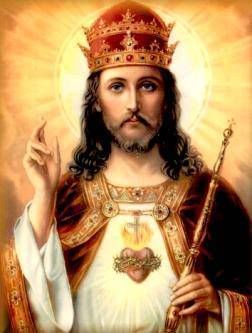
Act of Consecration to the Sacred Heart


Act of Consecration to the Sacred Heart

O Sacred Heart of Jesus, to Thee I consecrate and offer up my person and my life, my actions, trials, and sufferings, that my entire being may henceforth only be employed in loving, honoring and glorifying Thee. This is my irrevocable will, to belong entirely to Thee, and to do all for Thy love, renouncing with my whole heart all that can displease Thee.

I take Thee, O Sacred Heart, for the sole object of my love, the protection of my life, the pledge of my salvation, the remedy of my frailty and inconstancy, the reparation for all the defects of my life, and my secure refuge at the hour of my death. Be Thou, O Most Merciful Heart, my justification before God Thy Father, and screen me from His anger which I have so justly merited. I fear all from my own weakness and malice, but placing my entire confidence in Thee, O Heart of Love, I hope all from Thine infinite Goodness. Annihilate in me all that can displease or resist Thee. Imprint Thy pure love so deeply in my heart that I may never forget Thee or be separated from Thee.
I beseech Thee, through Thine infinite Goodness, grant that my name be engraved upon Thy Heart, for in this I place all my happiness and all my glory, to live and to die as one of Thy devoted servants.

Amen.

Wednesday, June 17, 2009

Killing a Conscience in Seven Steps

An elderly French couple, having retired after long years of work, were enjoying a tranquil, bucolic existence in a cottage outside of Paris. While rocking on the porch one evening, they were discussing what the other would do if one of them died. After some thought, the husband said, "Well, if one of us dies, I'll move back to Paris."

How human! It's always easier to think of others dying, rather than ourselves. You'll die and you'll die and you'll die, but I won't die. Something of the same mind also shows up in our attitude toward sin and sinners. It's easy enough to see other's faults and sins but not always easy to see our own. It's not that we cannot see them but just that we don't have the courage to look at them. They hurt our pride, or make us uncomfortable or dissatisfied with ourselves. We prefer to live in a fool's paradise of denial instead of tackling the exertion to get rid of them.

As with dying, it's easy to philosophize about sin and evil in the world and to cluck the tongue about the wickedness of this generation and be scandalized by it. It's so easy to make up a litany of social sins like injustice, dishonesty, graft, mugging, big industry pollution of water and the atmosphere, violation of so-called animal rights and sexism. But it is not so easy to face our personal sins, their causes and consequences. We don't want to look straight at that inner self which we struggle to bury in our subconscious.

Actually, each of us has three selves. First the public self which functions while we are in the presence of others, as on a stage. We're always trying to make a good impression, wondering what others are thinking of us and how we are impressing them. We are putting on a show. But a time comes when we leave the stage and slam the dressing room door behind us. We find ourselves alone. Then our private self takes over. We do things we would never do if others were looking at us: checking the waistline from the side, trying to get a look at the bald spot, making faces in the mirror, checking the cavities in our teeth. There's no need here in private to put on a show or be on display.

But besides these, each of us has a third self, our inner self. That's the one we don't want to face up to. That's where, if it happens, we take a good hard look at what we really are before God and why. Generally, we abhor confronting this self, so we constantly try to distract ourselves when it rises up into our consciousness. We wake in the middle of the night and it looms and disturbs us so we snap on the radio to see what's going on with the talk shows. When awake, we can't stand being alone, because that vision of what we really are might show up again, so we must get with the crowd, change into the fast lane, find some distraction.

This is why today, when the world does evil, it's the fashion to ignore and forget what's done, or to excuse it, to call it a mistake. Anything but sin. Our behavior is socially unacceptable or we're not relating properly to others. Moreover, it's always easy to look around and see that what I did is no worse than what others do.

But the top of the line brand of rationalizing and shirking responsibility, a practice that enjoys a booming popularity today, is not only excusing one's misdeeds and sins but actually defending them and maintaining they are simply not sins. They are my right; they are necessities of life; they are manifestations of freedom and not misdeeds at all. Besides, everyone's doing it. They are only reasonable allowances that must be made for life in the 21st century. After all, there is such a thing as exaggeration and losing one's sense of proportion. Thus each person becomes his own pope, do-it-yourself pontificating. But if each one is his own judge, who will be condemned? What spawns such a state of mind? A few centuries ago, St. John Fisher described the successive steps of the tragic process which leads to a such a dead conscience.

First Step

The English martyr bishop once preached a Lenten course to the Court of Henry VIII when Henry was still a true defender of the faith. In that series, the bishop traced out what he described as seven steps to the development of a bad will or dead conscience. The first step on this road, he claimed, has one wrestling with a temptation to do an evil or sinful act. The evil appears to him under the guise of a good, to do which promises pleasure, satisfaction or reward of some kind. For example, he might be tempted to rob a bank or to seduce a friend's wife or to some other sinful aberration from God's will, the gravity of which is testified to ultimately by the ordinary Magisterium of the Church. If the act promised no satisfaction or enjoyment, obvious there would be no temptation. No one was ever tempted to sneak a dose of castor oil, like an alcoholic snatching a furtive drink for the kick involved. Pleasure, satisfaction, titillation are essential to temptation. At this stage, of course, there is no question of the person sinning no matter how strong the temptation might be, provided the temptation is resisted.

St. Paul recalls even the Lord, like us in all things except sin, was subject to temptation in the desert. So there can be no guilt in the mere appearance of the sin to the mind, with all its enticement to anticipated pleasure or satisfaction. Moreover, God graciously permits no one to be tempted beyond his power to resist. "My grace is sufficient for you."

Second Step

On the other hand, should the person succumb to the temptation and decide to do the evil deed, that is, to grab the proffered satisfaction or pleasure, he thereupon takes the second step of the process. He has, at that moment, voluntarily committed the sin internally. "Whoever looks after a woman," in the sense in which Jesus spoke, "has already committed adultery in his heart." He has committed his will and incurred the guilt of the sin which, in the proposed example, would be serious or mortal and break his relationship of love with God.

Third Step

After incurring the guilt of the sin internally consenting fully to the temptation, should he continue down the steep ladder, he takes the third step of the process as proposed by St. John Fisher. All three synoptics described this step as it was taken by Judas Iscariot in betraying Jesus. After he had dickered with the Jewish chief priests and officers, it is written that he took the money and "then kept looking for an opportunity to hand him over without creating a disturbance" (Luke 22:6, emphasis added). Thus, the unfortunate dupe in our horrible example schemes and searches out the means to put his already determined plot into action. He "cases" the bank site, plans the location of a getaway car, discovers the least busy time at the bank; or, in the other case, he devises plans for contacting his friend's wife at the most opportune time and place. By taking this third step, he has increased his malice, guilt and culpability of his sin, since he has more firmly determined his will to externalize what was previously solely an internal sin.

Fourth Step

Having decided on the means he will use, if he persists in this resolve, he moves on to the fourth step. He de facto actualizes the sin by doing the evil act in the external forum. He robs the bank. He violates the other man's wife, or whatever. His sin has now further grown in gravity since it has accumulated the added guilt of the concomitant injustices to the bank depositors who have lost their money, or the insurance company which must raise its rates to subsidize the loss; or, in the other case, because of the hurt and injustice accruing to the husband and/or family of his seduced victim.

The culprit has now put himself into a state of more serious mortal sin than before he acted. But he can still hope for the grace of repentance and conversion in the normal course of God's dealing with his children. Jesus insisted that he had not come to call the self-righteous but sinners. "Those who are well need not a physician." Thus the person, while in a state of grave sin, has reason to hope that God's grace will ultimately bring him to repentance. In his inner self, when he faces it, his conscience still realizes the evil of his ways and the seriousness of his condition, however he may try to stifle it. While he is sick spiritually, it is possible for him to recognize that fact along with his need for the divine physician.

Fifth Step

But having externalized the evil act to which he was tempted, and having felt the pleasure or benefits of the sin, he can find it so appealing and satisfying that he is led to move on to the fifth step of the process. He can so forget the love of God and the God who loves him that he slips quite easily into repeating the sin again and again, i.e., robbing other banks or seducing other's wives until he develops a habit of bank robbery or seduction. Thus, he reaches a point where he has confirmed his will in habitual evil or mortal sin. His conscience is numbed.

But even at this tragic point, he can still hope for repentance and salvation in the ordinary operation of God's grace. Despite his habit of mortal sin, which he commits easily, with pleasure and without effort (a second nature), he still acknowledges in his inner self or conscience, when he faces it, that what he is doing is wrong. His conscience continues to function correctly though feebly and he is still amenable to the light of grace bringing truth to his mind and strength to his will. Thus, God can lead him to repentance and conversion even while he pursues his acknowledged evil.

Sixth Step

He continues in his condition until one of two things happens. He decides he can no longer live that way since he has no true peace, and so he repents and is reconciled with God. Or, if reconciliation does not happen, he then plunges into the next curve of the downward spiral leading to total confirmation in evil. When that happens, he has taken the sixth step of the process which effectively puts him in a condition of hopelessness.

The essence of this step is that he starts to tell himself seriously that, for him, these sinful acts, in which his will is habitually confirmed, are not sinful. He convinces himself that robbing banks or seducing married women or homosexual acts or contraception or abortion is all right for him. Circumstances make them acceptable and justifiable in his or other's cases. Those who say nay just do not understand the ramifications of the times or social conditions, or what people in general are doing. They should wake up and get with it, and slough off their "hangups." In a word, he has become a full-fledged dissenter from, at very least, the teaching of the ordinary Magisterium, the guardian of Christian morals, a teaching which demands religious consent and conformable conduct.

St. John Fisher insisted that at this point the sinner had reached a state of being practically hopeless for heaven because he has closed off every avenue by which truth can reach his person. First, his will is confirmed in a habit of mortal sin from constant repetition. Now, by taking this latest step of self-deception, he has blocked from his intellect the light of truth and the influence of the Holy Spirit. He is saying that wrong is right. There is no way for God's truth to reach him and he has willfully put himself into a condition of unavailability to the Spirit. His conscience is dead and he has killed it.

Note that the Holy Spirit, in influencing persons, does three things, if his operation is not resisted. First, he conveys truth to the mind. Then he moves the mind to grasp and understand the truth he makes known. "He will bring to mind all things I have told you." Finally, he moves the will to "do the truth in charity," as St. Paul says. That is, he moves the person to believe God's word as made known and guaranteed, ultimately by the magisterium of the Church, and moves his will to do God's will as he has made it known. All these operations, of course, are not coercive and require free acceptance and cooperation by the recipient.

However, by repeatedly resisting God's grace and refusing to listen to the Holy Spirit, one actually loses the ability to accept his love and mercy on his terms. This is the unforgivable sin against the Holy Spirit, who never ceases to offer his love and grace. This individual has confirmed himself in a crass, erroneous conscience and is reduced to calling black white and saying no is yes.

Pope John Paul II interceded for such types in his Marian prayer at Los Angeles. He prayed for "all those who are confused about the truth and are tempted to call evil good and darkness light." St. John the Evangelist puts it this way: "If we say we are free of the guilt of sin, we deceive ourselves; the truth is not to be found in us. But if we acknowledge our sins, he who is just can be trusted to forgive our sins and cleanse us from every wrong. If we say we have never sinned, we make him a liar and his word finds no place in us" (1 John 1:8-10).

So, by ignoring St. John's cautions and denying his sin, the subject has put himself in the state of being unavailable to God's action and, in effect, has made himself unforgivable. He commits moral suicide, doing tremendous damage to himself and others by blasting out the very foundation of hope, which is faith. He has reached the depths of infidelity, the loss of faith, which, by its nature, implies commitment to the will of God who is believed by faith. Such confusion in one's life finally produces a condition of slavery. Pope John Paul, on his visit to New Orleans, made it clear to any unfortunate who might find himself in such a state and would listen: "Even though you can come and go as you like, and do what you want, you are not free if you are living under the power of error or falsehood, deceit or sin." As the TV commercial used to say, "You can't fool mother nature."

The author of the epistle to the Hebrews described this state in even more frightening terms:

For when men have once been enlightened and have tasted the heavenly gift and become sharers in the Holy Spirit, when they have tasted the good word of God and the powers of the age to come, and then have fallen away, it is impossible to make them repent again, since they are crucifying the Son of God for themselves and holding him up to contempt." (Heb. 6:4-6).

Such a person has left no access for God's grace to come to or operate in him, for the Holy Spirit will never force his acceptance. No power on earth, in heaven or in hell can possibly coerce the free will of a person to accept or act on the impulse of God's grace. No external cause or factor can produce faith. Nothing within a person can generate what is above the powers of nature. Thus, only a miracle of grace can bring about the conversion of a resisting heart.

But to expect such a miraculous conversion in the natural order exceeds the ordinary mode of operation of God's grace. To hope for such a miracle at the end of life or at any other moment, for that matter, is the sin of presumption in its purest form, for God is not mocked. Moreover, such a state, being completely incompatible with supernatural hope for heaven and the vision of God, can never produce true inner happiness, even on this earth.

Seventh Step

The first sign that habitual sinning and perversion is a disastrous turning off the road to God is sadness. Nature is relentless and ultimately strikes anyone who acts against her. As with the law of gravity, one can deny sin but he never escapes the effects of sin. Archbishop Sheen used to tell the story of the Spartan boy who stole a fox and hid it beneath his toga. While he was denying the theft, the fox was eating away at his entrails. The first warning of sadness springs from within, from the inner self and it remains because, though dull and subtle, it is persistent and inexorable.

Now, because no one likes to be the only one miserable, (misery loves company), a person confirmed in a habit of sin which he has foolishly convinced himself is not sin, boldly strides to the seventh and final step to spiritual destruction. He proceeds to pull out all the stops to convert others to adopt his convictions, to persuade them to think and act the way he thinks and acts. He wants to make others as unhappy as he is. His joy is to "debunk" others and try to free himself from guilt by projecting it onto others. He wants to make others as unhappy as he is.

Thus, he and his ilk take to shouting their conclusions and theories from the rooftops, whether they are about pornography, contraception, abortion, homosexuality or whatever is the blue plate special of the day. They resort to bitter, desperate self-defense to protect themselves in their own eyes against nay-sayers. They strive to indoctrinate others in their errors, seeking their approval. As St. Peter warns in his second epistle, "They will eagerly try to buy you for themselves with insidious speeches, but for them the Condemnation pronounced so long ago is at work already, and Destruction is not asleep" (2 Pet. 2:3, J.B.). So they are welcomed on Phil Donohue or Oprah or Sally or other TV or radio talk shows. Like magnets, they attract cliques at cocktail parties and spew their venom against the Holy Father and the Church's teachings; they write letters to editors; they join demonstrations; they carry signs to try in any way possible to get others to adopt and act on their views. Chicago Tribune Columnist Mike Royko stands up and psycho-babbles for the whole group: "I stopped being a Catholic many years ago (my family didn't want somebody like [Card.] O'Connor telling us how many children to have)." Like young boys whistling their way past a cemetery on a dark night, they pump up pseudo-courage to continue on their perilous path.

"After all, what does that old bachelor in Rome know about life; what does he know about marriage and love and contraception or homosexual activity? It is by Beelzebub that he is trying to cast out these practices he calls devils."

Thus, as a modernized version of St. John Fisher would have it, some put themselves in a state of unforgiveableness because they refuse to accept Gods' conditions for forgiveness, i.e., the willingness to admit their wrong doing. If a person is sick and admits it, there is some hope that the cause of his sickness can be discovered and remedied. But if a person is sick and insists that he is well, if he refuses to acknowledge that he might be ill, there is not much the Divine Physician can do for him. The worst thing in the world is not sin. It's the denial of sin by a false conscience. The unforgivable sin is the denial of sin.

Thus, objectively, confirmed dissenters from the Church's moral or dogmatic teaching cannot bring themselves to act contrary to the self-justifying conclusions of their own minds. Such resent the very authority upon which faith rests. If the truth is not run through the computer of their own judgment, they fear restraint of their liberty, the height of intellectual pride. Acceptance of truth on faith in God seems to them a reflection on themselves, an indignity to their human nature whose autonomy they regard as the primary operational principle. The truth is, submission by faith to the authority of God is not an insult, not a humiliation, not a degradation. It is rather a liberation from the five-barred cage of the senses, a guarantee that one will not be misled or tricked.

After all, the Catholic Church is a voluntary community and in deliberately choosing to remain part of it, all Catholics, clerical and lay, must provide "submission of mind and will" to the Church's ordinary magisterial teaching on faith and morals. The Church cannot force moral decisions on anyone since such decisions are made in the internal forum which is not subject to external forces.

According to St. John Fisher, one at this stage has reached the condition of hopelessness, because by infidelity, the opposite of faith, he has destroyed any basis of hope he may have had. He cannot really hope to be with one in whom he has no functioning faith. In the spiritual realm, such dissent is a disaster comparable to AIDS in the physical order. It threatens more than the physical life. "Do not fear those who deprive the body of life but cannot destroy the soul. Rather fear him who can destroy both body and soul in Gehenna" (Matt.10:28).

Obviously there are many whose activity, objectively, indicates a dead conscience, because they have completed the seven steps described by St. John Fisher. They are what Mother Teresa calls the poorest of the poor of this world, however prosperous they may look, no matter what posh suburb they may inhabit. They must be the first concern of the Church in pursuing its fundamental option for the poor, and should be the object of unceasing prayer by all Catholics. When the Apostles asked Jesus why they could not expel a certain demon, he replied, "This kind you can drive out only by prayer" (Mark 9:29). There but for the grace of God go I.

Reverend Philip E. Dion, CM., is Director of Aging and Retirement for the Vincentian Eastern Province. Formerly Dean of the Graduate School of St. John's University, New York and the Seminary of Our Lady of the Angels in Albany, N.Y., he holds an S.T.L. from the Angelicum in Rome. He has published four books on the spiritual life and given numerous retreats to clergy and religious in the U.S.A., South America and Asia.

St. Joseph Cafasso - 17th June 2009

Joseph Cafasso was born in 1811, in northern Italy, near the city of Turin. Four years later, in 1815, one of his most famous students was born in the same town, St. John Bosco. We celebrate his feast on January 31. Joseph had loving parents who were willing to sacrifice for his education. He went to Turin to study to become a priest.
Joseph met John Bosco in 1827 when Bosco was twelve. He talked to Seminarian Cafasso at the church and ran all the way home. "Mom, Mom," John called, "I met him, I met him!" "Who?" his mother asked. "Joseph Cafasso, mother. He's a saint, I tell you." Mrs. Bosco smiled and nodded gently. In 1833, Joseph was ordained a priest. He began his priestly work and went to an excellent school of theology for priests. When Father Cafasso graduated, he became a theology professor. He taught many young priests over the years. They could tell that he really loved them.
Father Cafasso became known as the priest who believed in the gentle and loving mercy of God. Because he was so kind himself, he gave people courage and hope. He guided many priests, religious and lay people. He helped John Bosco begin his great priestly ministry with boys. He also guided Father Bosco in starting his religious order known as the Salesians. Father Cafasso directed other founders, too. There were many social needs in Father Cafasso's time. One of the most urgent was the prison system. Prison conditions were disgusting. But what most moved Father Cafasso was the custom of hanging in public prisoners sentenced to death. Father Cafasso went to them and heard their confessions. He stayed with them, telling them of God's love and mercy until they died. He helped over sixty convicted men. All repented and died in the peace of Jesus. Father Cafasso called them his "hanged saints."
Father Cafasso also became the pastor of St. Francis Church in 1848. No one could ever measure his great influence on people and works in the Church. Father Cafasso died on June 23,1860. His devoted friend, St. John Bosco, preached the homily at his funeral. Pope Pius XII proclaimed him a saint in 1947.
We can never be too kind and understanding with people. If we should be tempted to take others for granted, or just look after ourselves, we can pray to St. Joseph Cafasso. He will help us to become "big-hearted" like he was.

Tuesday, June 16, 2009

St. John Francis Regis - 16th June 2009

Son of a wealthy merchant. Educated at the Jesuit college at Beziers, and at Cahors, Le Puy, Auch, and Tournon. Joined the Jesuits at age 18. Preacher. Catechist who was so good that children he taught helped bring their parents back to the Church. Ordained at age 34. Worked with plague victims in Toulouse, France. Taught at Pamiers.

His skill at preaching caused him to be sent as evangelist to provinces that had fallen to the Huguenots following the Edict of Nantes, places where many had abandoned the Church. Not known for a polished style or appearance, his simple method of preaching the Truth, and his willingness to work for the poor, converted crowds of farmers, workers, and country folk. When pressed about his image he replied, “The rich never lack confessors.” He lived off apples, black bread, and whatever came to hand, preferring to spend his time preaching, teaching, and hearing confessions.

Established hostels for prostitutes, whom he called “Daughters of Refuge”, who wished to leave the business. He was often assaulted for his trouble. Helped a group of country girls stay away from the cities by establishing them in the lacemaking and embroidery trade, an area of which he a patron saint.

Established the Confraternities of the Blessed Sacrament; to the society women he offered the “gift” of a few hungry mouths to feed, while to others he sent notes like,

“Sir, you will provide food for the poor people who names are listed below, and you will give them six sous for their lodging. If you are unable to provide them with food, you will give them a further six sous so that they may buy it themselves.”

They did. Established a granary for the poor which sometimes miraculously refilled, demanded (and received) treatment for them by doctors, nurses, and pharmacists. Known for miraculous healing, but said that “every time God converts a hardened sinner, He is working a far greater miracle.”

At one point there was a movement against him by some of his fellow Jesuits who felt his zealous “signs of simplicity and indiscretion” did not best showcase their order nor follow its teachings. Regis’ bishop, however, recognized there was more jealousy than theology in the complaint, and ignored it. Regis asked for transfer to Canada where he could preach without worries about the politics of the Order, but he was ordered to continue his good works in the French countryside.

At age 43 Regis had a premonition of his death. He spent three days in retreat, made a general confession, and resumed his mission in mountain villages. Bad weather set in, he spent his days preaching, his nights in poor shelter, developed pleurisy and then pneumonia. His last words were “Jesus, my Savior, I recommend my soul to You.”