The texts provided below are taken from the catecheses, exhortations, and sermon excerpts of the Holy Curé of Ars, Saint John Vianney. The entire series was put together by Fr. Bryan W. Jerabek.
Catechism on Salvation
There are many Christians who do not even know why they are in the world. "Oh my God, why have You sent me into the world?" "To save your soul." "And why do You wish me to be saved?" "Because I love you." The good God has created us and sent us into the world because He loves us; He wishes to save us because He loves us.... To be saved, we must know, love and serve God.
Oh, what a beautiful life! How good, how great a thing it is to know, to love and serve God! We have nothing else to do in this world. All that we do besides is lost time. We must act only for God, and put our works into His hands.... We should say, on awaking, "I desire to do everything today for You, O my God! I will submit to all that You shall send me, as coming from You. I offer myself as a sacrifice to You But, O God, I can do nothing without You. Do help me!"
Oh, how bitterly shall we regret at the hour of death the time we have given to pleasures, to useless conversations, to repose, instead of having employed it in mortification, in prayer, in good works, in thinking of our poor misery, in weeping over our poor sins; then we shall see that we have done nothing for Heaven. Oh, my children, how sad it is! Three-quarters of those who are Christians labor for nothing but to satisfy this body, which will soon be buried and corrupted, while they do not give a thought to their poor soul, which must be happy or miserable for all eternity. They have neither sense nor reason: it makes one tremble.
Look at that man, who is so active and restless, who makes a noise in the world, who wants to govern everybody, who thinks himself as important, who seems as if he would like to say to the sun, "Go away, and let me enlighten the world instead of you." Some day this proud man will be reduced at the utmost to a little handful of dust, which will be swept away from river to river, and at last into the sea.
See my children, I often think that we are like those little heaps of sand that the wind raises on the road, which whirl round for a moment, and are then scattered.... We have brothers and sisters who are dead. Well, they are reduced to that little handful of dust of which I was speaking. Worldly people say it is too difficult to save one's soul. Yet nothing is easier. To observe the Commandments of God and the Church, and to avoid the seven capital sins; or if you like to put it so, to do good and avoid evil: that is all. Good Christians, who labor to save their souls and to work out their salvation, are always happy and contented; they enjoy beforehand the happiness of Heaven: they will be happy for all eternity. While bad Christians, who lose their souls, are always to be pitied; they murmur, they are sad, they are as miserable as stones; and they will be so for all eternity. See what a difference!
This is a good rule of conduct, to do nothing but what we can offer to the good God. Now, we cannot offer to Him slanders, calumnies, injustice, anger, blasphemy, impurity, night clubs, dancing; yet that is all that people do in the world. Speaking of dances, St. Francis of Sales used to say that "they were like mushrooms, the best were good for nothing." Mothers are apt to say indeed, "Oh, I watch over my daughters." They watch over their attire, but they cannot watch over their hearts. Those who have dances in their houses load themselves with a terrible responsibility before God; they are answerable for all the evil that is done – for the bad thoughts, the slanders, the jealousies, the hatred, the revenge.... Ah, if they well understood this responsibility they would never have any dances. Just like those who make bad pictures and statues, or write bad books, they will have to answer for all the harm that these things will do during all the time they last.... Oh that makes one tremble!
See, my children, we must reflect that we have a soul to save, and an eternity that awaits us. The world, its riches, pleasures, and honors will pass away. Let us take care, then. The saints did not all begin well; but they all ended well. We have begun badly; let us end well, and we shall go one day and meet them in Heaven.
Wednesday, March 9, 2011


Lent: Rediscovering Our Baptism - Pope Benedict XVI
"Lent is a journey, it means accompanying Jesus as He travels to Jerusalem, the place where the mystery of His Passion, Death and Resurrection is to be fulfilled. It reminds us that Christian life is a 'road' to be travelled, consisting not so much in a law to be observed as in the person of Christ Himself, Who must be encountered, welcomed and followed".
"It is above all in the liturgy, in participation in the holy mysteries, that we are drawn into following this path with the Lord, ... reliving the events that have led us to salvation; but not as a simple commemoration, a recollection of things past", the Holy Father explained. "There is", he said, "a keyword to indicate this, which is often repeated in the liturgy: the word 'today', which must be understood not metaphorically but in its original concrete sense. Today God reveals His law and we have the opportunity to chose between good and evil, between life and death".
On Sundays during Lent we experience "a baptismal itinerary" which helps to conform "our lives to the requirements and duties of that Sacrament, which lies at the foundation of our Christian life".
"The first Sunday [of Lent], called the Sunday of temptation because it presents us with the temptation of Jesus in the desert, invites is to renew our definitive choice for God, and courageously to face the struggle that awaits us in remaining faithful to Him". The second Sunday is the Sunday of Abraham and the Transfiguration and, "like Abraham, father of believers, we too are invited to depart, to leave our own land, to abandon the certainties we have constructed and place our faith in God. We may glimpse our goal in the transfiguration of Christ, the beloved Son, in Whom we too become 'children of God'".
On the third Sunday we encounter the Samaritan woman. "Like Israel in the Exodus, in Baptism we too received the water that saves. Jesus, as He tells the Samaritan woman, has the water of life which satisfies every thirst; this water is His Spirit. ... The fourth Sunday leads us to reflect on the experience of the man 'blind from birth'. In Baptism we are freed from the shades of evil and receive the light of Christ in order to live as children of light. ... Finally, the fifth Sunday presents us with the raising of Lazarus. In Baptism we pass from death to life and become capable of pleasing God, of causing the old man to die so as to live in the spirit of the Risen One".
In Church tradition the period of Lent is characterised by practices such as fasting, almsgiving and prayer, said Pope Benedict, explaining how fasting "means abstaining from food, but it also includes other forms of privation for a more abstemious life". It "is closely linked to almsgiving ... which under the one name of 'mercy' embraces many good works". Moreover, during this period the Church "invites us to a more trusting and intense prayer, and to prolonged meditation on the Word of God".
"On this Lenten journey", the Pope concluded, "let us be attentive to welcoming Christ's invitation to follow Him more decisively and coherently, renewing the grace and commitments of our Baptism, so as to abandon the old man who is in us and clothe ourselves in Christ, thus reaching Easter renewed and being able to say with St. Paul 'it is no longer I who live, but it is Christ who lives in me'"
"It is above all in the liturgy, in participation in the holy mysteries, that we are drawn into following this path with the Lord, ... reliving the events that have led us to salvation; but not as a simple commemoration, a recollection of things past", the Holy Father explained. "There is", he said, "a keyword to indicate this, which is often repeated in the liturgy: the word 'today', which must be understood not metaphorically but in its original concrete sense. Today God reveals His law and we have the opportunity to chose between good and evil, between life and death".
On Sundays during Lent we experience "a baptismal itinerary" which helps to conform "our lives to the requirements and duties of that Sacrament, which lies at the foundation of our Christian life".
"The first Sunday [of Lent], called the Sunday of temptation because it presents us with the temptation of Jesus in the desert, invites is to renew our definitive choice for God, and courageously to face the struggle that awaits us in remaining faithful to Him". The second Sunday is the Sunday of Abraham and the Transfiguration and, "like Abraham, father of believers, we too are invited to depart, to leave our own land, to abandon the certainties we have constructed and place our faith in God. We may glimpse our goal in the transfiguration of Christ, the beloved Son, in Whom we too become 'children of God'".
On the third Sunday we encounter the Samaritan woman. "Like Israel in the Exodus, in Baptism we too received the water that saves. Jesus, as He tells the Samaritan woman, has the water of life which satisfies every thirst; this water is His Spirit. ... The fourth Sunday leads us to reflect on the experience of the man 'blind from birth'. In Baptism we are freed from the shades of evil and receive the light of Christ in order to live as children of light. ... Finally, the fifth Sunday presents us with the raising of Lazarus. In Baptism we pass from death to life and become capable of pleasing God, of causing the old man to die so as to live in the spirit of the Risen One".
In Church tradition the period of Lent is characterised by practices such as fasting, almsgiving and prayer, said Pope Benedict, explaining how fasting "means abstaining from food, but it also includes other forms of privation for a more abstemious life". It "is closely linked to almsgiving ... which under the one name of 'mercy' embraces many good works". Moreover, during this period the Church "invites us to a more trusting and intense prayer, and to prolonged meditation on the Word of God".
"On this Lenten journey", the Pope concluded, "let us be attentive to welcoming Christ's invitation to follow Him more decisively and coherently, renewing the grace and commitments of our Baptism, so as to abandon the old man who is in us and clothe ourselves in Christ, thus reaching Easter renewed and being able to say with St. Paul 'it is no longer I who live, but it is Christ who lives in me'"
The Parables of the Kingdom - Part V - Mons João Clá Dias
The Parables of the Kingdom - Part V - Mons João Clá Dias
V - Epilogue
Jesus taught His disciples the substance and the beauties of the Kingdom of Heaven, therefore making them doctors. Thus, well formed, it was their duty to teach others with an abundance and variety of doctrine, proportionate to the level and needs of their audience, without ever being caught "empty handed." "Because in the same way that the father of a family, should nourish his own with corporal food, so the evangelical doctor should sustain the Christian people with spiritual food."
It is also necessary - when we have others under our care - to employ all the best means of erudition, both past and present, and the most captivating didactics, to instruct and form them.
On this occasion, Jesus contemplated the future of His work, no longer merely from the eternal knowledge springing from His divinity, nor from the beatific vision of His soul in glory alone, but through His human experience. He discerned the splendours of the final outcome of all events, after all of His sufferings and torments during the Passion. he rejoiced to see, in advance, the triumph of His disciples, the triumph of the Church, and of the good in general, after the Judgement, as well as the justice of the Father falling upon those who would reject His Revelation. This is why He unveiled before the public - as well as His disciples - future panoramas, at times grave and foreboding, at other times dazzling with marvellous splendours. His listeners were occasionally filled with fear and trembling; at other moments, with consolation and hope. Fear is an excellent deterrent in face of the invitation to evil, and hope is one of the best incentives leading us to God.
Let us set our minds and hearts on the marvels of the Kingdom of Heaven, and maintain an enduring terror of eternity in Hell. Thus, we will be prepared to take our place among those guests who will be on the right of Jesus in the Final Judgement!
Tuesday, March 8, 2011
The Parables of the Kingdom - Part 4 - Mons Joao Cla Dias EP

The Parables of the Kingdom - Part 4 - Mons Joao Cla Dias EP
IV - Parable of the Net
"Again, the kingdom of heaven is like a net which was thrown into the sea and gathered fish of every kind; when it was full, men drew it ashore and sat down and sorted the good into vessels but threw away the bad. So it will be at the close of the age. The angels will come out and separate the evil from the righteous, and throw them into the furnace of fire; there men will weep and gnash their teeth."
We continue listening to Jesus speaking in the vicinity of the Sea of Tiberius. According to experts, its waters contain almost thirty species of fish. Fr. Manuel de Tuya, OP, accurately describes the historical and geographical reality of this parable, analyzing, according to Levitical legislation, the fish that were considered impure - due to the absence of scales, etc., and others classified as bad because they were defective. Hence, once the net had been brought to the beach, the fishermen removed the fish, and the good ones were placed in vessels, while the bad ones were discarded.
This scene, so common in the daily life of His disciples, is highlighted by the Divine Master, to make it clear to them that, to enter the Kingdom of Heaven, it is indispensable to be a good citizen of this same Kingdom, which begins here with the supernatural life. Only in this way will we avoid being excluded at our Particular Judgement, and therefore, in the Final Judgement as well. "in other words, the Church is compared to a net, because it was entrusted to the hands of fishermen, and by it everyone is drawn from the waves of this present life into the Eternal Kingdom, that they should not drown in the depths of eternal death."
This Church assembles all kinds of fish, because all men are called to forgiveness: the wise and the foolish, the free and the slave, the rich and the poor, the strong and the weak. The net will be entirely filled, that is, the Church, when, at the end of time, the destiny of the human race will have been determined. Hence it continues, "when it was full" they drew it ashore, and sat down and sorted the good into vessels but threw away the bad. For as the sea signifies the world, so the seashore signifies the end of the world; and as the good are gathered into vessels, but the bad cast away, so the chosen ones are received into the eternal abodes, while the reprobates, having lost the light of the inward kingdom, are cast forth into the outer darkness. Now, the net of faith holds good and bad mingled together; but upon reaching shore, those with in the net of the Church shall be revealed."
It is not only according to St Gregory that this "net" can be interpreted as an image of the Church; many authors share this opinion. The Church is composed of the just, but of sinners as well. The evil that we sometimes find in its human part should neither alarm nor scandalize us; it has been forseen. Despite this, the Church remains HOly in its essence, because it is divine. Our concern should be seeking this "pearl" and finding this "treasure", and abandoning all attachments to be good "fish" in this net.
The task of separation will fall to the Angels, on the Day of Judgement: the good on the right, the bad on the left. Holy priests will be separated from sacrilegious priests; observant religious from the sensual; honest judges from the unjust; the prudent virgins will be received, the foolish rejected; faithful spouses will be removed from among the adulterers; in short, the elect will be put on one side and the reprobates on the other.
A comprehensive description of the eternal torment of the damned in hell, and a contrasting account of the heavenly delights that the good will enjoy in eternal life would be appropriate here. However, there will surely other opportunities to deal with this important theme.
Monday, March 7, 2011
The Parables of the Kingdom - Part 3 - Mons Joao Cla Dias EP

The Parables of the Kingdom - Part 3 - Mons Joao Cla Dias EP
III - Parable of the Pearl of Great Value
"The kingdom of heaven is like a merchant in search of fine pearls, who, on finding one pearl of great value, went and sold all that he had and bought it."
"The kingdom of heaven is similar not to the merchant, but rather to the pearl; just as in the present parable, it is not like the man who finds the treasure, but rather the treasure in question." In Antiquity, pearls were considered to be of inestimable value. Hence, whoever found a pearl of excellent quality for sale was willing to vend all his goods to purchase it. The text speaks to us of 'a merchant in search of fine pearls.' Upon acquiring a pearl of the highest quality, he does not consider selling it - at least the Gospels mention nothing in this respect.
Many authors debate the secondary details. What is important to bear in mind is that this parable "has the same meaning as the previous one, differing only in matter," in other words, if circumstances should demand it, one must abandon everything one owns to obtain this treasure or pearl which is non other than the Kingdom of Heaven.
St. John Chrysostom ponders this subject: "The gospel preaching is not only a font of multiple riches - as is a treasure - but it is also precious as a pearl." And further on, completing his though, he affirms: "The truth is one; it cannot be divided into various parts. Therefore only one pearl is said to be found. And just as one who possesses a pearl of great value, knows well its wealth, while it often goes unknown by others because it is so small it can be concealed in a hand, so it is in the preaching of the Gospel; they who posses it know that they are rich, while unbelievers, not knowing of this treasure know not its value."
In Fact, in those early times, how many pagan thinkers adhered to the truth of Christianity, feeling attracted by its doctrine - some even giving their lives for love of it? They were "good pearl merchants".
On the other hand, many today have abandoned the "pearl" of the truth, preferring to descend the precipice of error, equivocation and confusion. They throw themselves fearlessly into the murky waters of indifference and tepidity with regard to their eternal salvation, the Kingdom, and even God. For these souls, the sense of being becomes increasingly torpid, almost reaching the point of no longer distinguishing between good and evil, beauty and ugliness, truth and error.
And how many know the truth, yet fail to dedicate themselves to it merely through a lack of generosity? They do not "sell everything they possess..." And who, in today's world, is willing to sacrifice all to remain in a state of grace?
The two parables complement each other harmoniously. One refers to the pulchrum of the Kingdom (that of the pearl); the other seeks to instil the concept of gain, utility and reward (that of the treasure). In the latter, the Kingdom is reflected as a freely bestowed gift ("find"); in the former, the effort ("search") is emphasized. In both, it becomes obvious that everyone seeking to acquire the Kingdom of Heaven must become detached from the goods of this earth.
Sunday, March 6, 2011
The Parables of the Kingdom - Part 2 - Mons Joao Cla Dias EP
The Parables of the Kingdom - Part 2
Parable of the Hidden treasure
"The kingdom of heave is like a treasure hidden in a field, which a man found and covered up; then in his joy he goes and sells all that he has and buys that field."
The secondary details are omitted by the Evangelist. Did the Divine Master deal with them, or not? We have no way of knowing. But we can imagine how captivating Jesus exposition must have been, by the very fact that he discussed themes through His humanity, and, pari pasu, was illuminating, predisposing and aiding, through grace and His divine power, the depths of each soul present.
Matthew has a definite goal in mind. This is why he summarizes the parable in its essential parts, leaving aside, for example, how this treasure was discovered. We know of astounding discoveries of this sort throughout history. Hence, it is left to our imagination to fill in the details of this story.
The man hides the treasure once again. Morally speaking, he proceeds properly, by not taking possession of the unearthed riches. At the same time he shows himself to be prudent, hiding the riches to avoid causing temptation for others who could come across them. "It is not necessary to attribute this detail [that of hiding the treasure] to the significance of the parable, because, according to my theory it is merely an ornamental part of it" Maldonado analyses this point in particular, with deep and wise insight, while commenting on the considerations of St. Jerome and St. Bede.
We are intrigued that the authors concentrate on the man who finds the treasure, but are unconcerned about the land in which it was hidden. Let us probe this point a little further.
Considering the early years of the Church, we see how much it cost Jews and converted pagans "to buy the land" in which the treasure of salvation was hidden. The renouncement required was absolute: family, goods, reputation and even one's own life. How admirable, though, was the conduct of those who embraced the Catholic Faith in those times!
Which of the two roles does present day humanity play: that of the man who wishes to buy, or that of the one who wishes to sell? Unfortunately, most facts lean towards the second hypothesis. many of us today, fall prey to the folly of becoming unconcerned with this treasure of our Faith, won at such a high price by our ancestors, and for which the Saviour shed all of His Most Precious Blood on Calvary. For what shameful price do some of us sell this sublime treasure, just as Esau sold his birthright, in exchange for a paltry dish of lentils! Today, more than ever, the "lentils" of sensuality, corruption, illicit pleasure, ambition etc. are multiplying.
We could also include here the example of a religious who allows himself to be swept away by practical affairs, forgetting the 'treasure' for which he abandoned everything in his initial fervour.
The fullness of joy of the man of the parable should remain with us uninterruptedly throughout our entire lives, as one of the effects of the true Faith. Virtue is a freely bestowed gift; it cannot be bought. However, its ongoing possession and growth require self-denial, piety and fervour. It is necessary to "sell" all of our passions, caprices, manias, vices, sentimentality, etc. - in brief, all that is evil in us. It is the best 'deal; we can make on this earth.
Saturday, March 5, 2011
The Parables of the Kingdom - Part 1 - Mons Joao Cla Dias EP
The Parables of the Kingdom
1 - The Kingdom revealed by the divine master
Some soldiers, sent by the religious authorities to the Temple to seize Jesus returned without fulfilling their mission. They claimed the task an impossible one because of the simple fact that no one had ever spoken as He spoke. This episode reveals the great power of expression of the truth taught by the Truth Incarnate.No one has ever been - or will ever be - Master, in the full sense of the term, as Jesus Christ. Who could surpass the Divine Preacher in pedagogy?
We can also consider how morally incapable man is of coming to a full knowledge of religious truths on his own. The aid of Revelation is necessary in attaining such knowledge. Regarding this, we might ponder: Could there be anyone better than Jesus Himself to offer this Revelation? He brought, from on high, a wealth of themes to instruct us - among which we find that of the Kingdom of God.
Objective of the teachings of Jesus
His great desire was to directly acquaint us with the marvels that the Father had prepared for us, for these are not easily expressed in human language as St. Paul himself says: ' What no eye has seen, nor ear heard, nor the heart of man conceived, what God has prepared for those who love him "(1 Cor 2:9). But we would lose merit if He were to show us the Kingdom of Heaven, rather than reveal it to us. Hence, it was indispensable that He use approximate images, filled with logic and verisimilitude, easily grasped by our intelligence. Being who He was, and communicating a doctrine that was eternal and filled with grandeur, in its very substance, the Master had no need to resort to bombastic rhetoric.
In light of this, and analysing how events unfolded, it becomes clear to the simple Gospel reader that, in His public life, it was not Jesus' objective to form professionals, artists or specialists in science. He strove to build up the living stones of His Church and guide them toward His eternal Kingdom. We also better understand some of the reasons which led Him to present Himself, in His mission, as a perfect excellent model for all who are called to teach. By His way of acting, He warned of the errors, deceptions and deviations of those who wish to project themselves through their teaching, or those who seek to claim ownership of the truth, while it is something belonging to everyone.
After Jesus, saints and Church doctors have greatly enlightened us on this point, among them St. Augustine, who writes "For whosoever claims to himself as his own that which Thou appointed to all to enjoy, and desires that to be his own which belongs to all, is forced away from what is common to all to that which is his own - that is, from truth to falsehood."
Truly, from this outlook, Jesus gave us the highest example of unpretentiousness, as St. Paul tells us: "Though he was in the form of God, he did not count equality with God a thing to be grasped, but emptied himself, taking the form of a servant, being born in the likeness of men' (Phil 2:6-7). Thus, we invariably find Him deferring to the Father.
Supremacy of the Divine Magisterium
Let us examine some elements which deepen our understanding of the reason that Jesus stands out in the firmament of history as the Divine Master. The Angelic Doctor affirms: "Now Christ is the first and chief teacher of spiritual doctrine and faith, according to Hebrews 2:3-4: 'Which having begun to be declared by the Lord was confirmed unto us by them that heard Him, God also bearing them witness by signs and wonders.'"
One can, in fact, speak with utter certainty on the excellence of the Magisterium of Christ, since "the power of Christ's teaching is to be considered in the miracles by which He confirmed His doctrine, in the efficacy of His persuasion, and in the authority of His words, for He spoke as being Himself above the Law when He said: 'But I say to you' (Mt 5:22-44); and, again, in the force of His righteousness shown in His sinless manner of life"
Further supporting the vision of the Sacred Magisterium of the Divine Master, St. Thomas shows how sacred science surpassed all others, both in object and certainty. For it has the loftiest themes as its object - themes beyond the grasp of purely human reason. The other sciences, however, only encompass what belongs within their parameters. As to its certainty, sacred science is based on divine Light, which is infallible,while the others rely on the light of reason, which is susceptible to error. He concludes: "Hence it is clear that from every standpoint, it is nobler than other sciences."
IN light of this supremacy of the Divine Magisterium of Jesus, let us reconsider His reason for using parables in His teaching.
The method of intertwining simplicity and eternity.
Parables were commonly used in the Old Testament. Among them is the parable of the vineyard of Isaiah, and that used by Nathan to admonish David for his sins (Sam 12: 1-4). We are led to believe that during the time of the public life of Our Lord, parables had become even more commonplace, especially among rabbis. There were parables of all kinds. They always contained a comparison that aims to shed light on some difficult teaching. Despite their simplicity - or perhaps even because of it - parables were a useful pedagogic tool. Their characteristic note of ambiguity created an engaging enigma. Those who failed to grasp their full meaning were wholly intrigued, and those who understood them fully enjoyed a certain satisfaction. According;y, the Divine Master said to His listeners; "He who has ears to hear; let him hear" (Mk 4:9)
Authors have debated this point among themselves. Some analyse the parables of the Messiah from the standpoint of justice, considering them a tactic used by the Messiah to chastise those who refused to believe in Revelation, despite His miracles. Outstanding among them is Maldonado, as well as Knabenbauer and Fonk. Others, favouring an opposite perspective, based on mercy, explain that the parables' discreet veil was meant to stimulate the interest of listeners, prompting them to ask questions. St. Jerome affirms: "Mix the clear with the obscure so that, by means of what is understood that which is not can be grasped."
Within the new perspectives, it was also crucial for Jesus to form His disciples gradually rather than in an abrupt manner. From this point of view, His chosen method could not have been better. Parables were typically simple and devoid of pretension. They were always relevant when dealing with matters related to eternity. Simplicity and eternity were two terms intertwined at the heart of the Revelation brought by Jesus with regard to the Kingdom.
Two opposing visions of the Kingdom
The Jewish People had an erroneous notion of this point. They considered the coming of the Messiah to be a unique opportunity for the fulfillment of the nationalistic dream of the Chosen people: a divine intervention to establish an historical era in which political, social and economic dominion over all peoples would be gloriously and triumphantly be attained.
The content of the Revelation concerning the true Kingdom headed in exactly the opposite direction. There, we find nothing but unpretentiousness, a calm pace and the surmounting of obstacles. Hence its correlation with the images of the mustard seed and the wheat and the tare - parables opposing the erroneous visualization held by the Jewish People.
Jesus preaches to the multitude
This is the recurring theme of Chapter 13 of the Gospel of St. Matthew. In this chapter, we accompany Jesus preaching in Galilee. After leaving the house, Jesus sits by the shore of the Sea of Tiberius. He is surrounded by such an enormous multitude that He is compelled to enter a boat to address everyone. He speaks, once again, in parables: the sower, the tares, the mustard seed and the leaven. He departs from His listeners and returns to the house. Once alone with His disciples, He is asked to explain the metaphor of the tares. f we continue listening to Him, we penetrate the Gospel passage.
Although St. Matthew presents these teachings as having been given in private - to the disciples alone, rather than the multitude - Maldonado is of the opposite opinion: 'I believe it was more likely that He had previously said this to everyone along with the other parables'
(part II to follow)
Saturday, February 19, 2011
John of the Cross: Purify the Heart in Order to Meet Christ
In his general audience today, held in the Paul VI Hall, the Pope focused his attention on St. John of the Cross, "spiritual friend to St. Teresa and, with her, reformer of the Carmelite religious family. Proclaimed a Doctor of the Church by Pius XI in 1926, he is traditionally known as the 'Doctor mysticus', the Mystical Doctor", the Holy Father said.
John was born to a poor family at Fontiveros near the Spanish town of Avila in 1542 and entered the Carmelite order at Medina del Campo. Ordained a priest in 1567, it was on the occasion of his first Mass that he met Teresa, "who explained to him her plan for the reform of the Carmelites". In his renewal of his religious profession John took the name "of the Cross" and collaborated enthusiastically in the process of reform, something "which brought him great suffering", and even led to his imprisonment following an unjust accusation. While preparing a journey to Mexico he fell seriously ill and died in December 1591. He was beatified by Clement X in 1675 and canonised by Benedict XIII in 1726.
St. John of the Cross, said Benedict XVI, "is considered one of most important lyric poets of Spanish literature. He wrote four major works: 'Ascent of Mount Carmel', 'Dark Night of the Soul', 'Spiritual Canticle' and 'Living Flame of Love'.
"In his 'Spiritual Canticle' St. John outlines the soul's journey of purification", the Holy Father added. "The 'Living Flame of Love' continues in the same line, describing in greater detail the condition of union with God. ... 'Ascent of Mount Carmel' outlines the spiritual itinerary from the point of view of a progressive purification of the soul, which is necessary in order to scale the heights of Christian perfection, symbolised by the summit of Mount Carmel".
The Pope continued his catechesis by explaining how "the 'Dark Night of the Soul' describes the 'passive' aspect; in other words, God's contribution to the process of purifying the soul. Human effort alone, in fact, is incapable of reaching the deepest roots of a person's bad inclinations and habits. It can halt them but not eradicate them completely. To do this, we need a special action by God which radically purifies the spirit and disposes it to the union of love with Him".
"The rate of increase of faith, hope and charity goes hand in hand with the work of purification and with progressive union with God, until attaining transformation into Him. When this goal is reached, the soul is immersed in Trinitarian life itself. ... This is why the Mystical Doctor held that there is no true union of love with God that does not culminate in Trinitarian union".
The Pope completed his remarks by asking whether the life of St. John of the Cross has anything to say to everyday Christians, or whether it is an example only for the few select souls who can follow the path of purification and mystical ascesis. "The journey with Christ, travelling with Christ ... is not an additional weight to the already sufficiently-heavy burden of our lives", he said. "It is something totally different. ... It is a light, a power which helps us carry our everyday burden. ... Allowing ourselves to be loved by Christ is the light which helps us to carry the daily burden, and sanctity is not a task we must accomplish on our own, a very difficult task. ... Let us ask God to help us become saints, to allow ourselves to be loved by God, which is the vocation and true redemption of us all".
John was born to a poor family at Fontiveros near the Spanish town of Avila in 1542 and entered the Carmelite order at Medina del Campo. Ordained a priest in 1567, it was on the occasion of his first Mass that he met Teresa, "who explained to him her plan for the reform of the Carmelites". In his renewal of his religious profession John took the name "of the Cross" and collaborated enthusiastically in the process of reform, something "which brought him great suffering", and even led to his imprisonment following an unjust accusation. While preparing a journey to Mexico he fell seriously ill and died in December 1591. He was beatified by Clement X in 1675 and canonised by Benedict XIII in 1726.
St. John of the Cross, said Benedict XVI, "is considered one of most important lyric poets of Spanish literature. He wrote four major works: 'Ascent of Mount Carmel', 'Dark Night of the Soul', 'Spiritual Canticle' and 'Living Flame of Love'.
"In his 'Spiritual Canticle' St. John outlines the soul's journey of purification", the Holy Father added. "The 'Living Flame of Love' continues in the same line, describing in greater detail the condition of union with God. ... 'Ascent of Mount Carmel' outlines the spiritual itinerary from the point of view of a progressive purification of the soul, which is necessary in order to scale the heights of Christian perfection, symbolised by the summit of Mount Carmel".
The Pope continued his catechesis by explaining how "the 'Dark Night of the Soul' describes the 'passive' aspect; in other words, God's contribution to the process of purifying the soul. Human effort alone, in fact, is incapable of reaching the deepest roots of a person's bad inclinations and habits. It can halt them but not eradicate them completely. To do this, we need a special action by God which radically purifies the spirit and disposes it to the union of love with Him".
"The rate of increase of faith, hope and charity goes hand in hand with the work of purification and with progressive union with God, until attaining transformation into Him. When this goal is reached, the soul is immersed in Trinitarian life itself. ... This is why the Mystical Doctor held that there is no true union of love with God that does not culminate in Trinitarian union".
The Pope completed his remarks by asking whether the life of St. John of the Cross has anything to say to everyday Christians, or whether it is an example only for the few select souls who can follow the path of purification and mystical ascesis. "The journey with Christ, travelling with Christ ... is not an additional weight to the already sufficiently-heavy burden of our lives", he said. "It is something totally different. ... It is a light, a power which helps us carry our everyday burden. ... Allowing ourselves to be loved by Christ is the light which helps us to carry the daily burden, and sanctity is not a task we must accomplish on our own, a very difficult task. ... Let us ask God to help us become saints, to allow ourselves to be loved by God, which is the vocation and true redemption of us all".
Wednesday, February 9, 2011
St. Peter Canisius
Benedict XVI dedicated his catechesis during this morning's general audience to St. Peter Canisius, whom Leo XIII proclaimed as "the second apostle of Germany", and who was subsequently canonised and proclaimed as a Doctor of the Church by Pius XI in 1925.
Born at Nijmegen in the Netherlands in 1521, Peter Canisius entered the Society of Jesus in 1543 and was ordained a priest in 1546. In 1548, St. Ignatius of Loyola sent him to complete his spiritual formation in Rome. A year later he moved to the Duchy of Bavaria where he became dean and rector of the University of Ingolstadt. Later he was administrator of the diocese of Vienna, Austria, where he practiced his pastoral ministry in hospitals and prisons. In the year 1566 he founded the College of Prague and, until 1569, was the first superior of the Jesuit province of upper Germany.
In this role he created a network of Jesuit communities in Germanic countries, especially schools, which became starting points for the Catholic Reformation. He participated in religious discussions with Protestant leaders, including Melanchthon, held in the city of Worms, acted as pontifical nuncio to Poland, participated in the two Diets of Augsburg in 1559 and in 1565, and attended the closing session of the Council of Trent. In 1580 he retired to Fribourg in Switzerland where he dedicated himself to writing and where he died in 1597. Peter Canisius also edited the complete works of Cyril of Alexandria and of St. Leo the Great, and the Letters of St. Jerome.
Among his most famous works were his three "Catechises", written between 1555 and 1558. The first was aimed at students capable of understanding the basic notions of theology; the second at ordinary young people for their primary religious education; and the third at children with a medium- or secondary-school education.
"One characteristic of St. Peter Canisius", said the Holy Father, was "that he was able to harmonise fidelity to dogmatic principles with the respect due to each individual. ... In a historical period of deep confessional contrasts, he avoided severity and the rhetoric of anger, something fairly rare in discussions among Christians at that time, ... and sought only to explain our spiritual roots and to revitalise faith in the Church".
"In the works destined for the spiritual education of the masses, our saint insists on the importance of the liturgy, ... the rites of Mass and the other Sacraments. However, at the same time, he is careful to show the faithful the importance and beauty of individual daily prayer to accompany and permeate participation in the Church's public worship", said Benedict XVI, pointing our that "this exhortation and this methodology maintain all their value, especially after being authoritatively re-presented by Vatican Council II".
Peter Canisius "clearly teaches that apostolic ministry is incisive and produces fruits of salvation in people's hearts only if the preacher is a personal witness of Jesus and knows how to become His instrument, closely bound to Him through faith in His Gospel and in His Church, through a morally coherent life and incessant prayer".
Born at Nijmegen in the Netherlands in 1521, Peter Canisius entered the Society of Jesus in 1543 and was ordained a priest in 1546. In 1548, St. Ignatius of Loyola sent him to complete his spiritual formation in Rome. A year later he moved to the Duchy of Bavaria where he became dean and rector of the University of Ingolstadt. Later he was administrator of the diocese of Vienna, Austria, where he practiced his pastoral ministry in hospitals and prisons. In the year 1566 he founded the College of Prague and, until 1569, was the first superior of the Jesuit province of upper Germany.
In this role he created a network of Jesuit communities in Germanic countries, especially schools, which became starting points for the Catholic Reformation. He participated in religious discussions with Protestant leaders, including Melanchthon, held in the city of Worms, acted as pontifical nuncio to Poland, participated in the two Diets of Augsburg in 1559 and in 1565, and attended the closing session of the Council of Trent. In 1580 he retired to Fribourg in Switzerland where he dedicated himself to writing and where he died in 1597. Peter Canisius also edited the complete works of Cyril of Alexandria and of St. Leo the Great, and the Letters of St. Jerome.
Among his most famous works were his three "Catechises", written between 1555 and 1558. The first was aimed at students capable of understanding the basic notions of theology; the second at ordinary young people for their primary religious education; and the third at children with a medium- or secondary-school education.
"One characteristic of St. Peter Canisius", said the Holy Father, was "that he was able to harmonise fidelity to dogmatic principles with the respect due to each individual. ... In a historical period of deep confessional contrasts, he avoided severity and the rhetoric of anger, something fairly rare in discussions among Christians at that time, ... and sought only to explain our spiritual roots and to revitalise faith in the Church".
"In the works destined for the spiritual education of the masses, our saint insists on the importance of the liturgy, ... the rites of Mass and the other Sacraments. However, at the same time, he is careful to show the faithful the importance and beauty of individual daily prayer to accompany and permeate participation in the Church's public worship", said Benedict XVI, pointing our that "this exhortation and this methodology maintain all their value, especially after being authoritatively re-presented by Vatican Council II".
Peter Canisius "clearly teaches that apostolic ministry is incisive and produces fruits of salvation in people's hearts only if the preacher is a personal witness of Jesus and knows how to become His instrument, closely bound to Him through faith in His Gospel and in His Church, through a morally coherent life and incessant prayer".
Friday, January 28, 2011
Chastity
Below is a link to a lovely document by the Canadian Conference of Catholic Bishops about chastity. Please read it.
Wednesday, January 26, 2011
Joan of Arc: Bringing the Light of the Gospel into History
During this morning's general audience, celebrated in the Paul VI Hall in the presence of 3,000 people, Holy Father dedicated his catechesis to St. Joan of Arc (1412-1431), whom he described as "one of the 'strong women' who, at the end of the Middle Ages, fearlessly brought the splendid light of the Gospel into the complex events of history".
The life of Joan of Arc, who was born into a prosperous peasant family, took place in the context of the conflict between France and England known as the Hundred Years War. At the age of thirteen, "through the 'voice' of St. Michael the Archangel, Joan felt herself called by the Lord to intensify her Christian life and to act personally to free her people".
She made a vow of virginity and redoubled her prayers, participating in sacramental life with renewed energy. "This young French peasant girl's compassion and commitment in the face of her people's suffering were made even more intense through her mystical relationship with God. One of the most original aspects of her sanctity was this bond between mystical experience and political mission". said Benedict XVI.
Joan's activities began in early 1429 when, overcoming all obstacles, she managed to meet with the French Dauphin, the future King Charles VII. He had her examined by theologians of the University of Poitiers who "delivered a positive judgment, they discovered nothing bad in her, and found her to be a good Christian".
On 22 March of that year Joan dictated a letter to the King of England and his men, who were laying siege to the city of Orleans. "Hers was a proposal of authentic and just peace between two Christian peoples, in the light of the names of Jesus and Mary", said the Holy Father. But the offer was rejected and Joan had to fight for the liberation of the city. Another culminating moment of her endeavours came on 17 July 1429 when King Charles was crowned in Reims.
Joan's passion began on 23 May 1430 when she fell into the hands of her enemies at Compiegne and was taken to the city of Rouen. There a long and dramatic trial was held which concluded with her being condemned to death on 30 May 1431.
The trial was presided by two ecclesiastical judges, Bishop Pierre Cauchon and the inquisitor Jean le Maistre, but in fact it was conducted by a group of theologians from the University of Paris. These "French ecclesiastics, having made political choices opposed to those of Joan, were predisposed to hold negative views of her person and mission. The trial was a dark page in the history of sanctity, but also a shining page in the mystery of the Church which is, ... 'at the same time holy and always in need of being purified'".
"Unlike the saintly theologians who illuminated the University of Paris, such as St. Bonaventure, St. Thomas Aquinas and Blessed Duns Scotus, ... the judges were theologians who lacked the charity and humility to see the work of God in this young girl. Jesus' words come to mind, according to which the mysteries of God are revealed to those who have the hearts of children, but hidden from the wise and intelligent. Thus Joan's judges were radically incapable of understanding her, of seeing the beauty of her soul", the Pope said.
Joan died at the stake on 30 May 1431, holding a crucifix in her hands and invoking the name of Jesus. Twenty-five years later a trial of nullification, instituted by Pope Callixtus III, "concluded with a solemn sentence nullifying the condemnation and ... highlighting Joan of Arc's innocence and perfect faithfulness to the Church. Much later, in 1920, she was canonised by Pope Benedict XV".
"The Name of Jesus invoked by this saint in the last instants of her earthly life was as the continual breath of her soul, ... the centre of her entire life", the Holy Father explained. "This saint understood that Love embraces all things of God and man, of heaven and earth, of the Church and the world. ... Liberating her people was an act of human justice, which Joan performed in charity, for love of Jesus, hers is a beautiful example of sanctity for lay people involved in political life, especially in the most difficult situations".
"Joan saw in Jesus all the reality of the Church, the 'Church triumphant' in heaven and the 'Church militant' on earth. In her own words, 'Our Lord and the Church are one'. This affirmation ... takes on a truly heroic aspect in the context of the trial, in the face of her judges, men of the Church who persecuted and condemned her".
"With her shining witness St. Joan of Arc invites us to the highest degree of Christian life, making prayer the motif of our days, having complete trust in achieving the will of God whatever it may be, living in charity without favouritisms or limitations, and finding in the Love of Jesus, as she did, a profound love for His Church".
The life of Joan of Arc, who was born into a prosperous peasant family, took place in the context of the conflict between France and England known as the Hundred Years War. At the age of thirteen, "through the 'voice' of St. Michael the Archangel, Joan felt herself called by the Lord to intensify her Christian life and to act personally to free her people".
She made a vow of virginity and redoubled her prayers, participating in sacramental life with renewed energy. "This young French peasant girl's compassion and commitment in the face of her people's suffering were made even more intense through her mystical relationship with God. One of the most original aspects of her sanctity was this bond between mystical experience and political mission". said Benedict XVI.
Joan's activities began in early 1429 when, overcoming all obstacles, she managed to meet with the French Dauphin, the future King Charles VII. He had her examined by theologians of the University of Poitiers who "delivered a positive judgment, they discovered nothing bad in her, and found her to be a good Christian".
On 22 March of that year Joan dictated a letter to the King of England and his men, who were laying siege to the city of Orleans. "Hers was a proposal of authentic and just peace between two Christian peoples, in the light of the names of Jesus and Mary", said the Holy Father. But the offer was rejected and Joan had to fight for the liberation of the city. Another culminating moment of her endeavours came on 17 July 1429 when King Charles was crowned in Reims.
Joan's passion began on 23 May 1430 when she fell into the hands of her enemies at Compiegne and was taken to the city of Rouen. There a long and dramatic trial was held which concluded with her being condemned to death on 30 May 1431.
The trial was presided by two ecclesiastical judges, Bishop Pierre Cauchon and the inquisitor Jean le Maistre, but in fact it was conducted by a group of theologians from the University of Paris. These "French ecclesiastics, having made political choices opposed to those of Joan, were predisposed to hold negative views of her person and mission. The trial was a dark page in the history of sanctity, but also a shining page in the mystery of the Church which is, ... 'at the same time holy and always in need of being purified'".
"Unlike the saintly theologians who illuminated the University of Paris, such as St. Bonaventure, St. Thomas Aquinas and Blessed Duns Scotus, ... the judges were theologians who lacked the charity and humility to see the work of God in this young girl. Jesus' words come to mind, according to which the mysteries of God are revealed to those who have the hearts of children, but hidden from the wise and intelligent. Thus Joan's judges were radically incapable of understanding her, of seeing the beauty of her soul", the Pope said.
Joan died at the stake on 30 May 1431, holding a crucifix in her hands and invoking the name of Jesus. Twenty-five years later a trial of nullification, instituted by Pope Callixtus III, "concluded with a solemn sentence nullifying the condemnation and ... highlighting Joan of Arc's innocence and perfect faithfulness to the Church. Much later, in 1920, she was canonised by Pope Benedict XV".
"The Name of Jesus invoked by this saint in the last instants of her earthly life was as the continual breath of her soul, ... the centre of her entire life", the Holy Father explained. "This saint understood that Love embraces all things of God and man, of heaven and earth, of the Church and the world. ... Liberating her people was an act of human justice, which Joan performed in charity, for love of Jesus, hers is a beautiful example of sanctity for lay people involved in political life, especially in the most difficult situations".
"Joan saw in Jesus all the reality of the Church, the 'Church triumphant' in heaven and the 'Church militant' on earth. In her own words, 'Our Lord and the Church are one'. This affirmation ... takes on a truly heroic aspect in the context of the trial, in the face of her judges, men of the Church who persecuted and condemned her".
"With her shining witness St. Joan of Arc invites us to the highest degree of Christian life, making prayer the motif of our days, having complete trust in achieving the will of God whatever it may be, living in charity without favouritisms or limitations, and finding in the Love of Jesus, as she did, a profound love for His Church".
Thursday, January 20, 2011
From Leo XIII’s encyclical Humanum genus, of April 20, 1884
Just as a perfect condition of the body results from the conjunction and composition of its various members, which, though differing in form and purpose, make, by their union and the distribution of each one to its proper place, a combination beautiful to behold, firm in strength, and necessary for use; so, in the commonwealth, there is an almost infinite dissimilarity of men, as parts of the whole. If they are to be all equal, and each is to follow his own will, the State will appear most deformed; but if, with a distinction of degrees of dignity, of pursuits and employments, all aptly conspire for the common good, they will present a natural image of a well-constituted State.
Wednesday, January 19, 2011
Small Symptoms of a Great Transformation
(The following commentary is by Dr. Plinio)
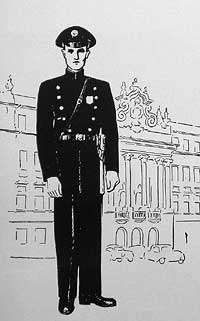
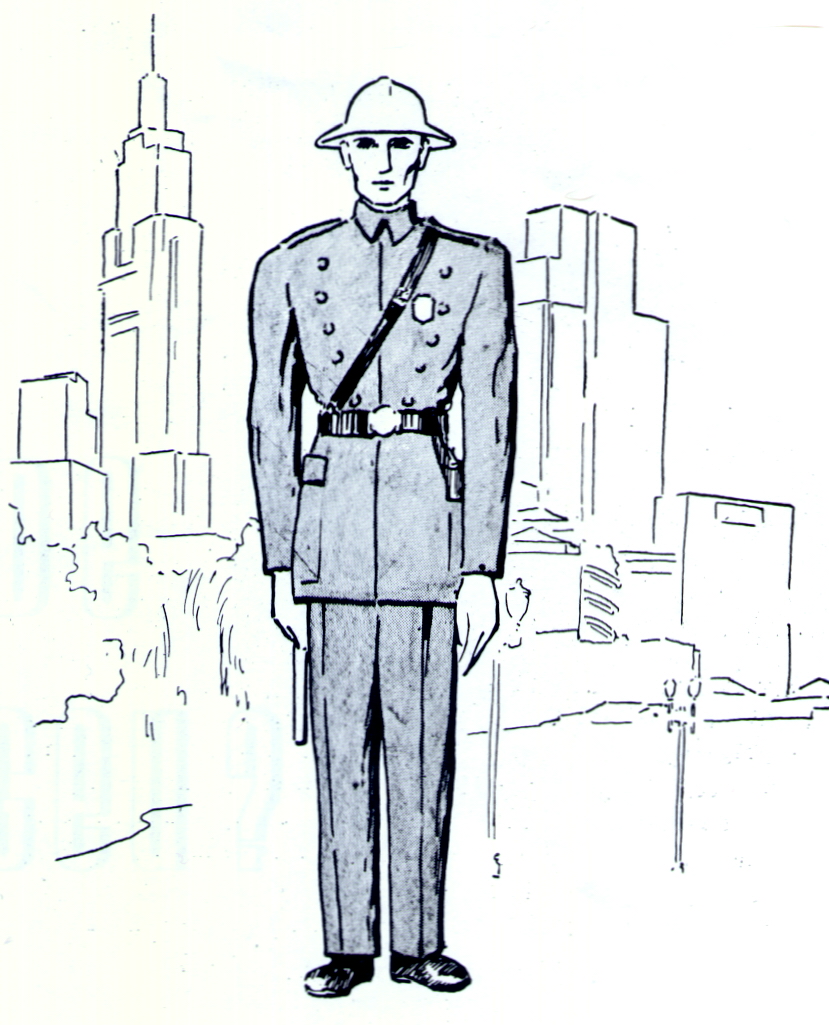
According to the doctrine of the divine origin of power, those who legitimately exercise functions of authority do so in the name of God. The legitimate holder of authority, whatever his title or position, does so because of a power that comes to him from on high. This power transcends man himself and dignifies those who command and those who obey. However, this transcendence should be expressed in a perceptible form. Therefore, the symbols of power should be appropriate to inspire respect. And when the position employs the use of a uniform, it should have the distinction corresponding to the function of whoever is wearing it.
This concept obviously applies, par excellence, to the supreme magistrates. However, it also applies to a lesser degree to offices that participate in public authority even though in a very secondary way.
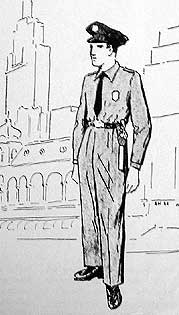
Because of its seriousness, distinction, and sobriety, the first uniform of the Civil Guard of Sao Paulo, obeys the first principle cited above. The second uniform already reflects an obvious concern towards attenuating the marks of superiority of the first. And, finally, the third uniform goes yet farther than the second in increasing this tendency. Thus, we see a small manifestation of the large gust of pagan and egalitarian naturalism that, in these cataclysmic days, is sweeping the universe.
Invoking the Gift of Full Communion
In his general audience, held this morning in the Paul VI Hall, the Pope dedicated his catechesis to the Week of Prayer for Christian Unity, which is taking place from 18 to 25 January and during which "all those who believe in Christ are invited to come together in prayer, so as to bear witness to the profound ties that unite them and to invoke the gift of full communion".
The Holy Father remarked on "the providential fact that prayer is at the centre of the journey to unity. This", he said, "reminds us once again that unity cannot be a product of mere human efforts, is its above all a gift of God. ... We do not 'construct' unity, God 'constructs' it, it comes from Him, from the mystery of the Trinity".
Benedict recalled how the theme chosen for this year's Week of Prayer "refers to the experience of the first Christian community in Jerusalem, as described in the Acts of the Apostles: 'They devoted themselves to the Apostles' teaching and fellowship, to the breaking of bread and the prayers'".
This quotation identifies "four characteristics defining the first Christian community of Jerusalem", he said, "which still act as pillars for the life of all Christian communities, and constitute the solid foundation on which to continue to construct the visible unity of the Church".
Commenting on the first of these characteristics, the Pope noted that, "even today, the community of believers recognises the norms of its own faith in that reference to the teaching of the Apostles. All efforts to build unity among Christians must, then, involve increasing faithfulness to the 'depositum fidei' handed down to us by the Apostles".
The Holy Father then turned to the second element, "fraternal communion, ... the most tangible expression of unity between disciples and the Lord, especially for the outside world. ... The history of the ecumenical movement has been marked by difficulties and doubts, but it is also a history of fraternity, of co-operation and of human and spiritual sharing, which has significantly altered relations among believers in the Lord Jesus. We are all committed to continuing this journey".
On the subject of the third characteristic, "the breaking of bread", the Holy Father noted that "communion in Christ's sacrifice is the pinnacle of our union with God and, therefore, it also represents the completeness of the unity of Christ's disciples, full communion". In this context he noted also how "the impossibility of sharing the same Eucharist ... also gives a penitential dimension to our prayers. This must be a reason for ever more generous commitment on everyone's part so that, having removed the obstacles to full communion, the day may come when it will be possible to gather around the table of the Lord, together breaking the Eucharistic bread and drinking from the same chalice.
"Finally", he added, "prayer was the fourth characteristic of the early Church in Jerusalem ... Prayer also means opening ourselves to the fraternity that stems from our being children of the one heavenly Father; it means being ready for forgiveness and reconciliation".
"Like the first Christian community of Jerusalem, on the basis of what we already share we must offer a powerful witness - well-founded spiritually and well-supported by reason - of the one God Who revealed Himself and speaks to us in Christ, in order to be bring a message which guides and illuminates the path of modern man, who often lacks clear points of reference. It is important, then, to increase our mutual love every day, striving to overcome the barriers that still exist between Christians, in the knowledge that true inner unity does exist among people who follow the Lord. We must collaborate as much as possible, working together on outstanding questions and, above all, aware that we need the Lord's help on this journey. He must still help us a lot because without Him, alone, without 'abiding in Him', we can do nothing".
The Holy Father remarked on "the providential fact that prayer is at the centre of the journey to unity. This", he said, "reminds us once again that unity cannot be a product of mere human efforts, is its above all a gift of God. ... We do not 'construct' unity, God 'constructs' it, it comes from Him, from the mystery of the Trinity".
Benedict recalled how the theme chosen for this year's Week of Prayer "refers to the experience of the first Christian community in Jerusalem, as described in the Acts of the Apostles: 'They devoted themselves to the Apostles' teaching and fellowship, to the breaking of bread and the prayers'".
This quotation identifies "four characteristics defining the first Christian community of Jerusalem", he said, "which still act as pillars for the life of all Christian communities, and constitute the solid foundation on which to continue to construct the visible unity of the Church".
Commenting on the first of these characteristics, the Pope noted that, "even today, the community of believers recognises the norms of its own faith in that reference to the teaching of the Apostles. All efforts to build unity among Christians must, then, involve increasing faithfulness to the 'depositum fidei' handed down to us by the Apostles".
The Holy Father then turned to the second element, "fraternal communion, ... the most tangible expression of unity between disciples and the Lord, especially for the outside world. ... The history of the ecumenical movement has been marked by difficulties and doubts, but it is also a history of fraternity, of co-operation and of human and spiritual sharing, which has significantly altered relations among believers in the Lord Jesus. We are all committed to continuing this journey".
On the subject of the third characteristic, "the breaking of bread", the Holy Father noted that "communion in Christ's sacrifice is the pinnacle of our union with God and, therefore, it also represents the completeness of the unity of Christ's disciples, full communion". In this context he noted also how "the impossibility of sharing the same Eucharist ... also gives a penitential dimension to our prayers. This must be a reason for ever more generous commitment on everyone's part so that, having removed the obstacles to full communion, the day may come when it will be possible to gather around the table of the Lord, together breaking the Eucharistic bread and drinking from the same chalice.
"Finally", he added, "prayer was the fourth characteristic of the early Church in Jerusalem ... Prayer also means opening ourselves to the fraternity that stems from our being children of the one heavenly Father; it means being ready for forgiveness and reconciliation".
"Like the first Christian community of Jerusalem, on the basis of what we already share we must offer a powerful witness - well-founded spiritually and well-supported by reason - of the one God Who revealed Himself and speaks to us in Christ, in order to be bring a message which guides and illuminates the path of modern man, who often lacks clear points of reference. It is important, then, to increase our mutual love every day, striving to overcome the barriers that still exist between Christians, in the knowledge that true inner unity does exist among people who follow the Lord. We must collaborate as much as possible, working together on outstanding questions and, above all, aware that we need the Lord's help on this journey. He must still help us a lot because without Him, alone, without 'abiding in Him', we can do nothing".
Monday, January 17, 2011
The laity in the Church
The laity in the Church
The laity form a living, active and responsible part of the Church, and this accords with the will of Jesus Christ, who wished his Church to be open to all.
Suffice it here to recall the behaviour of the owner of the vineyard in the very significant and thought·provoking parable told by Jesus. Seeing some unemployed people, the owner said to them: 'You go to my vineyard too' (Matthew 20:4). 'From that distant day,' comments the 1987 Synod of Bishops, 'the call has never failed to resound throughout history, it is addressed to every person who comes into this world ... The call not only concerns Pastors, clergy, and men and women religious. It is addressed to everyone, lay people as well are personally called by the Lord, from whom they receive a mission on behalf of the Church and the world' (Christilideles laici, 2). All are invited 'to let themselves be reconciled with God' (2 Corinthians 5:20), to let themselves be saved and to co·operate in universal salvation, since God wants everyone to be saved' (I Timothy 2:4). All are invited, with their own personal qualities, to labour in the Father's 'vineyard', where each has a personal place and a personal reward.
The laity's calling entails their participation in the Church's life and consequently their intimate communion in Christ's own life too. It is a divine gift and at the same time a mutual commitment. For didn't Jesus ask the disciples who had followed him to remain constantly united with him and in him, and to let his own living energy burst into their minds and hearts? 'Remain in me, as I in you. Without me you can do nothing' (John 15:4-5). As for priests, so for the laity: true fruitfulness depends on union with Christ.'
The church is holy and all her members are called to be holy. The laity share in the holiness of the Church, being full members of the Christian community: and this sharing (which we may call ontological) in the Church's holiness is translated, in the laity's case, into an individual ethical commitment to sanctification.
In this capacity for and vocation to holiness all members of the Church are equal (d. Galatians 3:28). The degree of personal holiness doesn't depend on the position one holds in society, least of all in the Church, but only on the degree of charity one practises (d. 1 Corinthians 13). A member of the laity who open heartedly welcomes God's love into his or her heart and life is holier than any priest or bishop who only welcomes it half·heartedly."
The prayer life of every Christian, and therefore of all members of the laity, cannot thrive without participation in the Liturgy, recourse to the sacrament of Reconciliation and above all the celebration of the Eucharist, where sacramental communion with Christ is the source of that kind of mutual immanence between the soul and Christ which he fore tells: 'Whoever eats my flesh and drinks my blood lives in me and I live in that person' (John 6:56). The eucharistic banquet assures the Christian of that spiritual nourishment which makes it possible to produce much fruit. So the Christilideles laici are also called and invited to an intense Eucharistic life.For them sacramental participation in Sunday mass should be the source of their spiritual life and also of their apostolate. Blessed are they who, besides Sunday Mass and Communion, feel drawn and prompted to frequent Communion, recommended by so many of the Saints, especially in recent times, when the apostolate of the laity has been developing more and more.
The Christian laity as children of the promise' are called to bear witness in the world to the greatness and fruitfulness of the hope they bear in their hearts: a hope based on the teaching and work of Jesus Christ, who died and rose again for the salvation of all. In a world which, despite appearances to the contrary, is often racked with anguish over the ever renewed and disappointing experience of the limitations inadequacies and even emptiness of many structures created to ensure human happiness on earth, their witness of hope is particularly needed to direct spirits in their quest for a future life beyond the relative values of the things of this world. In this, the laity as workers in the service of the Gospel 'through the structures of secular life', have a special relevance of their own. They show that Christian hope does not mean shunning the world, nor renunciation of a full realization of earthly existence, but an opening of it to the transcendental dimension of life eternal, which alone gives this existence its true value.
The laity form a living, active and responsible part of the Church, and this accords with the will of Jesus Christ, who wished his Church to be open to all.
Suffice it here to recall the behaviour of the owner of the vineyard in the very significant and thought·provoking parable told by Jesus. Seeing some unemployed people, the owner said to them: 'You go to my vineyard too' (Matthew 20:4). 'From that distant day,' comments the 1987 Synod of Bishops, 'the call has never failed to resound throughout history, it is addressed to every person who comes into this world ... The call not only concerns Pastors, clergy, and men and women religious. It is addressed to everyone, lay people as well are personally called by the Lord, from whom they receive a mission on behalf of the Church and the world' (Christilideles laici, 2). All are invited 'to let themselves be reconciled with God' (2 Corinthians 5:20), to let themselves be saved and to co·operate in universal salvation, since God wants everyone to be saved' (I Timothy 2:4). All are invited, with their own personal qualities, to labour in the Father's 'vineyard', where each has a personal place and a personal reward.
The laity's calling entails their participation in the Church's life and consequently their intimate communion in Christ's own life too. It is a divine gift and at the same time a mutual commitment. For didn't Jesus ask the disciples who had followed him to remain constantly united with him and in him, and to let his own living energy burst into their minds and hearts? 'Remain in me, as I in you. Without me you can do nothing' (John 15:4-5). As for priests, so for the laity: true fruitfulness depends on union with Christ.'
The church is holy and all her members are called to be holy. The laity share in the holiness of the Church, being full members of the Christian community: and this sharing (which we may call ontological) in the Church's holiness is translated, in the laity's case, into an individual ethical commitment to sanctification.
In this capacity for and vocation to holiness all members of the Church are equal (d. Galatians 3:28). The degree of personal holiness doesn't depend on the position one holds in society, least of all in the Church, but only on the degree of charity one practises (d. 1 Corinthians 13). A member of the laity who open heartedly welcomes God's love into his or her heart and life is holier than any priest or bishop who only welcomes it half·heartedly."
The prayer life of every Christian, and therefore of all members of the laity, cannot thrive without participation in the Liturgy, recourse to the sacrament of Reconciliation and above all the celebration of the Eucharist, where sacramental communion with Christ is the source of that kind of mutual immanence between the soul and Christ which he fore tells: 'Whoever eats my flesh and drinks my blood lives in me and I live in that person' (John 6:56). The eucharistic banquet assures the Christian of that spiritual nourishment which makes it possible to produce much fruit. So the Christilideles laici are also called and invited to an intense Eucharistic life.For them sacramental participation in Sunday mass should be the source of their spiritual life and also of their apostolate. Blessed are they who, besides Sunday Mass and Communion, feel drawn and prompted to frequent Communion, recommended by so many of the Saints, especially in recent times, when the apostolate of the laity has been developing more and more.
The Christian laity as children of the promise' are called to bear witness in the world to the greatness and fruitfulness of the hope they bear in their hearts: a hope based on the teaching and work of Jesus Christ, who died and rose again for the salvation of all. In a world which, despite appearances to the contrary, is often racked with anguish over the ever renewed and disappointing experience of the limitations inadequacies and even emptiness of many structures created to ensure human happiness on earth, their witness of hope is particularly needed to direct spirits in their quest for a future life beyond the relative values of the things of this world. In this, the laity as workers in the service of the Gospel 'through the structures of secular life', have a special relevance of their own. They show that Christian hope does not mean shunning the world, nor renunciation of a full realization of earthly existence, but an opening of it to the transcendental dimension of life eternal, which alone gives this existence its true value.
Wednesday, January 12, 2011
St. Catherine of Genoa and the Experience of Purgatory
During this morning's general audience, held in the Paul VI Hall in the presence of 9,000 faithful, Benedict XVI focused his catechesis on St. Catherine of Genoa (1447-1510), author of two books: "Treatise on Purgatory" and "Dialogues on the Soul and the Body".
Catherine received a good Christian education in the home before marrying at the age of sixteen, although her married life was not an easy one. At first she led a worldly existence which caused her a profound sense of emptiness and bitterness however, following a unique spiritual experience which made her aware of her own misery and defects and, at the same time, of the goodness of God, she decided to change her life and to begin a journey of purification and mystical communion with the Lord. "The place of her ascent to the mystical heights was the hospital of Pammatone, the largest in Genoa, of which she was director", said the Pope.
"The period between her conversion and her death was not marked by extraordinary events", said the Holy Father, "but two elements characterised her entire life: on the one hand, mystical experience, profound union with God and, ... on the other, service to others, especially the most needy and abandoned".
"We must never forget", he went on, "that the more we love God and remain constant in our prayers, the more we will truly manage to love those around us, because in each individual we will see the face of the Lord, Who loves without limit or distinction".
Benedict XVI then went on to refer to the works of the saint, recalling how, "in her mystical experiences, Catherine never received specific revelations on Purgatory or on the souls being purified there". She did not see Purgatory "as a place of transit in the depths of the earth: it is not an exterior fire, but an interior fire". She did not use the hereafter as a basis "to recount the torments of purgatory and then show the way to purification and conversion; rather, she began from the interior experience of man on his journey towards eternity".
Thus, for Catherine, "the soul is aware of God's immense love and perfect justice; as a consequence, it suffers for not having responded to that love perfectly, and it is precisely the love of God Himself which purifies the soul from the ravages of sin".
This mystical saint from Genoa used an image typical of Dionysus the Areopagite: the thread of gold linking the human heart to God, said the Pope. "In this way the heart of man is inundated with the love of God, which becomes his only guide, the only driving force in his life. This situation of elevation towards God and abandonment to His will, as expressed in the image of the thread, is used by Catherine to express the action of divine light on the souls in Purgatory, a light which purifies and raises them towards the splendour of the dazzling rays of God".
"In their experience of union with God, saints achieve so profound an 'understanding' of the divine mysteries, in which love and knowledge almost become one, that they can even help theologians in their studies", said the Pope.
"St. Catherine's life teaches us that the more we love God and enter into intimate contact with Him through prayer, the more He makes Himself known and enflames our hearts with His love. By writing about Purgatory, the saint reminds us of a fundamental truth of the faith which becomes an invitation for us to pray for the dead, that they may achieve the blessed vision of God in the communion of the saints".
And Benedict XVI concluded: "The saint's lifelong humble, faithful and generous service in the hospital of Pammatone is a shining example of charity towards everyone, and a special encouragement for women who make a fundamental contribution to society and the Church with their precious efforts, enriched by their sensitivity and the care they show towards the poorest and those most in need".
Catherine received a good Christian education in the home before marrying at the age of sixteen, although her married life was not an easy one. At first she led a worldly existence which caused her a profound sense of emptiness and bitterness however, following a unique spiritual experience which made her aware of her own misery and defects and, at the same time, of the goodness of God, she decided to change her life and to begin a journey of purification and mystical communion with the Lord. "The place of her ascent to the mystical heights was the hospital of Pammatone, the largest in Genoa, of which she was director", said the Pope.
"The period between her conversion and her death was not marked by extraordinary events", said the Holy Father, "but two elements characterised her entire life: on the one hand, mystical experience, profound union with God and, ... on the other, service to others, especially the most needy and abandoned".
"We must never forget", he went on, "that the more we love God and remain constant in our prayers, the more we will truly manage to love those around us, because in each individual we will see the face of the Lord, Who loves without limit or distinction".
Benedict XVI then went on to refer to the works of the saint, recalling how, "in her mystical experiences, Catherine never received specific revelations on Purgatory or on the souls being purified there". She did not see Purgatory "as a place of transit in the depths of the earth: it is not an exterior fire, but an interior fire". She did not use the hereafter as a basis "to recount the torments of purgatory and then show the way to purification and conversion; rather, she began from the interior experience of man on his journey towards eternity".
Thus, for Catherine, "the soul is aware of God's immense love and perfect justice; as a consequence, it suffers for not having responded to that love perfectly, and it is precisely the love of God Himself which purifies the soul from the ravages of sin".
This mystical saint from Genoa used an image typical of Dionysus the Areopagite: the thread of gold linking the human heart to God, said the Pope. "In this way the heart of man is inundated with the love of God, which becomes his only guide, the only driving force in his life. This situation of elevation towards God and abandonment to His will, as expressed in the image of the thread, is used by Catherine to express the action of divine light on the souls in Purgatory, a light which purifies and raises them towards the splendour of the dazzling rays of God".
"In their experience of union with God, saints achieve so profound an 'understanding' of the divine mysteries, in which love and knowledge almost become one, that they can even help theologians in their studies", said the Pope.
"St. Catherine's life teaches us that the more we love God and enter into intimate contact with Him through prayer, the more He makes Himself known and enflames our hearts with His love. By writing about Purgatory, the saint reminds us of a fundamental truth of the faith which becomes an invitation for us to pray for the dead, that they may achieve the blessed vision of God in the communion of the saints".
And Benedict XVI concluded: "The saint's lifelong humble, faithful and generous service in the hospital of Pammatone is a shining example of charity towards everyone, and a special encouragement for women who make a fundamental contribution to society and the Church with their precious efforts, enriched by their sensitivity and the care they show towards the poorest and those most in need".
Tuesday, January 11, 2011
Rediscovering the Beauty of Baptism
At midday today, following this morning's celebration in the Sistine Chapel during which he baptised a number of newborn infants, the Pope appeared at the window of his study to pray the Angelus with several thousand pilgrims gathered in St. Peter's Square below.
The Holy Father explained how today's Feast of the Baptism of the Lord ends the liturgical period of Christmas. "This mystery of Christ's life", he said, "is a visible sign that His assuming the flesh was the sublime act of love of the three divine Persons. We can say that after this solemn event the creative, redemptory and sanctifying action of the Most Holy Trinity became increasingly manifest in the public mission of Jesus, in His teaching and miracles, in His passion, death and resurrection".
"It is truly the Messiah, Son of the Most High God, Who, emerging from the waters of the River Jordan, establishes regeneration in the Spirit and opens, for those who wish, the possibility of becoming children of God. It is, indeed, no coincidence that each baptized person acquires the status of child on the basis of a Christian name, an unmistakable sign that the Holy Spirit causes man to be 'born again' in the bosom of the Church".
Benedict XVI highlighted how "Baptism is the beginning of spiritual life, which reaches fullness through the Church. At the moment of the Sacrament, while the ecclesial community prays and commends a new child to God, the parents and godparents undertake to welcome the neo-baptized and to support it in its formation and Christian education. This is a great responsibility, which derives from a great gift! Therefore, I wish to encourage all the faithful to rediscover the beauty of being baptized and thus of belonging to the great family of God, and to bear joyful witness to their faith that it may generate fruits of goodness and harmony".
Following the Marian prayer, the Pope mentioned "the people of Haiti a year after the great earthquake which was, alas, followed by a serious cholera epidemic. Cardinal Robert Sarah, president of the Pontifical Council 'Cor Unum' will travel to the Caribbean island today to express my constant proximity, and that of the entire Church".
The Holy Father then turned to address a group of Italian parliamentarians whom he thanked "for their commitment, and that of their colleagues, in support of religious freedom. With them I also greet the Coptic faithful, who are present here today and to whom I renew expressions of my closeness", he concluded.
The Holy Father explained how today's Feast of the Baptism of the Lord ends the liturgical period of Christmas. "This mystery of Christ's life", he said, "is a visible sign that His assuming the flesh was the sublime act of love of the three divine Persons. We can say that after this solemn event the creative, redemptory and sanctifying action of the Most Holy Trinity became increasingly manifest in the public mission of Jesus, in His teaching and miracles, in His passion, death and resurrection".
"It is truly the Messiah, Son of the Most High God, Who, emerging from the waters of the River Jordan, establishes regeneration in the Spirit and opens, for those who wish, the possibility of becoming children of God. It is, indeed, no coincidence that each baptized person acquires the status of child on the basis of a Christian name, an unmistakable sign that the Holy Spirit causes man to be 'born again' in the bosom of the Church".
Benedict XVI highlighted how "Baptism is the beginning of spiritual life, which reaches fullness through the Church. At the moment of the Sacrament, while the ecclesial community prays and commends a new child to God, the parents and godparents undertake to welcome the neo-baptized and to support it in its formation and Christian education. This is a great responsibility, which derives from a great gift! Therefore, I wish to encourage all the faithful to rediscover the beauty of being baptized and thus of belonging to the great family of God, and to bear joyful witness to their faith that it may generate fruits of goodness and harmony".
Following the Marian prayer, the Pope mentioned "the people of Haiti a year after the great earthquake which was, alas, followed by a serious cholera epidemic. Cardinal Robert Sarah, president of the Pontifical Council 'Cor Unum' will travel to the Caribbean island today to express my constant proximity, and that of the entire Church".
The Holy Father then turned to address a group of Italian parliamentarians whom he thanked "for their commitment, and that of their colleagues, in support of religious freedom. With them I also greet the Coptic faithful, who are present here today and to whom I renew expressions of my closeness", he concluded.
Monday, January 3, 2011
The Three Kings - By Dr. Plinio
The following is a commentary about the Three Kings by Dr. Plinio
The feast of the Epiphany, the adoration of Our Lord in Bethlehem by the “Magi from the East” (Matthew 7), shows us the value of representation and symbolism in the plans of Divine Providence.
It is generally said that the Three Magi came to adore Our Lord as representatives of the Gentile peoples. It is also common to say that they were magi because they represented the ancient wisdom of the East paying homage to Our Lord Jesus Christ. Magus, a word derived from the Greek, means a man of a great wisdom. The Three Magi came from different parts of the world to adore Our Lord as a sign that all nations were called to the light of the Faith.
Many progressivists and Protestants have expressed misgivings that they were kings. I do not see any reason for such doubt since Scripture foretold that Kings from different parts of the world would come to adore the Messiah (Psalm 2:10-12; 71:10-11; Is 60:11; 62:2).
At any rate, they were men from different races representing the old world and ancient wisdom who came to adore Our Lord and pay Him homage with gifts of gold, frankincense and myrrh. They traveled to Bethlehem moved by a very noble cause. According to their wise previsions and an interior call they received from God, they knew that the Messiah had been born.
This interior call shows us that God Himself chose them as representatives of the Gentile peoples. They fulfilled the vocation for which they were called, and on the Epiphany they paid homage to Our Lord. Each King who was present at the Manger kneeling before the Divine Infant represented his own personal fidelity, of course, but he also represented the fidelity of all the past kings as well as all the kings to come in History. They were only three, but they fulfilled that representation.
We find something similar in the Passion and at the foot of the Cross. Our Lady, St. John, and the Holy Women represented everyone who had been, was, or would be faithful through the ages. For example, every faithful soul in History is represented by the act of Veronica wiping the Holy Face of Our Lord. The select group that was faithful on that solemn occasion represented the whole genre of faithful people.
We can ask if we can apply this rule to ourselves. Today the Catholic Church is humiliated by her own authorities, persecuted by Progressivism within her walls, immersed in the worst confusion that has ever fallen over her in History. We are just a few who want to remain faithful to the Church as she always was and to restore her to her past glory. In a certain way, we represent fidelity, purity, orthodoxy, courage, and the spirit of initiative and battle at the very moment when everything pressures everyone to give up, to step back, to flee.
Whom are we representing? In this new crucifixion of Our Lord, which is the crucifixion of the Church, we represent the faithful of the past who rest in the peace of the Lord and loved the Church. If St. Gregory VII, St. Louis of France, St. Ferdinand of Castile, St. Louis Grignon de Montfort, or Blessed Nuno Alvares could have seen in their times the crisis through which the Church is passing now and the few souls who would remain faithful, they would have blessed us from that distance. They would have considered themselves our cohorts and felt a relief that at least there were some small number doing what they would like to do.
The feast of the Epiphany, the adoration of Our Lord in Bethlehem by the “Magi from the East” (Matthew 7), shows us the value of representation and symbolism in the plans of Divine Providence.
It is generally said that the Three Magi came to adore Our Lord as representatives of the Gentile peoples. It is also common to say that they were magi because they represented the ancient wisdom of the East paying homage to Our Lord Jesus Christ. Magus, a word derived from the Greek, means a man of a great wisdom. The Three Magi came from different parts of the world to adore Our Lord as a sign that all nations were called to the light of the Faith.
Many progressivists and Protestants have expressed misgivings that they were kings. I do not see any reason for such doubt since Scripture foretold that Kings from different parts of the world would come to adore the Messiah (Psalm 2:10-12; 71:10-11; Is 60:11; 62:2).
At any rate, they were men from different races representing the old world and ancient wisdom who came to adore Our Lord and pay Him homage with gifts of gold, frankincense and myrrh. They traveled to Bethlehem moved by a very noble cause. According to their wise previsions and an interior call they received from God, they knew that the Messiah had been born.
This interior call shows us that God Himself chose them as representatives of the Gentile peoples. They fulfilled the vocation for which they were called, and on the Epiphany they paid homage to Our Lord. Each King who was present at the Manger kneeling before the Divine Infant represented his own personal fidelity, of course, but he also represented the fidelity of all the past kings as well as all the kings to come in History. They were only three, but they fulfilled that representation.
We find something similar in the Passion and at the foot of the Cross. Our Lady, St. John, and the Holy Women represented everyone who had been, was, or would be faithful through the ages. For example, every faithful soul in History is represented by the act of Veronica wiping the Holy Face of Our Lord. The select group that was faithful on that solemn occasion represented the whole genre of faithful people.
We can ask if we can apply this rule to ourselves. Today the Catholic Church is humiliated by her own authorities, persecuted by Progressivism within her walls, immersed in the worst confusion that has ever fallen over her in History. We are just a few who want to remain faithful to the Church as she always was and to restore her to her past glory. In a certain way, we represent fidelity, purity, orthodoxy, courage, and the spirit of initiative and battle at the very moment when everything pressures everyone to give up, to step back, to flee.
Whom are we representing? In this new crucifixion of Our Lord, which is the crucifixion of the Church, we represent the faithful of the past who rest in the peace of the Lord and loved the Church. If St. Gregory VII, St. Louis of France, St. Ferdinand of Castile, St. Louis Grignon de Montfort, or Blessed Nuno Alvares could have seen in their times the crisis through which the Church is passing now and the few souls who would remain faithful, they would have blessed us from that distance. They would have considered themselves our cohorts and felt a relief that at least there were some small number doing what they would like to do.
We also are representing those unknown faithful souls spread throughout the world today who are smashed by Progressivism inside the Church and do not know what to do or where to go to be faithful. They would like to do what we are doing.
Finally, we are representing those who will come after us and who will be enthused when they look back and see what we are doing now. They will wish that they could have been with us now to assist us.
In History some of these representations are quite impressive. For example, when St. Remigius was teaching King Clovis and his men the Catholic Faith to prepare them for Baptism and they heard about the Passion of Our Lord, Clovis cried out loudly and drove his lance in the ground saying: “Would that I were there with my Franks to prevent such an injustice!”
As he spoke, his Frankish warriors pounded their lances on the ground to signal their acquiescence. They did not realize it, but in a certain sense they were present at the Passion. For during it, Our Lord foresaw that action of Clovis and his Franks and it gave Him consolation.
There is, therefore, a kind of reversibility of action beyond time, where all the past and future fidelities converge in a single, grandiose scene that represents them all.
Today, Our Lady is like a prisoner who is insulted and ill-treated by men, and especially by the progressivist religious authorities. She came to warn mankind at La Salette and Fatima about this general apostasy in the Church. Her words were not heard. She also wept in various places – Syracuse, Rocca Corneta, New Orleans, Granada. Her tears beseech the few who remain faithful to save her from the horrible suffering of this passion of the Holy Church. It is an honor to be called to act at this extraordinary hour. If we correspond to this call, we will be wiping the holy face of Our Lady, as Veronica did for Our Lord, and we will be representing every faithful soul throughout History.
This doctrine of how a few persons can represent a whole genre, which we see in the adoration of the Three Magi, should encourage us. Let us ask them, who certainly are in Heaven with Our Lord, to give us the courage that we need:
* the courage to stand alone, as they did in the pagan world;
* the courage to wait for the appearance of a star, the signal that the hour of God has arrived for us to carry out His will;
* and the courage to do so promptly and with complete fidelity, as they did.
Finally, we are representing those who will come after us and who will be enthused when they look back and see what we are doing now. They will wish that they could have been with us now to assist us.
In History some of these representations are quite impressive. For example, when St. Remigius was teaching King Clovis and his men the Catholic Faith to prepare them for Baptism and they heard about the Passion of Our Lord, Clovis cried out loudly and drove his lance in the ground saying: “Would that I were there with my Franks to prevent such an injustice!”
As he spoke, his Frankish warriors pounded their lances on the ground to signal their acquiescence. They did not realize it, but in a certain sense they were present at the Passion. For during it, Our Lord foresaw that action of Clovis and his Franks and it gave Him consolation.
There is, therefore, a kind of reversibility of action beyond time, where all the past and future fidelities converge in a single, grandiose scene that represents them all.
Today, Our Lady is like a prisoner who is insulted and ill-treated by men, and especially by the progressivist religious authorities. She came to warn mankind at La Salette and Fatima about this general apostasy in the Church. Her words were not heard. She also wept in various places – Syracuse, Rocca Corneta, New Orleans, Granada. Her tears beseech the few who remain faithful to save her from the horrible suffering of this passion of the Holy Church. It is an honor to be called to act at this extraordinary hour. If we correspond to this call, we will be wiping the holy face of Our Lady, as Veronica did for Our Lord, and we will be representing every faithful soul throughout History.
This doctrine of how a few persons can represent a whole genre, which we see in the adoration of the Three Magi, should encourage us. Let us ask them, who certainly are in Heaven with Our Lord, to give us the courage that we need:
* the courage to stand alone, as they did in the pagan world;
* the courage to wait for the appearance of a star, the signal that the hour of God has arrived for us to carry out His will;
* and the courage to do so promptly and with complete fidelity, as they did.
Wednesday, December 29, 2010
St. Catherine of Bologna: Spiritual Weapons against Evil
The Holy Father dedicated his catechesis during today's general audience, held in the Paul VI Hall in the presence of 8,000 people, to St. Catherine of Bologna (1413-1463).
Born to a noble family in the Italian city of Bologna, at the age of ten she moved to Ferrara where she entered the court of Niccolo III d'Este as a maid of honour. There she received a very careful education which would later serve her during her monastic life when "she used the cultural and artistic knowledge acquired over those years to great advantage", the Pope said.
In 1427, at the age of fourteen, she left the court to dedicate herself to religious life in a community of young women. Two years later the leader of this group founded an Augustinian convent, but Catherine and a number of others preferred Franciscan spirituality and transformed the community into Poor Clares.
The saint "made great spiritual progress in this new phase of her life, though she also had to face great trails", the Pope explained. "She experienced the night of the spirit, tormented even by the temptation of disbelief in the Eucharist. After much suffering, the Lord consoled her. In a vision He gave her the clear awareness of the real Eucharistic presence". In another vision God revealed the forgiveness of her sins, giving Catherine a "powerful experience of divine mercy".
In 1431 the saint had yet another vision, this time of the Final Judgement, which led her "to intensify her prayers and penance for the salvation of sinners. Satan continued to assail her as she increasingly entrusted herself to the Lord and the Virgin Mary. In her writings, Catherine left us essential notes on this mysterious struggle, from which, by the grace of God, she emerged victorious".
These notes are contained in her one written work, the "Treatise on the Seven Spiritual Weapons" in which Catherine teaches that to combat evil it is necessary: "(1) to be careful always to do good; (2) to believe that we can never achieve anything truly good by ourselves; (3) to trust in God and, for His love, never to fear the battle against evil, either in the world or in ourselves; (4) to meditate frequently on the events and words of Jesus' life, especially His passion and death; (5) to remember that we must die; (6) to keep the benefits of heaven firmly in our minds, (7) to be familiar with Holy Scripture, keeping it in our hearts to guide all our thoughts and actions".
"In her convent Catherine, though used to the court of Ferrara, ... performed even the most humble tasks with love and ready obedience", said the Holy Father, recalling also that, out of obedience, the saint "accepted the job of mistress of novices, although she felt she was incapable of carrying out the role". In the same spirit she agreed to move to Bologna as abbess of a new monastery though she would have preferred to end her days in Ferrara.
Catherine died on 9 March 1463 and was canonised by Pope Clement XI in 1712. "With her words and life", Benedict XVI concluded, "she strongly invites us always to allow ourselves to be guided by God, to do His will every day even if it does not always correspond to our own plans, and to trust in His Providence which never abandons us. In this perspective, St. Catherine also invites us to rediscover the value of the virtue of obedience".
Born to a noble family in the Italian city of Bologna, at the age of ten she moved to Ferrara where she entered the court of Niccolo III d'Este as a maid of honour. There she received a very careful education which would later serve her during her monastic life when "she used the cultural and artistic knowledge acquired over those years to great advantage", the Pope said.
In 1427, at the age of fourteen, she left the court to dedicate herself to religious life in a community of young women. Two years later the leader of this group founded an Augustinian convent, but Catherine and a number of others preferred Franciscan spirituality and transformed the community into Poor Clares.
The saint "made great spiritual progress in this new phase of her life, though she also had to face great trails", the Pope explained. "She experienced the night of the spirit, tormented even by the temptation of disbelief in the Eucharist. After much suffering, the Lord consoled her. In a vision He gave her the clear awareness of the real Eucharistic presence". In another vision God revealed the forgiveness of her sins, giving Catherine a "powerful experience of divine mercy".
In 1431 the saint had yet another vision, this time of the Final Judgement, which led her "to intensify her prayers and penance for the salvation of sinners. Satan continued to assail her as she increasingly entrusted herself to the Lord and the Virgin Mary. In her writings, Catherine left us essential notes on this mysterious struggle, from which, by the grace of God, she emerged victorious".
These notes are contained in her one written work, the "Treatise on the Seven Spiritual Weapons" in which Catherine teaches that to combat evil it is necessary: "(1) to be careful always to do good; (2) to believe that we can never achieve anything truly good by ourselves; (3) to trust in God and, for His love, never to fear the battle against evil, either in the world or in ourselves; (4) to meditate frequently on the events and words of Jesus' life, especially His passion and death; (5) to remember that we must die; (6) to keep the benefits of heaven firmly in our minds, (7) to be familiar with Holy Scripture, keeping it in our hearts to guide all our thoughts and actions".
"In her convent Catherine, though used to the court of Ferrara, ... performed even the most humble tasks with love and ready obedience", said the Holy Father, recalling also that, out of obedience, the saint "accepted the job of mistress of novices, although she felt she was incapable of carrying out the role". In the same spirit she agreed to move to Bologna as abbess of a new monastery though she would have preferred to end her days in Ferrara.
Catherine died on 9 March 1463 and was canonised by Pope Clement XI in 1712. "With her words and life", Benedict XVI concluded, "she strongly invites us always to allow ourselves to be guided by God, to do His will every day even if it does not always correspond to our own plans, and to trust in His Providence which never abandons us. In this perspective, St. Catherine also invites us to rediscover the value of the virtue of obedience".
Sunday, December 26, 2010
And the Word was made flesh
(The following is a commentary by Dr. Plinio)
And the Word was made flesh, and dwelt among us, and we saw His glory, the glory as it were of the Only Begotten of the Father, full of grace and truth."
Thus does Saint John's Gospel (1:14) announce the ineffably grand moment when the Son of God "dwelt among us" in order to manifest His glory.
Yet, how discreet, how humble, how hidden was this first step taken by the King of the universe along His path of suffering, struggle, and triumph!
Let us meditate on the Nativity of Our Lord Jesus Christ with the Gospel of Saint Luke (2:1-7).
And it came to pass that in those days there went out a decree from Caesar Augustus, that the whole world should be enrolled. This enrolling was first made by Cyrinus, the governor of Syria.
And all went to be enrolled, everyone into his own city.
And Joseph also went up from Galilee, out of the city of Nazareth into Judea, to the city of David, which is called Bethlehem, because he was of the house and family of David, to be enrolled with Mary, his espoused wife, who was with child.
And it came to pass that when they were there, her days were accomplished, that she should be delivered. And she brought forth her firstborn son, wrapped Him in swaddling clothes and laid Him in a manger because there was no room for them in the inn.
Let us picture a poor wedded couple, dressed with simplicity and bound for Bethlehem, crossing the arid countryside of the Holy Land, an aridity alleviated only by a few streams and olive groves. Mary travels seated on a young donkey, while Joseph proceeds on foot pondering the words of the angel who revealed to him the miraculous character of his virgin spouse's pregnancy.
As they reach Bethlehem, the winter night falls. But no one receives them, "because there was no room for them in the inn."
Is it for them that there is no room, since they have no prestige? Prestige commonly comes, especially in decadent times, from money and concessions to the vices of the times and the spirit of the "world" (this spirit being understood in the sense the Gospels give it). But this holy couple is poor and gifted with a highly religious spirit -- virtues the "worldly" find particularly detestable.
Nevertheless, Saint Joseph and Our Lady descend from the highest lineage of Bethlehem of Judea. Saint Joseph is a prince of the House of David, and Our Lady likewise descends from the kings of Judea.
However, so decadent are the Chosen People that in their eyes Saint Joseph is nothing but a poor carpenter, while Our Lady, his relatively well-off cousin, has chosen to share his poverty.
What are they doing in Bethlehem?
They are obeying the decree of the Roman Emperor, Caesar Augustus, who, certainly for vanity's sake, had ordered a census to ascertain how many were subject to his power.
The Prince of the House of David, in travelling to the city of his birth, manifests the glory of the foreign emperor. Saint Joseph is conquered, Caesar Augustus is the conqueror, and Bethlehem fails to recognize her illustrious children.
"He came unto his own, and his own received him not" (John 1:11). Mary and Joseph, bearing the very Son of God, are rejected by their own people and are thus obliged to seek shelter in a cave inhabited by animals. So it is in the intimacy and isolation of that dwelling place for beasts that history's most important event up till that time unfolds: the Word of God made flesh in the most pure womb of Mary comes into the world.
* * *
Thus does one understand the kind of joy proper to the Nativity. A great solitude and deprivation, but at the same time,a great elevation. For over such misery descended riches without name, riches unlike any others on the face of the earth. The Child-God was wrapped in swathes of cloth and lying in a manger where animals feed.
None, save that couple, witness or know how to appreciate this scene of indescribable grandeur.
The highest glory is there present in a tender child who, crying, hungry and cold, extends his little arms towards his mother, requesting a little milk or a blanket to be covered. And Our Lady knows that it is the Creator who opens his arms unto her! The Sovereign of the universe cries, beseeching a bit of milk and warm clothing!
We can imagine the contrast between the supernatural ambience and the poverty of the grotto. There the Child Jesus is adored by all the angels in a magnificent choir, the celestial court celebrating the greatest feast up to then. Angels and Archangels, Cherubim and Seraphim, all with extraordinary brilliance give glory to God through the Nativity. That glory permeates the grotto discreetly, for it is necessary that those outside not take note, that only souls of faith perceive what is happening and only in intimacy. Our Lady is there reclining and praying as the most perfect soul in the history of mankind, save only for the divine Person of Our Lord Jesus Christ.
For Our Lady alone is worth more than all the souls before her, during her time and thereafter; more than all who existed, exist, and will exist until the end of the world. She alone is worth more than all the angels.
A short distance away, praying to the Child-God and to Our Lady, is the humble cabinetmaker, the deposed prince, obscured by history and by the misfortunes that befell his ancestors. That man received an honor proper to no one else: He was chosen to be the spouse of the mother of the Word Incarnate, the adoptive father of the very Son of God!
* * *
This takes place at midnight, when little moved in the ancient world. We can imagine the silence, the abandonment. The inhabitants of the nearby city of Bethlehem comfortably rest in their beds. Outside, even the livestock sleep while the Divine Infant is born. Everything is empty and darkness reigns. Only within that grotto does a small light flicker. Only that couple is there, they and the Child Jesus, the King of ages, the God-Man Himself.
This divine event takes place before few. The greatest of honors is born and resides entirely in a frail infant. The most important historical event up to that time comes to pass in secret. In such a way that the sole witnesses to that august scene desire to meditate, to remain silent, with more desire to feel the Nativity within themselves than to proclaim it in a loud and clear voice. It is the affectionate reverence of those who feel inadequate to render gratitude for the extraordinary honor of touching, in such an intimate way, so high a mystery coupled with pity and compassion for a God who consented to make Himself so small. How to express respect so great that it approaches fear, and tenderness so profound that it seems almost to liquefy the soul? Lofty veneration, then lofty adoration, finally, lofty tenderness.
This also seems to explain the nocturnal aspect of the Nativity. We cannot conceive of it taking place except at night. For darkness is necessary for radiating so discreet a light. Therein we find the joy characteristic of Christmas that hesitates to expand itself for fear of losing its delicacy and intimacy.
* * *
Thus does one understand why such Christmas carols such as "Stille Nacht" ("Silent Night") are customarily sung in a low voice, almost as if to oneself. They are sung as if not to awaken the Child Jesus. This is one aspect of the genius of "Stille Nacht," composed by a simple German schoolmaster in the last century, yet now the preeminent Christmas carol of all ages. Hearing it we have the impression that the choir is in a corner of the cave of Bethlehem. The choir sings with such emotion, for it almost cannot help it, yet in a very low voice, so as not to disturb the Divine Infant nor the ineffable and almost internal song with which Our Lady is lulling her Son.
In this way one understands the thousand delicacies that emanate from "Silent Night" and the tenderness of the Nativity. It is a song expressive of a kind of compassion for Him who is being celebrated: How little this infinite God; how infinite this little God!
Centuries of Christian civilization were necessary that the most celebrated of Christmas songs might blossom like a flower in the Catholic Church.
And the Word was made flesh, and dwelt among us, and we saw His glory, the glory as it were of the Only Begotten of the Father, full of grace and truth."
Thus does Saint John's Gospel (1:14) announce the ineffably grand moment when the Son of God "dwelt among us" in order to manifest His glory.
Yet, how discreet, how humble, how hidden was this first step taken by the King of the universe along His path of suffering, struggle, and triumph!
Let us meditate on the Nativity of Our Lord Jesus Christ with the Gospel of Saint Luke (2:1-7).
And it came to pass that in those days there went out a decree from Caesar Augustus, that the whole world should be enrolled. This enrolling was first made by Cyrinus, the governor of Syria.
And all went to be enrolled, everyone into his own city.
And Joseph also went up from Galilee, out of the city of Nazareth into Judea, to the city of David, which is called Bethlehem, because he was of the house and family of David, to be enrolled with Mary, his espoused wife, who was with child.
And it came to pass that when they were there, her days were accomplished, that she should be delivered. And she brought forth her firstborn son, wrapped Him in swaddling clothes and laid Him in a manger because there was no room for them in the inn.
Let us picture a poor wedded couple, dressed with simplicity and bound for Bethlehem, crossing the arid countryside of the Holy Land, an aridity alleviated only by a few streams and olive groves. Mary travels seated on a young donkey, while Joseph proceeds on foot pondering the words of the angel who revealed to him the miraculous character of his virgin spouse's pregnancy.
As they reach Bethlehem, the winter night falls. But no one receives them, "because there was no room for them in the inn."
Is it for them that there is no room, since they have no prestige? Prestige commonly comes, especially in decadent times, from money and concessions to the vices of the times and the spirit of the "world" (this spirit being understood in the sense the Gospels give it). But this holy couple is poor and gifted with a highly religious spirit -- virtues the "worldly" find particularly detestable.
Nevertheless, Saint Joseph and Our Lady descend from the highest lineage of Bethlehem of Judea. Saint Joseph is a prince of the House of David, and Our Lady likewise descends from the kings of Judea.
However, so decadent are the Chosen People that in their eyes Saint Joseph is nothing but a poor carpenter, while Our Lady, his relatively well-off cousin, has chosen to share his poverty.
What are they doing in Bethlehem?
They are obeying the decree of the Roman Emperor, Caesar Augustus, who, certainly for vanity's sake, had ordered a census to ascertain how many were subject to his power.
The Prince of the House of David, in travelling to the city of his birth, manifests the glory of the foreign emperor. Saint Joseph is conquered, Caesar Augustus is the conqueror, and Bethlehem fails to recognize her illustrious children.
"He came unto his own, and his own received him not" (John 1:11). Mary and Joseph, bearing the very Son of God, are rejected by their own people and are thus obliged to seek shelter in a cave inhabited by animals. So it is in the intimacy and isolation of that dwelling place for beasts that history's most important event up till that time unfolds: the Word of God made flesh in the most pure womb of Mary comes into the world.
* * *
Thus does one understand the kind of joy proper to the Nativity. A great solitude and deprivation, but at the same time,a great elevation. For over such misery descended riches without name, riches unlike any others on the face of the earth. The Child-God was wrapped in swathes of cloth and lying in a manger where animals feed.
None, save that couple, witness or know how to appreciate this scene of indescribable grandeur.
The highest glory is there present in a tender child who, crying, hungry and cold, extends his little arms towards his mother, requesting a little milk or a blanket to be covered. And Our Lady knows that it is the Creator who opens his arms unto her! The Sovereign of the universe cries, beseeching a bit of milk and warm clothing!
We can imagine the contrast between the supernatural ambience and the poverty of the grotto. There the Child Jesus is adored by all the angels in a magnificent choir, the celestial court celebrating the greatest feast up to then. Angels and Archangels, Cherubim and Seraphim, all with extraordinary brilliance give glory to God through the Nativity. That glory permeates the grotto discreetly, for it is necessary that those outside not take note, that only souls of faith perceive what is happening and only in intimacy. Our Lady is there reclining and praying as the most perfect soul in the history of mankind, save only for the divine Person of Our Lord Jesus Christ.
For Our Lady alone is worth more than all the souls before her, during her time and thereafter; more than all who existed, exist, and will exist until the end of the world. She alone is worth more than all the angels.
A short distance away, praying to the Child-God and to Our Lady, is the humble cabinetmaker, the deposed prince, obscured by history and by the misfortunes that befell his ancestors. That man received an honor proper to no one else: He was chosen to be the spouse of the mother of the Word Incarnate, the adoptive father of the very Son of God!
* * *
This takes place at midnight, when little moved in the ancient world. We can imagine the silence, the abandonment. The inhabitants of the nearby city of Bethlehem comfortably rest in their beds. Outside, even the livestock sleep while the Divine Infant is born. Everything is empty and darkness reigns. Only within that grotto does a small light flicker. Only that couple is there, they and the Child Jesus, the King of ages, the God-Man Himself.
This divine event takes place before few. The greatest of honors is born and resides entirely in a frail infant. The most important historical event up to that time comes to pass in secret. In such a way that the sole witnesses to that august scene desire to meditate, to remain silent, with more desire to feel the Nativity within themselves than to proclaim it in a loud and clear voice. It is the affectionate reverence of those who feel inadequate to render gratitude for the extraordinary honor of touching, in such an intimate way, so high a mystery coupled with pity and compassion for a God who consented to make Himself so small. How to express respect so great that it approaches fear, and tenderness so profound that it seems almost to liquefy the soul? Lofty veneration, then lofty adoration, finally, lofty tenderness.
This also seems to explain the nocturnal aspect of the Nativity. We cannot conceive of it taking place except at night. For darkness is necessary for radiating so discreet a light. Therein we find the joy characteristic of Christmas that hesitates to expand itself for fear of losing its delicacy and intimacy.
* * *
Thus does one understand why such Christmas carols such as "Stille Nacht" ("Silent Night") are customarily sung in a low voice, almost as if to oneself. They are sung as if not to awaken the Child Jesus. This is one aspect of the genius of "Stille Nacht," composed by a simple German schoolmaster in the last century, yet now the preeminent Christmas carol of all ages. Hearing it we have the impression that the choir is in a corner of the cave of Bethlehem. The choir sings with such emotion, for it almost cannot help it, yet in a very low voice, so as not to disturb the Divine Infant nor the ineffable and almost internal song with which Our Lady is lulling her Son.
In this way one understands the thousand delicacies that emanate from "Silent Night" and the tenderness of the Nativity. It is a song expressive of a kind of compassion for Him who is being celebrated: How little this infinite God; how infinite this little God!
Centuries of Christian civilization were necessary that the most celebrated of Christmas songs might blossom like a flower in the Catholic Church.
Subscribe to:
Posts (Atom)


