Evil triumphs when good men do nothing - Edmund Burke

Thursday, February 19, 2009

St. Conrad of Piacenza - 19th February 2009


Born of a noble family in northern Italy, Conrad as a young man married Euphrosyne, daughter of a nobleman.

Saint Conrad was living peacefully as a nobleman of Piacenza. He had married when quite young and led a virtuous and God-fearing life. One day, when engaged in his usual pastime of hunting, he ordered his attendants to set fire to some brushwood where game had taken refuge. The prevailing wind caused the flames to spread rapidly, and the surrounding fields and forest were soon in a state of conflagration. A mendicant who happened to be found near the place where the fire had originated was accused of being the author; he was imprisoned, tried and condemned to death. As the poor man was being led to execution, Conrad, stricken with remorse, declared the man innocent and confessed his own guilt openly. In order to repair the damage of which he had been the cause, as he then volunteered to do, he was obliged to sell all his possessions. He repaid his neighbors for all the losses they had suffered, then retired to a distant region where he took the Third Order habit of Saint Francis, while his wife entered the Order of Poor Clares.

After visiting the holy places in Rome, he went to Sicily and dwelt for forty years in strict penance, sleeping on the bare ground with a stone for pillow, and with dry bread and raw herbs for food. God rewarded his great virtue by the gift of prophecy and the grace of miracles. He died while praying on his knees in 1351, surrounded by a bright light, in the presence of his confessor, who was unaware for some time of his death because of his position. He is invoked especially for the cure of hernias.

Wednesday, February 18, 2009

Blessed John of Fiesole - 18th February 2009

A famous painter of the Florentine school, born near Castello di Vicchio in the province of Mugello, Tuscany, 1387; died at Rome, 1455. He was christened Guido, and his father's name being Pietro he was known as Guido, or Guidolino, di Pietro, but his full appellation today is that of "Blessed Fra Angelico Giovanni da Fiesole". He and his supposed younger brother, Fra Benedetto da Fiesole, or da Mugello, joined the order of Preachers in 1407, entering the Dominican convent at Fiesole. Giovanni was twenty years old at the time the brothers began their art careers as illustrators of manuscripts, and Fra Benedetto, who had considerable talent as an illuminator and miniaturist, is supposed to have assisted his more celebrated brother in his famous frescoes in the convent of San Marco in Florence.

Fra Benedetto was superior at San Dominico at Fiesole for some years before his death in 1448. Fra Angelico, who during a residence at Foligno had come under the influence of Giotto whose work at Assisi was within easy reach, soon graduated from the illumination of missals and choir books into a remarkably naive and inspiring maker of religious paintings, who glorified the quaint naturalness of his types with a peculiarly pious mysticism. He was convinced that to picture Christ perfectly one must need be Christlike, and Vasari says that he prefaced his paintings by prayer. His technical equipment was somewhat slender, as was natural for an artist with his beginnings, his work being rather thin dry and hard. His spirit, however, glorified his paintings. His noble holy figures, his beautiful angels, human but in form, robed with the hues of the sunrise and sunset, and his supremely earnest saints and martyrs are permeated with the sincerest of religious feeling. His early training in miniature and illumination had its influence in his more important works, with their robes of golden embroidery, their decorative arrangements and details, and pure, brilliant colours. As for the early studies in art of Fra Angelico, nothing is known. His painting shows the influence of the Siennese school, and it is thought he may have studied under Gherardo, Starnina, or Lorenzo Monaco.

On account of the struggle for the pontifical throne between Gregory XII, Benedict XIII, and Alexander V, Fra Giovanni and his brother, being adherents of the first named, had in 1409 to leave Fiesole, taking refuge in the convent of their order established at Foligno in Umbria. The pest devastating that place in 1414, the brothers went to Cortona, where they spent four years and then returned to Fiesole. There Fra Angelico remained for sixteen years. He was then invited to Florence to decorate the new Convent of San Marco which had just been allotted to his order, and of which Cosmo de' Medici was a munificent patron. At Cortona are found some of his best pictures.

It was at Florence, however, where he spent nine years, that he painted his most important works. In 1445, Pope Eugenius IV invited Fra Angelico to Rome and gave him work to do in the Vatican, where he painted for him and for his successor, Pope Nicholas V, the frescoes of two chapels. That of the cappella del Sacramento, in the Vatican, was destroyed later by Paul III. Eugenius IV than asked him to go to Orvieto to work in the chapel of the Madonna di San Brizio in the cathedral. This work he began in 1447, but did not finish, returning to Rome in the autumn of that year. Much later the chapel was finished by Luca Signorelli. Pope Eugenius is said to have offered the painter the place of Archbishop of Florence, which through modesty and devotion to his art he declined. At Rome, besides his great paintings in the chapels of the Vatican, he executed some beautiful miniatures for choral books. He is buried in Rome in the church of Santa Maria sopra Minerva.

Among the thirty works of Fra Angelico in the cloisters and chapter house of the convent of San Marco in Florence (which has been converted into a national museum) is notable the famous "Crucifixion", with the Saviour between the two thieves surrounded by a group of twenty saints, and with bust portraits of seventeen Dominican fathers below. Here is shown to the full the mastery of the painter in depicting in the faces of the monks the emotions evoked by the contemplation of heavenly mysteries. In the Uffizi Gallery are "The Coronation of the Virgin", "The Virgin and Child with Saints", "Naming of John the Baptist", "The Preaching of St. Peter", "The Martyrdom of St. Mark", and "The Adoration of the Magi", while among the examples at the Florence Academy are "The Last Judgement", "Paradise", "TheDeposition from the Cross", "The Entombment", scenes from the lives of St. Cosmas and St. Damian, and various subjects from the life of Christ. At Fiesole are a "Madonna and Saints" and a "Crucifixion". The predella in London is in five compartments and shows Christ with the Banner of the Resurrection surrounded by a choir of angels and a great throng of the blessed. There is also there an "Adoration of the Magi". At Cortona appear at the Convent of San Domenico the fresco "The Virgin and Child with four Evangelists" and the altar-piece "Virgin and Child with Saints", and at the baptistry an "Annunciation" with scenes from the life of the Virgin and a "Life of St. Dominic". In the Turin Gallery "Two Angels kneeling on Clouds", and at Rome, in the Corsini Palace, "The Ascension", "The Last Judgment", and "Pentecost". At the Louvre in Paris are "The Coronation of the Virgin", "The Crucifixion", and "The Martyrdom of St. Cosmas and St. Damian". Berlin has, at the Museum, a "Last Judgment", and Dublin, at the National Gallery, "The Martyrdom of St. Cosmas and St. Damian". At Madrid is "The Annunciation", in Munich "Scenes from the Lives of St. Cosmas and St. Damian", and in St. Petersburg a "Madonna and Saints". Mrs. John L. Gardner has in the art gallery of her Boston residence an "Assumption" and a "Dormition of the Virgin". There are other works at Parma, Perugia, and Pisa. At San Marco, Florence, in addition to the works already mentioned are "Madonna della Stella", "Coronation of the Virgin", "Adoration of the Magi", and "St. Peter Martyr". The Chapel of St. Nicholas in the Vatican at Rome contains frescoes of the "Lives of St. Lawrence and St. Stephen", "The Four Evangelists", and "The Teachers of the Church". In the gallery of the Vatican are "St. Nicholas of Bari", and "Madonna and Angels". The work at Orvieto finished by Signorelli shows Christ in "a glory of angels with sixteen saints and prophets".

(Courtesy Catholic Encyclopedia)

Tuesday, February 17, 2009

Seven Holy Founders of the Servites - 17th February 2009

Today we celebrate the feast of the Seven Holy Founders of the Servites. Let us read what Dr. Plinio has to say about these saints.

On the feast of the Assumption, 1233 the Blessed Virgin appeared to seven noble Florentines exhorting them to leave the world and retire to live in solitude and prayer.

The seven retired to La Camarzia. After a time they returned to Florence and the inhabitants came outside the city to receive them in great joy. Newborn infants from the arms of their mothers called out on seeing them: “These are the Servants of Mary!”

The seven adopted that name and dedicated their lives to propagate the devotion to the Passion of Our Lord and the Sorrows of Mary. Later, on the Feast of the Assumption in 1240 Our Lady appeared to them carrying a black habit, and a nearby angel bore a scroll reading Servants of Mary. She told them:

“You will found a new Order, and you will be my witnesses throughout the world. This is your name: Servants of Mary. This is your rule: that of Saint Augustine. And here is your distinctive sign: the black scapular, in memory of my sufferings at the foot of the Cross.”

The Order developed rapidly not only in Italy but also in France and Germany, where the Holy Founders spread devotion to the Seven Sorrows of Mary. Their Order was duly approved by the Pope in 1259. They were canonized by Pope Leo XIII in 1888.

Comments of Prof. Plinio:

This is one of the oldest Orders specially dedicated to spread devotion to Our Lady. It is a very beautiful title, The Servants of Mary, which was miraculously inspired when infants still unable to speak began to shout it in praise of the, Seven Holy Founders who were retuning to Florence. This title designates a special devotion to Our Lady that would reach its full form centuries later with the explications of St. Louis Grignion de Montfort in his Treatise of True Devotion to Mary.

Essentially to be a servant of Our Lady is the same thing as to be her slave. It represents the renunciation of one’s past, present, and future merits and goods – both spiritual and material. It is an excellent designation that marks the distinction between the true Catholic position and the revolutionary one.

Today many people, including progressivist theologians, think that it is shameful for the modern man to be a servant or a slave of Our Lady. It would be acceptable in the past, but since the abolition of slavery, there should no longer be servants or slaves, even for Our Lady. So, regarding our relations with Our Lady, we should call ourselves her children but not her servants or slaves, because it is not in accordance with human dignity. This is obviously an egalitarian and revolutionary affirmation.

In reality, it is an honor to be the servant of Our Lady, who is the Queen of Heaven and Earth. The principal desire of our lives is to be her true slaves. Because as her servants we are also her children, a special kind of children who desire her glory above all and renounce everything for this end.

The name of the Order of the Servants of Mary, or Servites, was clearly a name desired not only by the Seven Saints who founded it, but also by Our Lady, who affirmed their choice. This name was also endorsed when the Pope approved the Order, and when the Church canonized the Founders in the 19th century. Therefore, it is an excellent name.

It is a work of the Devil, the inspirer of the Revolution, to strive to destroy every kind of superiority, not only on this earth, but even in the supernatural order. The Revolution cannot abide acknowledging the immense inequality God put between His Mother and all other creatures – Angels, Saints and the rest of mankind. Between Our Lady and all creatures there is a veritable abyss. It is irrational to deny this or even raise a doubt about it.

Notwithstanding, this is what the Revolution does. Denial of every hierarchy is a characteristic of its spirit. It also is the root of Atheism, which in effect is hatred for the fact that there is a Lord in Heaven Who reigns over all of us. The revolutionary spirit rejects every form of lordship.

Karl Marx formulated this hatred of any superiority: he said that the goal of Marxism was to do away with every kind of alienation. This word originates from the Latin: alienatio, which is the transfer of the right of ownership from one person to another. For Marx, no one should ever cede dominion over himself to any other person. Any form of superiority and authority would be evil because it would cause an unjustifiable alienation of the inferior person, which would be to usurp his right and will, and to exploit his labor.

So, it causes alienation when the father commands his children; the husband, his wife; the teacher, his pupil, employer, his employees; the noble, his plebeians; etc. Any sort of authority would cause alienation. The worst alienation for Marx, however, is the one produced by God. According to him, God does not exist; God is a myth. Therefore, in addition to being hateful, the alienation toward God would be something empty and idiotic.

Therefore, man should be absolutely independent, complete master of himself, and never obey anyone. This is the ideal of Marxism, which coincides with the ideal of the Revolution.

It is the opposite of the true Catholic spirit. I do not think that I need to offer proof of this here.

What should we ask the Seven Holy Founders of the Servites? If these 13th century men were to resurrect and see what is going on in the Church and the world today, what would they say? What kind of indignation and censures would they make?

We should ask them to intervene for the Catholic Church and re-enkindle true devotion to Our Lady among the faithful, along with its correlated hierarchical sense and counter- revolutionary spirit.

Monday, February 16, 2009

St. Gilbert of Sempringham - 16th February 2009

Gilbert was born in1083 in Sempringham, England, into a wealthy family, but he followed a path quite different from that expected of him as the son of a Norman knight. Sent to France for his higher education, he decided to pursue seminary studies.

After studying in France, he returned home and established a local school, to which he was to return as household secretary to the Bishop of Lincoln, who ordained him priest. When Gilbert's father died he was thus both parish priest and squire of the family domain. Gilbert formed a small village community of seven women, who lived in a local house under his spiritual direction and under an adaptation of the Rule of St. Benedict. This was to develop into an Order, with both lay sisters and lay brothers, and several other houses were to, follow, principally in Lincolnshire and Yorkshire. In all there were 13 Gilbertine houses, four for canons, who followed the Rule of St. Augustine, and nine double monasteries, of both men and women.

Over the years a special custom grew up in the houses of the order called "the plate of the Lord Jesus." The best portions of the dinner were put on a special plate and shared with the poor, reflecting Gilbert's lifelong concern for less fortunate people.

The Order was out of, favour for some time because Gilbert was in sympathy with Thomas Becket. In his later years, too, there was a revolt led by the law brothers who complained of being over-worked and under-fed. Nevertheless, the Gilbertines were amply supported by Rome; Gilbert himself died in 1189, aged 105 and was canonised as early as 1202. All the Gilbertine houses were destroyed at the Reformation and never re- constituted, thus bringing to an end a branch of monasticism which happily harmonised the male and female religious vocations with social concern (leper-hospitals, orphanages were founded by the Gilbertines).

Sunday, February 15, 2009

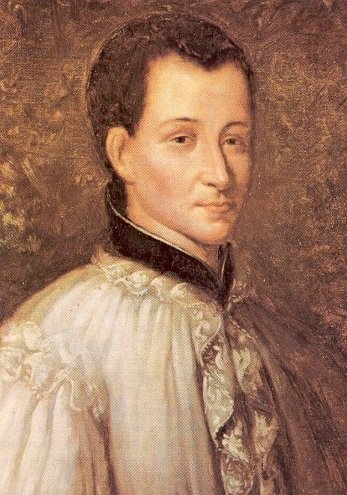
St. Claude la Colombiere - 15th Febraury 2009


This is a special day for the Jesuits, who claim today’s saint as one of their own. It’s also a special day for people who have a special devotion to the Sacred Heart of Jesus—a devotion Claude la Colombière promoted, along with his friend and spiritual companion, St. Margaret Mary Alacoque. The emphasis on God’s love for all was an antidote to the rigorous moralism of the Jansenists, who were popular at the time.

He was the third child of the notary Bertrand La Colombière and Margaret Coindat, was born on 2nd February 1641 at St. Symphorien d'Ozon in the Dauphine, southeastern France. After the family moved to Vienne Claude began his early education there, completing his studies in rhetoric and philosophy in Lyon.

It was during this period that Claude first sensed his vocation to the religious life in the Society of Jesus. We know nothing of the motives which led to this decision. We do know, however, from one of his early notations, that he "had a terrible aversion for the life embraced". This affirmation is not hard to understand by any who are familiar with the life of Claude, for he was very close to his family and friends and much inclined to the arts and literature and an active social life. On the other hand, he was not a person to be led primarily by his sentiments.

At 17 he entered the Jesuit Novitiate at Avignon. In 1660 he moved from the Novitiate to the College, also in Avignon, where he pronounced his first vows and completed his studies in philosophy. Afterwards he was professor of grammar and literature in the same school for another five years.

In 1666 he went to the College of Clermont in Paris for his studies in theology. Already noted for his tact, poise and dedication to the humanities, Claude was assigned by superiors in Paris the additional responsibility of tutoring the children of Louis XIV's Munster of Finance, Jean Baptiste Colbert.

His theological studies concluded and now a priest, Claude returned to Lyon. For a time he was teacher in the College, then full-time preacher and moderator of several Marian congregations.

Claude became noted for solid and serious sermons. They were ably directed at specific audiences and, faithful to their inspiration from the gospel, communicated to his listeners serenity and confidence in God. His published sermons produced and still produce significant spiritual fruits. Given the place and the short duration of his ministry, his sermons are surprisingly fresh in comparison with those of better-known orators.

The year 1674 was a decisive one for Claude, the year of his Third Probation at Maison Saint-Joseph in Lyon. During the customary month of the Exercises the Lord prepared him for the mission for which he had been chosen. His spiritual notes from this period allow one to follow step-by-step the battles and triumphs of the spirit, so extraordinarily attracted to everything human, yet so generous with God.

He took a vow to observe all the constitutions and rules of the Society of Jesus, a vow whose scope was not so much to bind him to a series of minute observances as to reproduce the sharp ideal of an apostle so richly described by St. Ignatius. So magnificent did this ideal seem to Claude that he adopted it as his program of sanctity. That it was indeed an invitation from Christ himself is evidenced by the subsequent feeling of interior liberation Claude experienced, along with the broadened horizons of the apostolate he witnesses to in his spiritual diary.

On 2nd February 1675 he pronounced his solemn profession and was named rector of the College at Paray-le-Monial. Not a few people wondered at this assignment of a talented young Jesuit to such an out-of the-way place as Paray. The explanation seems to be in the superiors' knowledge that there was in Paray an unpretentious religious of the Monastery of the Visitation, Margaret Mary Alacoque, to whom the Lord was revealing the treasures of his Heart, but who was overcome by anguish and uncertainty. She was waiting for the Lord to fulfill his promise and send her "my faithful servant and perfect friend" to help her realize the mission for which he had destined her: that of revealing to the world the unfathomable riches of his love.

After Father Colombière's arrival and her first conversations with him, Margaret Mary opened her spirit to him and told him of the many communications she believed she had received from the Lord. He assured her he accepted their authenticity and urged her to put in writing everything in their regard, and did all he could to orient and support her in carrying out the mission received. When, thanks to prayer and discernment, he became convinced that Christ wanted the spread of the devotion to his Heart, it is clear from Claude's spiritual notes that he pledged himself to this cause without reserve. In these notes it is also clear that, even before he became Margaret Mary's confessor, Claude's fidelity to the directives of St. Ignatius in the Exercises had brought him to the contemplation of the Heart of Christ as symbol of his love.

After a year and half in Paray, in 1676 Father La Colombière left for London. He had been appointed preacher to the Duchess of York - a very difficult and delicate assignment because of the conditions prevailing in England at the time. He took up residence in St. James Palace in October.

In addition to sermons in the palace chapel and unremitting spiritual direction both oral and written, Claude dedicated his time to giving thorough instruction to the many who sought reconciliation with the Church they had abandoned. And even if there were great dangers, he had the consolation of seeing many reconciled to it, so that after a year he said: "I could write a book about the mercy of God I've seen Him exercise since I arrived here!"

The intense pace of his work and the poor climate combined to undermine his health, and evidence of a serious pulmonary disease began to appear. Claude, however, made no changes in his work or life style.

Of a sudden, at the end of 1678, he was calumniously accused and arrested in connection with the Titus Oates "papist plot". After two days he was transferred to the severe King's Bench Prison where he remained for three weeks in extremely poor conditions until his expulsion from England by royal decree. This suffering further weakened Claude's health which, with ups and downs, deteriorated rapidly on his return to France.

During the summer of 1681 he returned to Paray, in very poor condition. On 15th February 1682, the first Sunday of Lent, towards evening Claude suffered the severe hemorrhage which ended his life.

On the 16th of June 1929 Pope Pius XI beatified Claude La Colombière, whose charism, according to St. Margaret Mary Alacoque, was that of bringing souls to God along the gospel way of love and mercy which Christ revealed to us.

Thursday, February 12, 2009

Red Envelope Campaign for life

This idea is from this blog. It can be modified for Canada as well, the address for Prime Misnister Steven Harper is

Office of the Prime Minister
80 Wellington Street
Ottawa
K1A 0A2

I do hope we can do this in earnest, this Red Envelope strategy is one of the best i have seen. I urge all my fellow bloggers to spread awareness about this.

" Dear Friends and Intercessors: This afternoon I was praying about a number of things, and my mind began to wander. I was deeply distressed at the symbolic actions that President Obama took as he began his presidency. Namely, that he signed executive orders releasing funds to pay for abortions, permission to fund human stem cell research, and federal funding for contraception. I have been involved in the pro-life movement for nearly 20 years, and it pained my heart to see a man and a political party committed to the shedding of innocent blood. This man, and this party lead our country, but they do not represent me or the 54% of Americans who believe that abortion is wrong and should no longer be legal. As I was praying, I believe that God gave me an interesting idea. Out in the garage I have a box of red envelopes. Like the powerful image of the red LIFE tape, an empty red envelope will send a message to Barack Obama that there is moral outrage in this country over this issue. It will be quiet, but clear. Here is what I would like you to do: Get a red envelope. You can buy them at Kinkos, or at party supply stores. On the front, address it to President Barack Obama (or Steven Harper) The White House 1600 Pennsylvania Ave. Washington , D.C. (Address for Steven Haper is on top) On the back, write the following message: This envelope represents one child who died in abortion. It is empty because that life was unable to offer anything to the world. Responsibility begins with conception. Put it in the mail, and send it. Then forward this email to every one of your friends who you think would send one too. I wish we could send 50 million red envelopes, one for every child who died before having a a chance to live. Maybe it will change the heart of the president."

Wednesday, February 11, 2009

Ave Maria

As today is the feast of Our Lady of Lourdes, let us listen to Ave Maria by Schubert as performed by the Heralds of the Gospel.


>

Our Lady of Lourdes - 11th February 2009

The first of the eighteen apparitions of the Blessed Virgin Mary to the humble Bernadette Soubirous took place at Lourdes on February 11, 1858. On March 25th, when Bernadette asked the beautiful Lady Her name, She replied: “I am the Immaculate Conception.” The Church for long centuries had believed in Her Immaculate Conception, Her exemption from every trace of the original sin which through Adam, our first and common father, separated man from his God. It was never proclaimed a dogma, however, until 1854. Mary Herself, in 1830, had asked of a Vincentian Sister at the Rue du Bac in Paris, that a medal be struck bearing Her likeness and the inscription: “O Mary, conceived without sin, pray for us who have recourse to Thee.” Our Lady by Her apparitions at Lourdes in 1858 seems to convey Her appreciation for the formal proclamation of Her great privilege, by Pius IX, in 1854. Countless and magnificent miracles of healing have occurred at Lourdes, confirmed by physicians and recorded in the Lourdes shrine “Book of Life.” To name but one: a doctor wrote a book describing the great miracle he had witnessed for a dying girl, whom he had observed on the train that was carrying handicapped persons from Paris to Lourdes. He had not expected her to survive and return home from the sanctuary.

Through the Lourdes Apparitions, the devotion of persons in all parts of the world to the Immaculate Mother of God has been wonderfully spread, and countless miracles have been wrought everywhere through Her intercession. The Virgin Mother of God is truly the chosen Messenger of God to these latter times, which are entrusted to Her, the chosen vessel of the unique privilege of exemption from original sin. Only with Her assistance will the dangers of the present world situation be averted. As She has done since 1858 in many places, at Lourdes, too, She gave us Her peace plan for the world, through Saint Bernadette: Prayer and Penance, to save souls.

http://www.lourdes-france.org/index.php?contexte=en&id=405

Tuesday, February 10, 2009

St. Scholastica - 10th Febraury 2009

Of this Saint but little is known on earth, save that she was the very pious younger sister of the great patriarch Saint Benedict, and that, under his direction, she founded and governed a numerous community near Monte Casino. Saint Gregory sums up her life by saying that she devoted herself to God from her childhood, and that her pure soul rose to God in the likeness of a dove, as if to show that her life had been enriched with the fullest gifts of the Holy Spirit.

Her brother was accustomed to visit her once every year, before Lent, and “she could not be sated or wearied with the words of grace which flowed from his lips.” On his last visit, after a day passed in spiritual conversation, the Saint, knowing that her end was near, said, “My brother, leave me not, I pray you, this night, but discourse with me till dawn on the bliss of those who see God in heaven.” Saint Benedict would not break his rule for the sake of natural affection, but his sister bowed her head and prayed, and there arose a storm so violent that Saint Benedict could not return to his monastery, and they passed the night as she had prayed, in heavenly conversation.

Three days later Saint Benedict saw in a vision the soul of Saint Scholastica going up in the likeness of a dove into heaven. Then he gave thanks to God for the graces He had given her and the glory which had crowned them. When she died, Saint Benedict as well as her spiritual daughters, and the monks sent by their patriarch to her conventual church, mingled their tears and prayed, “Alas! alas! dearest mother, to whom dost thou leave us now? Pray for us to Jesus, to whom thou art gone.” They then devoutly celebrated holy Mass, “commending her soul to God;” and her body was borne to Monte Casino, where her brother lay her in the tomb he had prepared for himself. It was written that “they all mourned her many days.” Finally Saint Benedict said, “Weep not, my sisters and brothers; for assuredly Jesus has taken her, before us, to be our aid and defense against all our enemies, that we may remain standing on the evil day and be perfect in all things.” Her death occurred in about the year 543.

Monday, February 9, 2009

St. Jerome Emiliani - 9th February 2009


Saint Jerome Emiliani, born in 1481, was a member of one of the Christian patrician families of Venice, and in early life a soldier. Showing in his youth much inclination to virtue, he studied the humanities with success until the age of fifteen, when the clash of arms interrupted his peaceful pursuits and his practice of virtue. And then, only his ambition for honors placed limits to his disorders; it was necessary to live honorably in order to receive promotions. He was appointed governor of a fortress in the mountains of Treviso, and while defending his post with outstanding bravery, was made prisoner by the enemy. In the misery of his dungeon he invoked amid tears the great Mother of God, recognizing that his chastisement was just. He promised, nonetheless, if She would set him free, to lead a new and better life, more worthy of his Christian heritage, and to make known Her benefits in every possible way. Our Lady appeared to him at once, gave him the keys he needed, and commanded him to fulfill faithfully what he had promised. She led him out through the ranks of his enemies to the gate of the city. He went to Her church at Treviso and dedicated himself to the service of the One who had delivered him, proclaiming Her mercies to all listeners. He consigned to writing, and had notarized, an account of his deliverance.

On reaching his home in Venice he undertook a life of active charity, causing admiration in all who had known him as a worldling. His special love was for the deserted orphan children whom he found wandering in the streets during a famine and an epidemic in 1528. Already he had converted his house into a hospital, selling even its furnishings to clothe and feed the poor folk who came in great numbers to him, when they heard he had procured wheat from other regions. He acquired a house for the children, and after recovering miraculously from the illness which he had contracted during the epidemic, he himself taught them the Christian truths. Soon the accounts of his pious orphanage brought visitors, and financial aid sufficient to sustain the enterprise. He was then entrusted with the Venitian Hospital for the Incurables. When he needed some particular grace, he had four orphans under eight years of age pray with him, and the grace never failed to arrive. In Venice he was aided in his Hospital by his friends, Saint Cajetan of Thienna and Saint Peter Caraffa of Naples.

He founded a hospital in Verona and an orphanage in Padua. At Bergamo, which had been struck by a pestilence and famine, he went out with the reapers he could assemble, and cut wheat in the hottest season of the Italian summer. At their head, he sang Christian hymns in his rich voice, engaging the others to follow his example. There he founded two orphanages and succeeded in closing a number of houses of ill repute; he gave their inhabitants whom he converted a rule of life and procured a residence for them. The bishop was aiding him constantly; and he sent him out to other villages and hamlets to teach the children Christian doctrine. Multiple conversions resulted in all directions. Two holy priests joined him in Bergamo, soon followed by other noble gentlemen. This was the origin of the Congregation of Regular Clerics, called the Somascans because of their residence at Somasca, situated between Milan and Bergamo. The Congregation was approved in 1540 by Pope Paul III, and the Order spread in Italy. Saint Jerome died in 1537 at the age of 56, from the illness he contracted while caring for the sick during an epidemic in the region of Bergamo.

Friday, February 6, 2009

Worrying sings of a chastisement

Look around at the newspapers and one will notice that Nature is beginning to chastise man for sins against God and nature (eg. homosexuality).
I do not want to be a doomsday prophet but the snow in the UK is an example of the signs of the times.

Here is a link to an article in the Globe and Mail which talks about what will happen if the ice sheets in West Antartica melts

http://www.theglobeandmail.com/servlet/story/LAC.20090206.ICE06/TPStory/Environment

I don't but in to the mass hysteria about global warming. I do believe the book of Revelations as well as prophecies at Fatima and Akita which say that at the chastisement 2/3rds of the worlds population will be wiped out.

Are you ready, is your soul ready to meet God - if not please go for confession and make repentance.

St. Paul Miki and Companions - 6th February 2009


When the first missionaries, like St. Francis Xavier, came to Japan in 1549 they were welcomed. Many Japanese became Christians. When the leader Hideyoshi took command, he feared that Christians would take over the government. In 1587 he banished them and destroyed many of their churches. Some missionary priests stayed and went into hiding, dressing like Japanese in order to minister to the Christians.

More than 3,000 Christians were martyred in Japan. On December 8, 1596, Hideyoshi arrested and condemned to death the friars of Miako. Among them were three Japanese Jesuits, six Franciscans (four of them Spanish), and seventeen Japanese laymen. Charged with attempting to harm the government, they were sentenced to crucifixion. Some of these men were very young: Louis was 10; Anthony, 13; Thomas, 16; and Gabriel, 19. The best known is Paul Miki, who was a Japanese of a noble family, a Jesuit brother, and a brilliant preacher.

The twenty-six men were tortured and then forced to walk more than 300 miles from Miako to Nagasaki through snow and ice and freezing streams. Along the way they preached to the people who had come out to see them. They sang psalms of praise and joy. They prayed the rosary and told the people that such a martyrdom was an occasion of rejoicing, not of sadness. Finally, on February 5, they reached Nagasaki, where twenty-six crosses awaited them on a hill now called the Holy Mountain. It is said that the Christians ran to their crosses, singing. Soldiers bound them to the crosses with iron bands at their wrists, ankles, and throats. Then they thrust them through with lances. Many people came to watch the cruel deaths. Hideyoshi and his solders had hoped the example would frighten other Christians. Instead, it gave them the courage to profess their faith as the martyrs had.

In 1858, Japan again permitted Christianity in Japan. Missionaries found thousands of Christians still in Japan. For two hundred years they had carried on the faith in secret.

Born in a wealthy family in 1562 at Tounucumada, Japan, the son of a military leader, Paul Miki felt a call to religious life from his youth. He became Jesuit in 1580 after being educated at the Jesuit college at Anziquiama. He became a successful evangelist, and when the political climate became hostile to Christianity, he decided to continue his ministry and was soon arrested. On his way to martydom, he and other imprisoned Christians were marched 600 miles so they could be abused by, and be a lesson to, their countrymen; but all of them they sang the Te Deum on the way His last sermon was delivered from the cross: "The only reason for my being killed is that I have taught the doctrine of Christ. I thank God it is for this reason that I die. I believe that I am telling the truth before I die. I know you believe me and I want to say to you all once again: Ask Christ to help you become happy. I obey Christ. After Christ's example, I forgive my persecutors. I do not hate them. I ask God to have pity on all, and I hope my blood will fall on my fellow men as a fruitful rain".

He died by being stabbed with a lance while crucified at Nagasaki, Japan. Paul Miki and his companions were canonized in 1862 by Pope Pius IX.

First and Second part of theFatima Vision

This is the first and second part of the secret that our Lady Revealed to the 3 Sheppard children at Fatima.

Our Lady showed us a great sea of fire which seemed to be under the earth. Plunged in this fire were demons and souls in human form, like transparent burning embers, all blackened or burnished bronze, floating about in the conflagration, now raised into the air by the flames that issued from within themselves together with great clouds of smoke, now falling back on every side like sparks in a huge fire, without weight or equilibrium, and amid shrieks and groans of pain and despair, which horrified us and made us tremble with fear. The demons could be distinguished by their terrifying and repulsive likeness to frightful and unknown animals, all black and transparent. This vision lasted but an instant. How can we ever be grateful enough to our kind heavenly Mother, who had already prepared us by promising, in the first Apparition, to take us to heaven. Otherwise, I think we would have died of fear and terror.

We then looked up at Our Lady, who said to us so kindly and so sadly:

“You have seen hell where the souls of poor sinners go. To save them, God wishes to establish in the world devotion to my Immaculate Heart. If what I say to you is done, many souls will be saved and there will be peace. The war is going to end: but if people do not cease offending God, a worse one will break out during the Pontificate of Pius XI. When you see a night illumined by an unknown light, know that this is the great sign given you by God that he is about to punish the world for its crimes, by means of war, famine, and persecutions of the Church and of the Holy Father. To prevent this, I shall come to ask for the consecration of Russia to my Immaculate Heart, and the Communion of reparation on the First Saturdays. If my requests are heeded, Russia will be converted, and there will be peace; if not, she will spread her errors throughout the world, causing wars and persecutions of the Church. The good will be martyred; the Holy Father will have much to suffer; various nations will be annihilated. In the end, my Immaculate Heart will triumph. The Holy Father will consecrate Russia to me, and she shall be converted, and a period of peace will be granted to the world”

For the entire understanding of Our Lady Of Fatima please click on the EWTN LINK

Thursday, February 5, 2009

Consecration as per Our Lady of Fatima.

Above all creatures, may you be blessed, you, the Handmaid of the Lord, who in the fullest way obeyed the divine call!

Hail to you, who are wholly united to the redeeming consecration of your Son!

Mother of the Church! Enlighten the People of God along the paths of faith, hope, and love! Enlighten especially the peoples whose consecration and entrustment by us you are awaiting. Help us to live in the truth of the consecration of Christ for the entire human family of the modern world.

In entrusting to you, O Mother, the world, all individuals and peoples, we also entrust to you this very consecration of the world, placing it in your motherly Heart.

Immaculate Heart! Help us to conquer the menace of evil, which so easily takes root in the hearts of the people of today, and whose immeasurable effects already weigh down upon our modern world and seem to block the paths towards the future!

From famine and war, deliver us.

From nuclear war, from incalculable self-destruction, from every kind of war, deliver us.

From sins against the life of man from its very beginning, deliver us.

From hatred and from the demeaning of the dignity of the children of God, deliver us.

From every kind of injustice in the life of society, both national and international, deliver us.

From readiness to trample on the commandments of God, deliver us.

From attempts to stifle in human hearts the very truth of God, deliver us.

From the loss of awareness of good and evil, deliver us.

From sins against the Holy Spirit, deliver us, deliver us.

Accept, O Mother of Christ, this cry laden with the sufferings of all individual human beings, laden with the sufferings of whole societies.

Help us with the power of the Holy Spirit to conquer all sin: individual sin and the ‘sin of the world', sin in all its manifestations.

Let there be revealed, once more, in the history of the world the infinite saving power of the Redemption: the power of merciful Love! May it put a stop to evil! May it transform consciences! May your Immaculate Heart reveal for all the light of Hope!

St. Agatha - 5th February 2009

(The Martyrdom of St Agatha - TIEPOLO, Giovanni Battista)

Saint Agatha was born in Sicily of rich and noble parents, a child of benediction from the first, for she was promised to her parents before her birth, and consecrated from her earliest infancy to God. In the midst of dangers and temptations she served Christ in purity of body and soul, and she died for love of chastity. Quintanus, who governed Sicily under the Emperor Decius, had heard the rumor of her beauty and wealth, and he made the laws against the Christians a pretext for summoning her from Palermo to Catania, where he was at the time. “O Jesus Christ!” she cried, as she set out on this dreaded journey, “all that I am is Thine; preserve me against the tyrant.”

And Our Lord did indeed preserve one who had given herself so utterly to Him. He kept her pure and undefiled while she was imprisoned for a whole month under charge of an evil woman. He gave her strength to reply to the offer of her life and safety, if she would but consent to sacrifice to the gods, “Christ alone is my salvation!” When Quintanus turned from passion to cruelty, and cut off her breasts, Our Lord sent the Prince of the Apostles to heal her. She told the elderly gentleman who appeared to her that she was Christian and desired no treatment, for her Lord could cure her by a single word. He smiled, identified himself as Saint Peter, and said: “It is in His name that you will be healed.” And when he disappeared, she saw that her wounds were healed and her flesh made whole. But when she was rolled naked upon potsherds, she asked that her torments might be ended. Her Lord heard her prayer and took her to Himself.

Saint Agatha gave herself without reserve to Jesus Christ; she followed Him in virginal purity, and then depended upon Him for protection. And to this day Christ has shown His tender regard for the very body of Saint Agatha. Again and again, during the eruptions of Mount Etna, the people of Catania have exposed her veil for public veneration, and found safety by this means. In modern times, on opening the tomb in which her body lies waiting for the resurrection, they beheld the skin still entire, and experienced the sweet fragrance which issued from this temple of the Holy Ghost.

We live in an unchaste era. Let us pray to this Saint to teach us chastity.


Wednesday, February 4, 2009

St. Joseph of Leonissa - 4th February 2009


The third of eight children, He was born to John Desideri and Serafina Paolini at Leonessa on January 8, 1556. At baptism he was given the name Eufranio. His father, a wool merchant, and his mother, who came from a family of distinction, were esteemed throughout the area for their virtue. Both parents died when Eufranio was about 12 years old.

Eufranio's uncle, Battista Desideri, a teacher at Viterbo, provided for Eufranio's upbringing and education. His uncle arranged a marriage between Eufranio and the daughter of a noble Viterban family. Feeling inclined toward religious life, the prospect of marriage caused Eufranio a great deal of stress. He fell ill, and doctors suggested that he return to Leonessa. After a few days removed from the pressure, Eufranio's health improved. While recuperating at Leonessa, Eufranio was introduced to the Capuchins who were building a friary outside the Spoletine gate. Impressed by the example of Matthew Silvestri, who had left the medical profession to embrace the Capuchin life and whose holiness was evident, Eufranio was inspired to become a Capuchin.

When his uncle found this out, he demanded that Eufranio move to Spoleto to continue his studies. The young Eufranio obeyed, but arranged to keep in contact with the Capuchins at the hermitage of St. Ann, hidden in the woods of Monte Patrico. There, far from his family, Eufranio managed to meet the provincial minister of the Umbrian province to whom he manifested his desire to become a Capuchin. He was admitted to the novitiate. Without telling anyone his plans, Eufranio left everything and traveled to Assisi to the place known as the Carcerelle where he received the habit and the name Joseph.

Once his family discovered what had transpired, they went to the friary and used every means at their disposal to convince Joseph to abandon religious life. Their attempts proved futile. Having completed his year of probation, Joseph made profession on January 8, 1573, after which he applied himself assiduously to his studies, delving especially into the writings of Bonaventure whose insights the Capuchins had espoused from their earliest days. Joseph was ordained presbyter at Amelia on September 24, 1580. After ordination, he continued his studies at Lugnano in Teverina. Although drawn to contemplation, Joseph wrote, "Whoever loves a life of contemplation has a serious obligation to go out into the world to preach, especially since the world's way of thinking is very confused and evil abounds on the earth."

On May 21, 1581, the Capuchin general vicar issued patents for preaching, the ministry in which Joseph would be engaged for the remainder of his life.

Relying solely on grace and with a mission crucifix always tucked in his cincture, Joseph negotiated the most obscure, mountainous regions of Umbria, Lazio and the Abruzzi in an intense and extensive mission of evangelization among those who were poor. On one occasion the legend of the wolf of Gubbio was apparently repeated when Joseph played the dual role of reconciler and evangelizer. In 1572, a law had been passed which granted amnesty to certain prisoners who had fought the Turks. In the vicinity of Arquata del Tronto, a group of about 50 of these former prisoners banded together and were terrorizing the local populace. All else having failed, Joseph was asked to find some solution. He boldly went in search of the band, found their hiding place, gathered them together and invited them into the church of St. Mary Camertina. Once inside, with his preaching cross in hand, Joseph began to speak to them about the need for conversion. As a result of his very moving appeal, all without exceptionresolved to change their lives. When leaving the church, each was given a rosary. The following year, Joseph was invited back to that town to preach a Lenten series. The reformed bandits were among the first to fill the pews.

Joseph enjoyed such great success in preaching because of his intimate union with God which was cultivated by incessant prayer. He would pray and meditate on the road, while holding his crucifix. In 1583, five Jesuit missionaries were murdered in Constantinople. Thereupon, the ambassadors of Paris and Venice asked the pope to send some Capuchins as their replacements. Joseph was among those who volunteered for the mission. On June 20, 1587, the Capuchin general vicar, Jerome of Polizzi Generosa, sent letters of obedience to those who had been chosen. Joseph was not among them. Though disappointed, Joseph accepted the decision. One of the chosen missionaries, Giles of Santa Maria, was prevented from leaving for reasons of health. In his stead, Joseph and Gregory of Leonessa received letters of obedience to join the Constantinople mission on August 1, 1587. After a few days, the two departed for Venice where they embarked on a boat headed for the Bosporus. After a long and harrowing journey, they arrived safely in Constantinople where they joined the other Capuchins who had taken up residence in the Galatan quarter of the city. Joseph was assigned as chaplain to some 4,000 Christian slaves who worked in the penal colony of Qaasim-pacha. He immediately went to work bringing the gospel and charitable relief to those who were languishing in inhumane conditions.

Many times he offered himself as a substitute in order to obtain the release of a slave who was near death. His offer was never accepted. One day Joseph wanted to visit the penal colonies at Top-Hane and Besik-Tas. He remained with those condemned to forced labor until late afternoon. Obliged to leave, he headed back for the friary but found the gates to the Galatan quarter already bolted. Exhausted, he fell asleep near a military guardhouse. In the morning, he was discovered by soldiers, arrested as a spy and thrown into prison. He remained there for over a month before being released in response to an appeal made by the Venetian ambassador on his behalf.

When the plague broke out in the penal colonies, the Capuchins immediately took up the ministry of assisting those who were sick and dying. Two Capuchins, Peter and Dennis, died doing so. Although Joseph became ill, he and Brother Gregory alone survived to remain at the mission. After converting a Greek bishop who had renounced the faith, Joseph devised a plan which entailed approaching the sultan, Murad 111, to seek the recognition of the right of freedom of conscience for anyone who was converted or returned to the Christian faith.

His first unsuccessful attempt at approaching the sultan took place as the sultan was passing by on the street. A second failed attempt was made while the sultan was at prayer in the mosque. Joseph was restrained by the sultan's bodyguards. Finally, a court physician and friend offered to obtain an audience for him on condition that he would put aside his religious habit and dress as a prestigious person might. Joseph preferred to witness to evangelical poverty and to present himself as a Catholic missioner seeking the recognition of a fundamental human right. He went to court early one morning and, unhindered, entered into the sultan's antechamber. When Joseph attempted to enter the sultan's chambers, he was arrested and bound in chains. He was condemned to an immediate death by being hung on hooks. He was hung from the gallows with one hook through the tendons of his right hand and another through his right foot. Tortured in such an atrocious position, parched by thirst and thrown into convulsions, death by a slow and spasmodic agony seemed to be his only release. He suffered there for three days, soldiers having built a slow fire under him so as to suffocate him with the fumes. Near death, on the evening of the third day, the guards cut him down. A young man (who some say was an angel) carefully freed him from the hooks and gave him medical attention, bread and wine. Joseph quickly recovered.

The young man said to him, "Return quickly to Italy and continue to preach the gospel there; your mission here is finished.'! Joseph quickly left Turkey and arrived at Rome where he and the converted Greek bishop presented themselves to Pope Sixtus V. Following Joseph's return to Italy, in the autumn of 1589, he took up residence at the Carcerelle in Assisi. The local bishop had requested that a Capuchin preach the Advent series in the cathedral that year. Joseph was chosen and met with great success, partly because he was already venerated as something of a martyr for the faith. Despite the local minister's hope that the Capuchins would gain prestige by having Joseph remain at Assisi, Joseph asked to resume his itinerant preaching ministry in the small villages and mountain towns of central Italy. Joseph ignored danger and inconvenience. When he couldn't reach a place by foot, he would crawl on hands and knees to get there. He would go anywhere to preach, especially to poor, rundown places where no one else was inclined to go. He would think nothing of plunging into a river or fording a stream in order to reach his destination, or of traveling barefoot through forest and thorn thickets.

Among the Capuchins who travelled with him, he was known as the "preacher of the thickets," and the "companion-killer." No one could keep up with his stamina and resolve. Joseph would forego food and sleep for the sake of reaching yet another small village where he could preach. No sooner would he finish in one town than already be on his way to the next. When farmers heard that Joseph was in town, they would leave the sowing of their crops half finished in order to hear him, even if it meant that the seed already sown would be lost to the birds and other animals.

In the aftermath of the Council of Trent, Joseph spent much time and energy catechizing. He began a ministry of evangelization among shepherds who lacked even rudimentary knowledge of the faith, prayer and the commandments. He would walk through the streets ringing a bell, reminding parents to send their children to catechism class. He used his preaching as a form of advocacy on behalf of those who were in need. He preached to the poor and addressed the social injustices which adversely affected them. For the benefit of all those who were poor and hungry, and especially women, Joseph was instrumental in establishing food cooperatives where anyone who was hungry could find food. Joseph would preach and beg for grain or other items which could be bartered for grain. Women who had themselves experienced poverty and hunger were placed in charge. Convinced that it was Christ reaching out to him in those who experienced want, Joseph sought them out. He recognized not only his personal call to help others, but also the need to create stable social programs for helping those who lacked the necessities of life. He also was instrumental in establishing hospitals and shelters to accommodate pilgrims, the sick and the homeless. His charity knew no limits. He ministered in prisons, visiting and helping the detainees in a variety of ways, and assisting those condemned to death. During epidemics, he did not hesitate to carry cadavers on his own shoulders to bring them to the cemetery. He never hesitated to offer himself, even at the cost of his own life.

One day while traveling from Leonessa to Montereale, he found himself in the middle of a brawl between two rival gangs. With incredible boldness he walked into their midst, raised his crucifix, prayed and spoke about the need to find alternatives to violence.

Two towns along the ancient Roman via Salaria, Bornona and Posta, had for some time been involved in a territorial dispute. Joseph preached in both towns and succeeded in doing what no one else could.

When he became deathly ill, Joseph asked to be taken to Leonessa in order to pay his last respects to his relativesand friends. The doctors then suggested that he go to Amatrice. His local minister and nephew, Francis of Leonessa, was at his deathbed. On Saturday evening, February 4, 1612, after beginning the divine office,which proved too difficult to continue, Joseph repeated his favorite prayer: "Sancta Maria, succurre miseris." Quietly and peacefully he slipped into death's embrace. Joseph was beatified by Clement XII in 1737 and canonized by Benedict XIV in 1746.

Tuesday, February 3, 2009

Signs of the time - Prophecy

Look around, every one has an idea that something is wrong but they don't know what it is. Everyone is hoping that the economy will improve. As Catholics, our Hope is in God. We dont need to run around here and there looking for solutions, we know that in good and bad times God will lead us and care for us as he did for our ancestors as they wandered for 40 years in the dessert.

Dear reader, the link below is a prophecy of Ralph Martin, I suggest you read it and understand it and digest it well. Following this I urge you to say many rosaries asking Our Lady to grant you the grace of perseverance in the time of chastisement and persecution..

http://al007italia.blogspot.com/2009/01/i-will-lead-you-into-desert.html

In this coming week, i will post summaries of prophecy by St John Bosco, Our Lady of Fatima, Our Lady at Akita and then lastly and most importantly those of Dr Plinio

Support Pope Benedict


In France, but probably also in other countries, the media, including alas so called catholic media, have been very hostile to the Pope's decision concerning the excommunication of four bishops of the SSPX. A petition against the decree is even circulating. We then decided to take the opportunity to say thank you to the Holy Father and to give him our full support. This initiative was launched by a group of friends, some of them from the SSPX, most of them not, but all of them very grateful to the Holy Father.

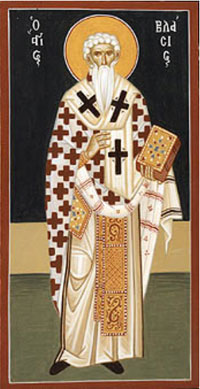
St. Blaise - 3rd Febraury 2009


It is not known precisely when or where St. Blaise lived, but according to tradition he was a bishop of Sebaste, Armenia, in the early part of the fourth century, and suffered martyrdom under the Roman emperor Licinius, who had commanded the governor of the province, one Agricolaus, to prevent the spread of Christianity in his territory. After this edict had been promulgated, Blaise fled to the mountains and lived in a cave frequented by wild beasts. He used his skill to heal the animals that he found wounded or sick, and when the emperor's hunters, bent on collecting wild animals for the royal games, discovered him in this cave, they carried him off to Agricolaus as a special prize.

On the way, the story goes, they met a poor woman whose pig had been seized by a wolf. At the command of Blaise, the wolf restored the pig to its owner, alive and unhurt. During the course of this journey he also miraculously cured a child who was choking to death on a fishbone. For this reason St. Blaise is often invoked by persons suffering from throat trouble. When he had reached the capital and was in prison awaiting execution, the old woman whose pig he had saved came to see him, bringing two fine wax candles to dispel the gloom of his dark cell. When he was finally killed, he is supposed to have been tortured with an iron comb or rake, and afterwards beheaded. In the West there was no cult honoring St. Blaise prior to the eighth century.

One of the Fourteen Holy Helpers, his emblems are an iron comb and a wax taper.

One reason for St. Blaise's popularity arose from the fact he was a physician who cured, even performing miraculous cures. Thereby, those who were sick, especially with throat ailments, invoked his intercession. Eventually the custom of the blessing of throats arose, whereby the priest held two crossed candles over the heads of the faithful or touched their throats with them while he invoked the prayer of the saint and imparted God's blessing. In our present Roman Ritual, the priest prays, "Through the intercession of St. Blaise, bishop and martyr, may God deliver you from every disease of the throat and from every other illness, in the name of the Father, and of the Son, and of the Holy Spirit." This practice continues in many parishes on St. Blaise's feast day.

While we invoke St. Blaise for his protection against any physical ailment of the throat, we should also ask his protection against any spiritual ailment - profanity, cursing, unkind remarks, detraction or gossip. St. James reminds us, "If a man who does not control his tongue imagines that he is devout, he is self-deceived; his worship is pointless" (1:26) and later, "We use [the tongue] to say, 'Praised be the Lord and Father'; then we use it to curse men, though they are made in the likeness of God. Blessing and curse come out of the same mouth. This ought not to be, my brothers!" (3:9-10). Therefore, may St. Blaise protect us from all evil, physical and spiritual, which may attack the throat.

Monday, February 2, 2009

Sermon by Saint Sophronius - Feast of the Presentation of Our Lord


(Presentation of Our Lord - Giotto)
In honour of the divine mystery that we celebrate today, let us all hasten to meet Christ. Everyone should be eager to join the procession and to carry a light.

Our lighted candles are a sign of the divine splendour of the one who comes to expel the dark shadows of evil and to make the whole universe radiant with the brilliance of his eternal light. Our candles also show how bright our souls should be when we go to meet Christ.

The Mother of God, the most pure Virgin, carried the true light in her arms and brought him to those who lay in darkness. We too should carry a light for all to see and reflect the radiance of the true light as we hasten to meet him.

The light has come and has shone upon a world enveloped in shadows; the Dayspring from on high has visited us and given light to those who lived in darkness. This, then, is our feast, and we join in procession with lighted candles to reveal the light that has shone upon us and the glory that is yet to come to us through him. So let us hasten all together to meet our God.
The true light has come, the light that enlightens every man who is born into this world. Let all of us, my brethren, be enlightened and made radiant by this light. Let all of us share in its splendour, and be so filled with it that no one remains in the darkness. Let us be shining ourselves as we go together to meet and to receive with the aged Simeon the light whose brilliance is eternal. Rejoicing with Simeon, let us sing a hymn of thanksgiving to God, the Father of the light, who sent the true light to dispel the darkness and to give us all a share in his splendour.

Through Simeon’s eyes we too have seen the salvation of God which he prepared for all the nations and revealed as the glory of the new Israel, which is ourselves. As Simeon was released from the bonds of this life when he had seen Christ, so we too were at once freed from our old state of sinfulness.

By faith we too embraced Christ, the salvation of God the Father, as he came to us from Bethlehem. Gentiles before, we have now become the people of God. Our eyes have seen God incarnate, and because we have seen him present among us and have mentally received him into our arms, we are called the new Israel. Never shall we forget this presence; every year we keep a feast in his honour.